Summary
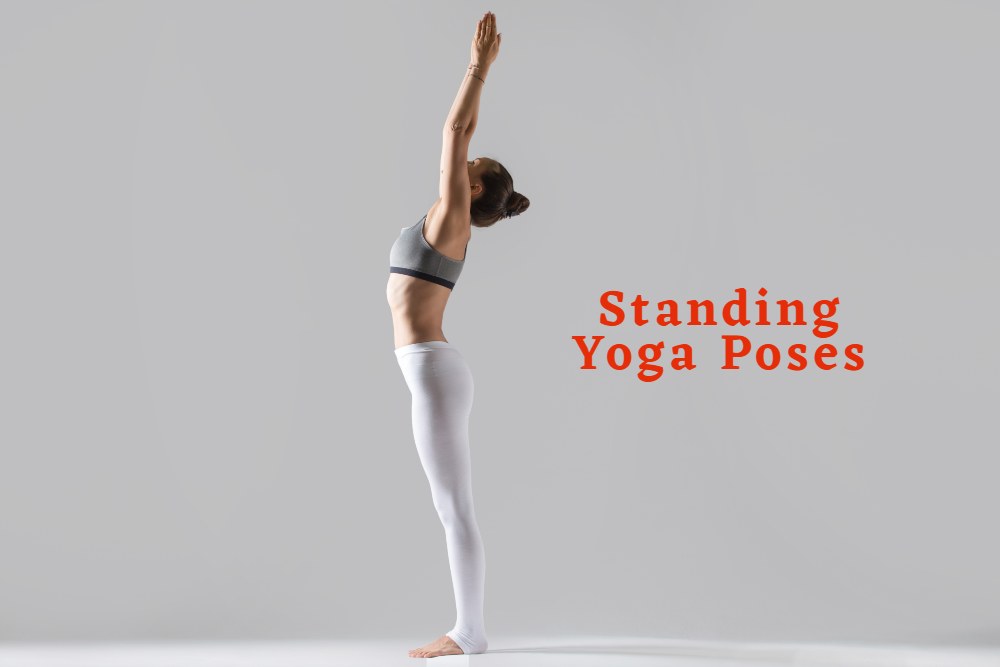
Fundamental standing yoga poses are classic, weight-bearing postures that will still get your heart pounding while simultaneously cultivating functional strength, balance, coordination, postural integrity and mental focus. They are designed to recruit major muscle groups, create joint stability and provide the foundation for all strong Yoga moves! This guide describes what standing poses are and why they are important, how to practice them safely, and how to approach them intelligently with the help of both modern movement science and real teaching experience.
What Are Standing Yoga Poses?
Standing yoga poses are practiced on your feet and involve both – or one, depending – feet rooted to the earth (i.e. yoga mat) and a spine that is in an upright position rather than horizontal or inverted. These poses demand that the practitioner support their body weight against gravity, which makes them very different from seated, prone or supine yoga postures.
Standing yoga poses require continuous muscle work, whereas floor-based yoga postures do not. The legs, hips, core and postural muscles are coordinated to stabilise the body while balancing and controlling movement. This dynamic engagement of leg muscles in standing poses, adds functional/weight bearing exercises which better represent activities of daily living such as standing, walking, climbing stairs and carrying/lifting objects.
Standing poses also work on the dynamic interplay of strength and alignment. Feel your weight settling down through the feet into the ground and then moving back up through legs, pelvis, spine and out the crown of the head–showing your body how to bear load evenly! It is this upward integration that contributes to why standing poses are often suggested as the basis for all other practice of yoga.
Structurally, The Standing Yoga Poses:
- Teach good joint stacking (ankles, knees, hips and spine)
- Posture awareness and body symmetry enhancement
- Develop balance, coordination, and proprioception
- Involve stabilizing muscles, work the big muscle groups.
Standing poses are often found early in the sequence of a traditional or vinyasa style class because they bring students an understanding of alignment, breath control and muscular engagement long before attempting deeper stretches, backbends and inversions or sitting for longer periods of meditation.
Much more than a series of positions that you do with your body, standing yoga poses are the means by which your body learns to stand properly, on and off the mat. They’re really a foundation movement pattern for healthy posture – and more generally long-term health, stability and awareness in our movements on (AND off) the mat!
Key Characteristics
- Upright spinal orientation
- Weight-bearing through feet and legs
- Continuous engagement of stabilizing muscles
- Balancing and Breath intertwined in space
Why They Are in Yoga Systems
The age-old tradition of emphasis on standing poses is intended to:
- Ready the body for extended meditation
- Strengthen the musculoskeletal system
- Build mental steadiness and discipline
Contemporary yoga adopts standing poses as the door to physical practice because they are functional, available, and teach concepts that we can take with us in our lives.
The Biomechanics of Standing Yoga Poses
Postural positions are bio-mechanically complicated due to the necessity of multiplex system excitation.
Muscular Systems Involved
- Bottom half: Quads, hamstrings, glutes, calves
- Primary: Transverse abdominis, obliques, other spinal stabilizers
- Upper body: Shoulders, trapezius, latissimus dorsi
Joint Actions
- Hip flexion, extension, abduction
- Knee stabilization
- Ankle proprioception
- Spinal elongation and rotation
This is why standing poses develop functional strength more than isolated work.
Why Standing Yoga Poses Are Essential
Functional Strength Development
Strength Standing postures build strength that mirrors patterns of movement you use in real life – walking, climbing, lifting and balancing.
Unlike gym machines:
- Multiple muscle groups work together
- Stabilizers are trained
- Strength: Can be applied off the mat
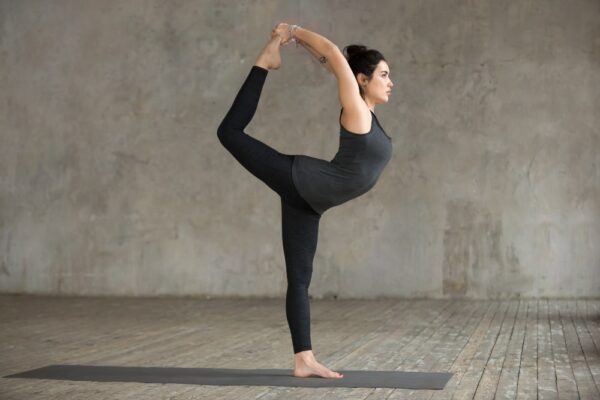
Balance and Neuromuscular Control
Balancing standing poses train:
- Inner ear (vestibular system)
- Visual focus (drishti)
- Proprioceptive feedback
This improves:
- Athletic performance
- Injury prevention
- Aging-related balance decline
Correction of Posture and Spine Health
Standing poses teach:
- Neutral pelvic alignment
- Even weight distribution
- Spinal length without compression
Regular practice helps reduce:
- Forward head posture
- Rounded shoulders
- Lower back strain
Cardiovascular and Metabolic Benefits
When sequenced dynamically:
- Heart rate increases
- Caloric burn improves
- Blood circulation enhances
So standing postures can help control weight and regulate energy.
Detailed Explanation of Essential Standing Yoga Poses
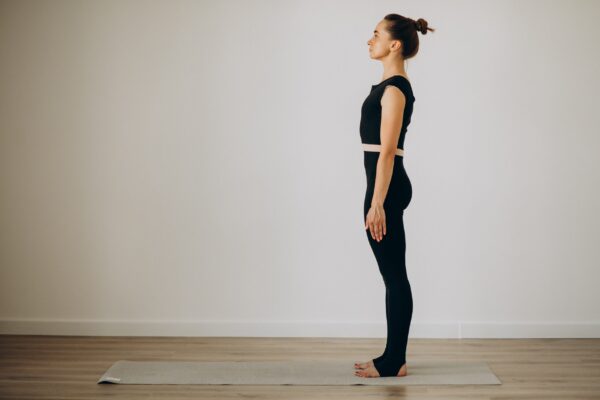
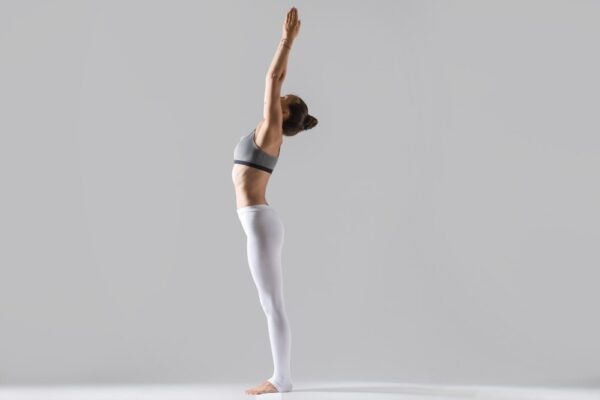
1. Mountain Pose (Tadasana)
Purpose: Postural awareness and alignment blueprint
How It Works:
- Activates postural muscles
- Aligns joints vertically
- Trains stillness and awareness
Common Mistakes:
- Locking knees
- Overarching lower back
Why It Matters:
(Note: You read more about the Mountain Pose by clicking here).Each standing pose is really just a Mountain Pose in action.
2. Chair Pose (Utkatasana)
Purpose: Strength and endurance
Muscles Targeted:
- Quadriceps
- Glutes
- Core stabilizers
Biomechanical Insight:
Replicates a squat with spine in neutral.
3. Warrior I (Virabhadrasana I)
Purpose: Strength + hip mobility
Key Focus:
- Hip flexor stretch
- Leg strength
- Upright torso control
Teaching Insight:
Good from Marko: Most students do well with a shortened stance to balance and protect the lower back.
4. Warrior II (Virabhadrasana II)
Purpose: Glute endurance & lateral hip strength
Benefits:
- Knee stability
- Hip opening
- Mental stamina
5. Warrior III (Virabhadrasana III)
Purpose: Posterior chain activation
Challenges:
- Balance
- Hip leveling
- Core engagement
Why It’s Advanced:
It obliterates visual steadiness as it asks for total body coordination.
Also Read: The Complete Guide to Meditation: Exploring Types, Techniques & Transformative Benefits
6. Triangle Pose (Trikonasana)
Objective: Stretch laterally and mobility of the joint
Key Concept:
Long before deep—don’t fall down into your hip.
7. Side Extended Angle Pose (Utthita Parsvakonasana Parivrtti)
Purpose: Strength with spinal extension
Functional Benefit:
Increases side body flexibility and strength in the legs.
8. Tree Pose (Vrksasana)
Purpose: Balance and focus
Neurological Benefit:
Enhances concentration and mental clarity.
9. Half Moon Pose (Ardha Chandrasana)
Key Points: To challenge dynamic balance and extension in the spine
Teaching Tip:
It’s safer and allows for better alignment with a block.
10. Goddess Pose (Utkata Konasana)
Purpose: Hip and pelvic strength
Why It’s Important:
Develops stability in the wide positions neglected by other daily movements.
11. Five-Pointed Star (Prasarita Tadasana)
Purpose: Grounding and circulation
Energy Effect:
Creates expansion while maintaining stability.
Standing Yoga Poses for Beginners (Step-by-Step Progression)
Beginner Strategy
- Learn alignment first
- Use props freely
- Hold poses briefly
- Rest when needed
Safe Weekly Frequency
- 3–5 sessions per week
- 20–40 minutes per session
Common Mistakes and Injury Prevention
Mistake 1: Forcing Depth
Solution: Emphasize stability at the expense of range of motion
Mistake 2: Holding Breath
Solution: Use slow nasal breathing
Mistake 3: Ignoring Pain Signals
Solution: Modify or rest immediately
How Standing Poses Fit Into a Complete Yoga Practice
Standing poses act as:
- Warm-up
- Strength phase
- Transition to deeper postures
They prepare the nervous system for stillness and meditation.
FAQs
1. Can I do standing yoga poses every day?
When applying good form and proper recovery, yes.
2. Do standing yoga poses tone muscles?
They develop muscles that are lean and functional as opposed to bulky.
3. What is the most difficult standing yoga position?
Warrior III and Half Moon are deemed the most challenging postures for balance, coordination and control.
4. Will standing yagonataloga poses improve one’s balance and coordination?
Yes. They increase stability, body consciousness and neuromuscular control.
5.Do standing yoga poses enhance flexibility without the risk of injury?
Yes. They help challenge and improve with active range of motion while challenging with joint stability.
Final Conclusion
Standing yoga poses are not just an option — they are the base. They create the neuromuscular coordination, joint stability and postural awareness strength that creates a safe sustainable practice on or off mat. From firing up deep stabilising muscles, to training the balance system and developing better biomechanical alignment - these poses are the building blocks of a full-on yoga session.
Scientific studies continue to support the correlation between a superior standing position and improving proprioception, load strength, pelvic floor activation and to lowering injury risk. They help to prepare the body for other and more challenging postures, they protect the spine and joints, and practice directly translate into better posture, movement and gait in everyday life.
In essence, progress in yoga does not come from skipping fundamentals, but from refining them. Commit to standing poses, and the entire practice—strength, balance, alignment, and longevity—follows.