In an age of constant stimulation, rising stress, irregular sleep, digital overload, and shallow breathing, people are searching for practices that are simple, effective, and sustainable. Among the many tools offered by yoga, Anulom Vilom stands out because it asks for very little and offers a great deal in return. It does not require a gym, a mat-heavy routine, or years of flexibility training. It begins with something you already have: your breath. In modern yoga teaching, Anulom Vilom is commonly described as a form of alternate nostril breathing, and many teachers also connect it with Nadi Shodhana, a traditional yogic breathing practice. Yoga itself is not only about postures; authoritative health sources describe it as a broader mind-body discipline that includes physical postures, breathing techniques, and meditation.
What makes Anulom Vilom so enduring is that it sits at the meeting point of two worlds. On one side is the traditional yogic worldview, in which breath is linked to prana, inner balance, and the purification of subtle channels of energy. On the other side is the modern wellness and scientific lens, which studies outcomes such as stress, blood pressure, focus, breathing efficiency, and emotional regulation. These two lenses are not identical, and they should not be confused with each other. But together, they help explain why this practice has remained relevant for centuries and why so many people still return to it today.
Let’s cover what Anulom Vilom is, where it belongs within yoga, what it means traditionally, how it may work from a modern physiological point of view, how to do it correctly, what benefits people commonly report, what the current research actually says, who should be careful, what mistakes beginners often make, and how to build a realistic daily practice. By the end, you should not only know the technique but understand why this deceptively simple practice has such a respected place in the yogic tradition.
What Is Anulom Vilom?
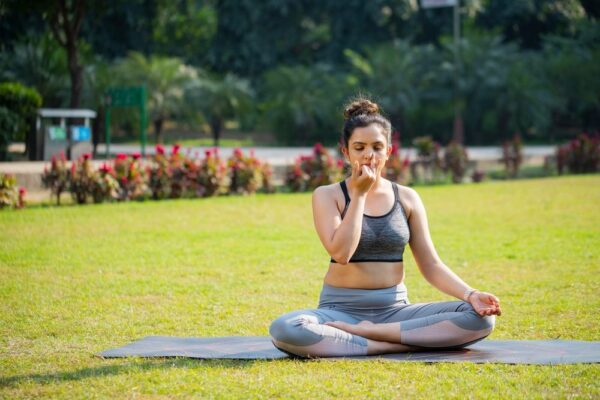
Anulom Vilom is a pranayama, or yogic breathing practice, in which you breathe through one nostril at a time and then alternate sides in a rhythmic sequence. Cleveland Clinic describes alternate nostril breathing as Nadi Shodhana, while The Yoga Institute describes Anulom Vilom as alternate nostril breathing or Nadi Shodhana pranayama. In practical terms, the exercise usually follows a recognizable pattern: inhale through one nostril, switch, exhale through the other, then reverse the cycle. That pattern creates a measured, deliberate rhythm that is very different from the hurried, unconscious breathing many people slip into during a stressful day.
To really understand Anulom Vilom, it helps to place it inside the wider framework of yoga. According to the U.S. National Center for Complementary and Integrative Health, yoga is an ancient and complex practice rooted in Indian philosophy. It began as a spiritual practice and is now also widely used to promote physical and mental well-being. Modern health research often studies yoga through its visible elements, such as posture, breathing, and meditation, but traditional yoga has always treated the breath as something more than a mechanical exchange of air. Within that framework, breath regulation is not just a calming trick; it is a disciplined method of influencing the body, mind, and attention together.
One reason Anulom Vilom is so popular is that it is both accessible and deep. A beginner can experience it as a straightforward breathing exercise, while a more experienced practitioner can relate to it as a serious internal practice. You do not need to be athletic. You do not need to be flexible. You do not need to perform advanced postures. You can sit on the floor or in a chair, and as long as the spine is upright and the breath is gentle, you can begin. That accessibility matters because many people who feel intimidated by yoga postures discover that pranayama offers another doorway into the practice. Cleveland Clinic specifically notes that the technique can be practiced while sitting in a chair or on the floor, and The Yoga Institute emphasizes that it can be practiced even from a home or office chair.
The Meaning and Traditional Understanding of Anulom Vilom
In traditional yogic language, Anulom Vilom is not presented merely as a respiratory drill. It is associated with the balancing of subtle pranic energies and the cleansing or harmonizing of inner channels. Cleveland Clinic explains that Nadi Shodhana is sometimes called “channel-cleansing breath,” and The Yoga Institute similarly frames Anulom Vilom as a practice involving the regulation of pranic energies flowing through specific channels in the body. Whether one interprets that language literally, symbolically, or spiritually, the core traditional message is clear: this practice is meant to bring inner balance, not just physical relaxation.
This is an important point because many modern readers make one of two mistakes. The first mistake is to dismiss the traditional language entirely as pre-scientific poetry. The second is to force traditional language into modern scientific vocabulary and pretend they are the same thing. They are not. Yogic terms like prana, nadis, and energetic balance belong to a spiritual-philosophical system with its own internal logic. Modern science studies measurable outcomes such as nervous system activity, symptoms, mood, blood pressure, and breathing function. A wise reader does not need to reject either framework. It is enough to understand that yoga speaks one language and science speaks another, and each can still offer useful insight.
Traditionally, Anulom Vilom is valued because it trains the practitioner in steadiness, attention, and balance. It is not flashy. It does not depend on external achievement. There is no medal for holding one’s breath the longest or doing the most rounds. In fact, the spirit of the practice points in the opposite direction. The breath should become smoother, quieter, and more refined. The nervous system should feel less agitated, not more strained. The mind should become clearer, not more forceful. This is one reason alternate nostril breathing is so often recommended as a preparation for meditation: it offers a bridge from outer activity to inner stillness. Cleveland Clinic and multiple yoga sources describe it as a balancing practice that helps bring attention inward and prepare the mind for deeper calm.
Why Anulom Vilom Matters in Modern Life
Modern life has made many people efficient at everything except breathing well. People hurry through meals, work while tense, scroll while slouched, sleep poorly, and carry stress in the chest, jaw, and shoulders. Breathing often becomes shallow, uneven, and unnoticed. Anulom Vilom interrupts that pattern. It creates a deliberate pause in which breathing is no longer automatic background activity but a conscious act. That shift alone can be powerful. It reminds the practitioner that the body is not only a machine for productivity; it is also a field of sensation, rhythm, and awareness.
Another reason the practice matters is that it is realistic. The Yoga Institute notes that it can be done in the morning or evening and even from an office chair, and the Cleveland Clinic recommends as little as five minutes at a time. That makes it easier to build consistency. Many wellness habits fail because they ask too much: too much time, too much space, too much equipment, or too much motivation. Anulom Vilom does not. Its strength lies in repeatability. Five honest minutes every day can do more for a person than one long session done only when life feels out of control.
How Anulom Vilom May Work From a Modern Scientific View
Modern science does not study “prana” in the same way yoga does, but it does study outcomes related to breathing techniques. Cleveland Clinic explains that alternate nostril breathing can help relieve stress, improve concentration, and support better overall breathing. It also notes that breathing practices can help activate the parasympathetic nervous system, which is associated with calm and restoration. In other words, one plausible modern explanation for some of the immediate effects of Anulom Vilom is that slow, attentive breathing can help shift the body away from a stress-dominant state and toward a more regulated one.
There is also the attentional component. Anulom Vilom is not just inhaling and exhaling; it requires gentle coordination, sequencing, and awareness. You must notice which nostril is open, which one is closed, where the breath is going, and when the cycle shifts. That process naturally gathers the mind. Even before formal meditation begins, the attention has already been invited away from scattered thinking and into a structured sensory rhythm. This may partly explain why people often report feeling both calmer and clearer after practice. Cleveland Clinic notes that alternate nostril breathing may sharpen focus and increase alertness even while it is calming.
That said, the scientific picture is promising but still incomplete. Research on yoga is complicated by differences in style, duration, populations, and technique. NCCIH explicitly notes that differences in the yoga methods used in research make it challenging to evaluate health effects with precision. That warning matters. It means that while the breath practice is widely respected and appears helpful in several areas, sweeping claims should be treated carefully. Anulom Vilom deserves respect, not exaggeration.

How To Prepare Before Practicing
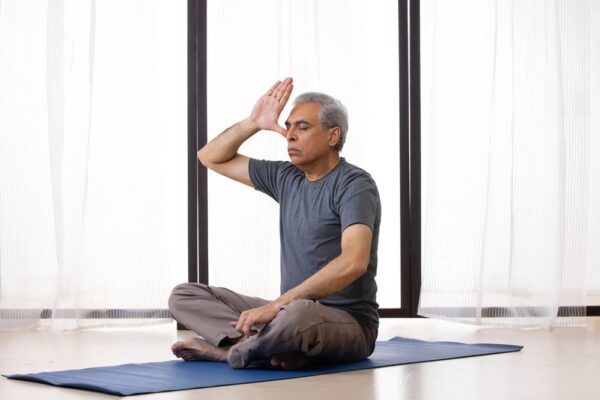
Preparation for Anulom Vilom is simple, but simplicity should not be mistaken for carelessness. Sit comfortably in a position you can maintain without strain. Cleveland Clinic says the chair-or-floor choice does not matter as long as you are sitting up straight and tall. The spine should feel upright, the chest open but not rigid, and the shoulders soft. Your face should remain relaxed. One hand can rest comfortably, while the other hand is used to alternate the nostrils. The aim is not perfect posture in an aesthetic sense; it is a posture that allows the breath to move freely and the mind to remain settled.
Timing also matters. The Yoga Institute recommends practicing Anulom Vilom 4 to 5 hours after meals, preferably in the morning or evening. This advice makes practical sense because the breath is usually more comfortable when the stomach is not full, and the body is not busy digesting a heavy meal. The morning is often ideal because the mind is relatively fresh and the day has not yet gathered full momentum. Evening practice can also work well as a way to decompress, provided the technique is done gently.
The inner attitude is just as important as the outer setup. A good Anulom Vilom practice begins with the intention to be gentle, steady, and unforced. NCCIH advises beginners to avoid forceful breathing, and Cleveland Clinic’s version of the practice uses only brief, light pauses rather than aggressive breath retention. For most beginners, the correct starting point is not intensity. It is easy. A breath that is strained, noisy, or competitive defeats the purpose of the practice.
Step-by-Step: How To Do Anulom Vilom Correctly
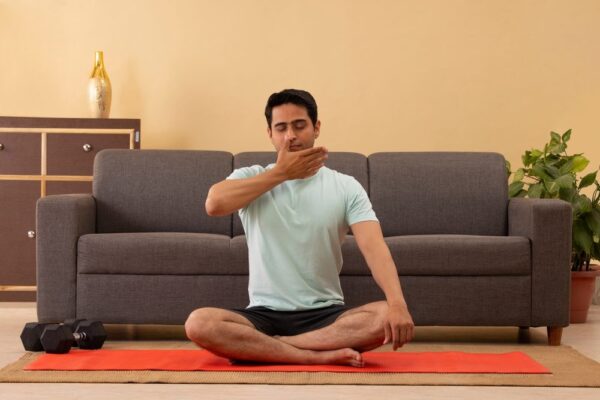
A practical way to learn Anulom Vilom is to start with the simple version described by the Cleveland Clinic. Sit comfortably with the spine upright. Exhale first. Then bring your hand to your nose so you can close one nostril at a time. The basic sequence is:
- Exhale gently to settle.
- Close the right nostril and inhale through the left.
- Close both nostrils briefly, if comfortable.
- Open the right nostril and exhale through the right.
- Inhale through the right.
- Close both nostrils briefly again, if comfortable.
- Open the left nostril and exhale through the left.
That completes one round: left in, right out; right in, left out. Then you continue in the same pattern for several cycles.
There are two important things to notice here. First, the breath alternates in a balanced way. Second, the sequence is more important than speed. Many beginners rush because they are worried about “getting it right,” but the practice improves when it becomes slower and more natural. Cleveland Clinic recommends repeating the process for about five minutes, and it also says to be gentle with yourself if you do not remember the sequence immediately. That is excellent advice. Anulom Vilom becomes elegant with familiarity, not with force.
For beginners, a softer version is often best. Instead of worrying about counting long ratios or holding the breath, simply keep the inhalations and exhalations smooth and comfortable. Think of the first stage of practice as learning the pathway of the breath, not mastering advanced control. This gentler starting point is consistent with broader yoga safety guidance, which advises newcomers to avoid forceful breathing, and with The Yoga Institute’s specific caution that cardiac patients and those with high blood pressure should avoid breath-holding and focus on continuous inhaling and exhaling instead.
Once the technique becomes familiar, the practitioner can begin paying attention to the quality of the breath. Is it jerky or smooth? Is one nostril more restricted than the other? Are the shoulders tensing? Is the face tightening? Is the mind becoming quieter? These observations matter because Anulom Vilom is not just about performing a sequence. It is about refining awareness. The breath becomes a mirror. When the mind is restless, the breath often becomes restless. When attention steadies, the breath often steadies too. That is one of the hidden lessons of pranayama.

The Major Benefits of Anulom Vilom
1. It may help reduce stress and support emotional steadiness
One of the most widely discussed benefits of alternate nostril breathing is its potential to reduce stress. Cleveland Clinic explains that breathwork can help counter sympathetic “fight or flight” activation by engaging the parasympathetic nervous system, which supports calm and relaxation. NCCIH also notes that research suggests yoga may help improve general wellness by relieving stress and supporting mental and emotional health. While Anulom Vilom is only one part of yoga, it directly uses the breathing component that many people find most immediately regulating.
Why does this matter so much? Because stress is rarely only mental. It becomes physical: a clenched jaw, a tight chest, scattered attention, irritability, poor sleep, shallow breathing, digestive discomfort, and low patience. A practice like Anulom Vilom does not erase life’s problems, but it can change the state from which you meet them. That is a powerful distinction. You may still have the same workload, the same responsibilities, the same unanswered emails, and the same family demands, but you respond from a less reactive baseline. Over time, that can influence the whole tone of daily life.
2. It may sharpen concentration and improve mental clarity
Cleveland Clinic specifically notes that alternate nostril breathing can sharpen focus, improve concentration, and even leave you feeling more energized. This combination surprises people because they assume calming practices always make them sleepy. Anulom Vilom often works differently. It can settle inner agitation without producing dullness. That is why many practitioners use it before meditation, study, prayer, or any task requiring steady attention.
From a practical standpoint, this benefit makes perfect sense. The technique requires sequencing, attention, and coordination. It asks the mind to follow one pattern instead of a hundred competing thoughts. A 2017 systematic review of 44 randomized controlled trials found high-level evidence for positive outcomes in cognitive functioning with regular alternate nostril breathing, although the authors also noted that the technique is not yet fully standardized across studies. That is important: the direction of the evidence is encouraging, but the field still needs more precise research.
3. It may improve breathing awareness and cardiorespiratory function
Many people discover, often to their surprise, that they do not breathe as well as they assumed. Stress can keep the breath high in the chest. Poor posture can compress natural breathing patterns. Constant distraction can make breathing feel almost absent from awareness. Cleveland Clinic notes that alternate nostril breathing has been shown to improve cardiorespiratory function, meaning the coordinated work of the heart and lungs in delivering oxygen effectively. Even beyond clinical outcomes, the practice can teach something fundamental: how to slow down and feel the breath again.
This is one of the quiet strengths of Anulom Vilom. It makes breathing visible to consciousness. The practitioner notices texture, depth, hesitation, asymmetry, smoothness, and rhythm. That awareness alone can be transformative. People often look for dramatic interventions when they are actually lacking something more basic: a healthy relationship with their own breathing. Anulom Vilom helps rebuild that relationship through repetition.
4. It may support blood pressure regulation, but the evidence should be read carefully
Some of the most interesting recent research on alternate nostril breathing looks at blood pressure. A 2024 systematic review and meta-analysis reported that both standalone alternate nostril breathing and combined yoga programs were associated with reductions in systolic and diastolic blood pressure. In the meta-analysis of six trials with 525 participants, alternate nostril breathing outperformed control conditions for reducing both systolic and diastolic blood pressure. Those are meaningful findings and help explain why breathing practices are attracting clinical interest.
At the same time, the authors warned that the results should be interpreted carefully because statistical heterogeneity exceeded 75%, and many studies in yoga breathing research are difficult to double-blind. In plain language, that means the results are promising but not final. So the balanced takeaway is this: Anulom Vilom may be a valuable supportive practice for cardiovascular wellness, especially as part of a broader lifestyle approach, but it should not be sold as a magical cure or a substitute for medical care. This is exactly the kind of nuance that responsible wellness writing should preserve.
5. It prepares the mind for meditation and inward balance
Long before modern research began measuring stress and blood pressure, yoga traditions valued practices like Anulom Vilom because they help gather the mind inward. The traditional language of “cleansing channels” or balancing pranic flow points toward a lived experience many practitioners describe in simpler terms: they feel more centered, more internally balanced, and more ready to sit quietly afterward. Cleveland Clinic’s explanation of Nadi Shodhana as a balancing practice and the yogic framing of subtle energy channels both support this role.
This may be one of the most underrated benefits of Anulom Vilom. Not every benefit has to be dramatic to be profound. Sometimes the greatest gift of a practice is that it makes you more available to yourself. It softens the noise. It reduces internal friction. It creates a small pocket of order inside the day. That is why even brief practice can feel meaningful. The breath becomes a doorway from outer busyness to inner presence.
6. It builds discipline without aggression
A final benefit worth mentioning is not usually listed in scientific abstracts, but it matters deeply in real life: Anulom Vilom trains consistency. Because the practice is gentle and brief, it teaches discipline without turning self-care into performance. Five minutes every morning can quietly reshape a person’s relationship with time, attention, and emotional self-management. In this sense, the practice is not only about breathing; it is about becoming someone who returns, steadily, to what restores balance.

What the Research Says - and What It Does Not Say
The 2017 systematic review on alternate nostril breathing examined 44 randomized controlled trials and concluded that the practice showed high-level evidence for positive outcomes in the autonomic nervous system, cardiopulmonary system, and cognitive functioning. At the same time, the authors emphasized that alternate nostril breathing has several variations and that standardization is not yet established. They specifically called for more clinical trials to determine effective frequency and duration parameters.
The 2024 blood pressure meta-analysis strengthened the case for physiological benefit by finding meaningful reductions in systolic and diastolic blood pressure compared with controls. But it also included an important scientific caution: heterogeneity was high, and most yoga breathing trials are hard to blind in the way drug trials are blinded. That means the evidence is encouraging, but not the kind of perfect, settled proof that would justify extravagant marketing language. Responsible interpretation means holding both facts together: there is genuine promise here, and there is still uncertainty.
A 2025 systematic review and meta-analysis of pranayama for diagnosed mental disorders found that pranayama may have small-to-medium short-term effects on symptom severity and quality of life when compared with passive controls. However, it included only six trial samples and noted that the overall risk of bias was high in four studies and showed some concerns in two. This does not mean pranayama is ineffective. It means the field is still developing and that the strongest conclusion at present is a cautious one: pranayama appears promising, but higher-quality trials are needed.
So what should a thoughtful reader conclude? This: Anulom Vilom is a credible, supportive practice with a meaningful traditional foundation and a growing, though still imperfect, evidence base. It is very reasonable to use it for stress management, focus, breath awareness, and general well-being. It is also reasonable to see it as a complementary tool in broader health routines. What is not reasonable is to present it as a cure-all for every illness. The practice is powerful enough that it does not need exaggeration.
Who Should Be Careful or Modify the Practice?
NCCIH states that yoga is generally considered safe for healthy people when performed properly under the guidance of a qualified instructor, and serious injuries are rare. It also warns that people new to yoga should avoid forceful breathing. That matters because many beginners assume that stronger effort means better results. In pranayama, the opposite is often true. When breath becomes aggressive, the practice loses its balancing quality. If you are new to Anulom Vilom, begin gently.
NCCIH also advises that pregnant women, older adults, and people with health conditions should talk with their health care providers and yoga instructors about individual needs. It notes that some conditions may require modifications, including severe high blood pressure, balance issues, glaucoma, and certain preexisting injuries. In pregnancy, physical activity, including yoga, is often safe and beneficial with appropriate precautions, but that does not mean every pose or every breathing method should be practiced in the same way. Individualization matters.
For Anulom Vilom specifically, The Yoga Institute offers a very practical caution: cardiac patients and people with high blood pressure should avoid holding the breath and instead focus on continuous inhaling and exhaling. This is one of the clearest and most useful pieces of guidance for everyday practice. It means the practice is not necessarily off-limits, but it may need to be simplified. For such practitioners, the gentle, continuous version is the safer route.
There is also the matter of common sense. If you are ill, extremely congested, panicky, or unable to breathe comfortably through the nose, that may not be the ideal moment for alternate nostril breathing. A heavily blocked nose makes nasal breathing difficult by definition, so comfort and practicality should guide the decision. When in doubt, simplify, pause, or seek guidance rather than pushing through discomfort.
Common Mistakes Beginners Make
The first common mistake is forcing the breath. People often think a deeper breath is always a better breath. It is not. A useful Anulom Vilom breath is smooth, controlled, and sustainable. If the inhale feels like a struggle or the exhale collapses, the practice becomes mechanical rather than meditative. NCCIH’s general warning against forceful breathing for beginners is highly relevant here.
The second mistake is becoming obsessed with retention, ratios, and perfection too early. Breath retention can have a place in more advanced practice, but many people move into it before they have learned ease. They become tense, count anxiously, and treat pranayama as a technical contest. A far better beginner’s attitude is this: first learn the route, then refine the rhythm, then deepen the subtlety. The Yoga Institute’s advice for high blood pressure and cardiac conditions also reminds us that breath-holding is not essential for benefiting from the practice.
The third mistake is ignoring posture and facial tension. Because Anulom Vilom looks gentle from the outside, beginners often slump, tighten their jaw, or lift their shoulders without noticing. But posture shapes breath. Cleveland Clinic’s instruction to sit upright and tall is not a decorative yoga cue; it is a functional one. The more aligned and relaxed the body is, the easier it becomes for the breath to find an even rhythm.
The fourth mistake is expecting instant miracles. Anulom Vilom can feel beneficial immediately, but its deeper value comes from regular practice. Cleveland Clinic recommends five minutes daily, and that advice is more important than it may sound. Daily repetition trains the nervous system and the mind more effectively than occasional over-effort. A person who practices gently and consistently for months will usually learn more from Anulom Vilom than someone who practices intensely for three days and stops.
Building a Daily Anulom Vilom Routine
The most sustainable routine is usually the simplest one. Sit down at roughly the same time each day. Take a minute to settle the body. Practice Anulom Vilom gently for five minutes. Then sit quietly for another minute or two and notice the after-effect. That is enough for a beginner. It is short enough to be realistic and structured enough to become a habit. The Yoga Institute’s timing guidance suggests morning or evening on a relatively empty stomach, and the Cleveland Clinic’s five-minute recommendation makes a practical starting point.
Over time, the routine can become more refined. Some people like to practice after light stretching or yoga postures. Others use it before meditation, prayer, journaling, or focused work. The logic is sound: first settle the body, then steady the breath, then direct the mind. Because Anulom Vilom is both calming and clarifying, it works beautifully as a transition practice between physical activity and quieter inner work.
What matters most is not making the practice complicated. A routine survives when it fits real life. If you wait for perfect silence, perfect discipline, and perfect mood, the practice will keep getting postponed. But if you understand that five honest minutes in an ordinary day are valuable, Anulom Vilom becomes something durable rather than idealized.
Frequently Asked Questions About Anulom Vilom
Is Anulom Vilom the same as alternate nostril breathing?
In many modern yoga and wellness contexts, yes. Cleveland Clinic describes alternate nostril breathing as Nadi Shodhana, and The Yoga Institute describes Anulom Vilom as alternate nostril breathing or Nadi Shodhana pranayama. So, for most practical beginner purposes, these terms are used in overlapping or interchangeable ways.
How long should a beginner practice?
A very practical starting point is five minutes a day. Cleveland Clinic explicitly recommends five minutes at a time and encourages daily practice. The key is consistency, not endurance. Starting small makes it easier to stay regular and avoid turning the practice into a burden.
Can I do Anulom Vilom after meals?
It is better not to. The Yoga Institute recommends practicing it 4 to 5 hours after meals, ideally in the morning or evening. A relatively empty stomach generally makes breath-based practices more comfortable and less restricted.
Can people with high blood pressure practice Anulom Vilom?
They may be able to practice a modified, gentler form, but The Yoga Institute advises that people with high blood pressure and cardiac patients should avoid holding their breath and focus on continuous inhalation and exhalation. More broadly, NCCIH recommends that people with health conditions discuss yoga modifications with a health care provider and a qualified instructor.
Is Anulom Vilom good before sleep?
Not always. Cleveland Clinic notes that alternate nostril breathing may increase alertness even while calming you, and for that reason, it says this technique may not be the best choice right before bed. Many people still find gentle breathing calming in the evening, but if your goal is sleepiness rather than clarity, this is worth remembering.
Do I need a teacher to learn it?
A very basic version can be learned from reputable instruction, but guidance is still valuable. NCCIH notes that practicing yoga under the guidance of a qualified instructor reduces the risk of injury and that learning on your own without supervision has been associated with increased risks in yoga more generally. For a gentle beginner version, self-practice may be manageable, but correct instruction becomes more important as practices become more advanced.
Can pregnant women practice Anulom Vilom?
Pregnancy is a situation where individual guidance matters. NCCIH says yoga and physical activity are often safe and desirable for most pregnant women with appropriate precautions, but it also advises evaluation by a health care provider and modification of practices as needed. In short: possible, but not casual, and not without considering personal circumstances.
Final Thoughts
Anulom Vilom is one of those rare practices whose simplicity hides its depth. At the surface, it is an organized way of breathing through alternate nostrils. A little deeper, it is a method for calming the mind, refining attention, and creating inner balance. Deeper still, within yoga, it is a pranayama practice tied to the traditional language of prana and subtle channels. Modern research adds another layer, suggesting potential benefits for stress regulation, concentration, breathing function, and blood pressure, while also reminding us to stay honest about the limits of current evidence.
The best way to understand Anulom Vilom is not only to read about it but to practice it correctly, gently, and consistently. Sit down. Straighten the spine. Slow the breath. Alternate the nostrils. Let the rhythm teach you something about steadiness. In a noisy world, that may be one of the most practical forms of wisdom yoga still offers.
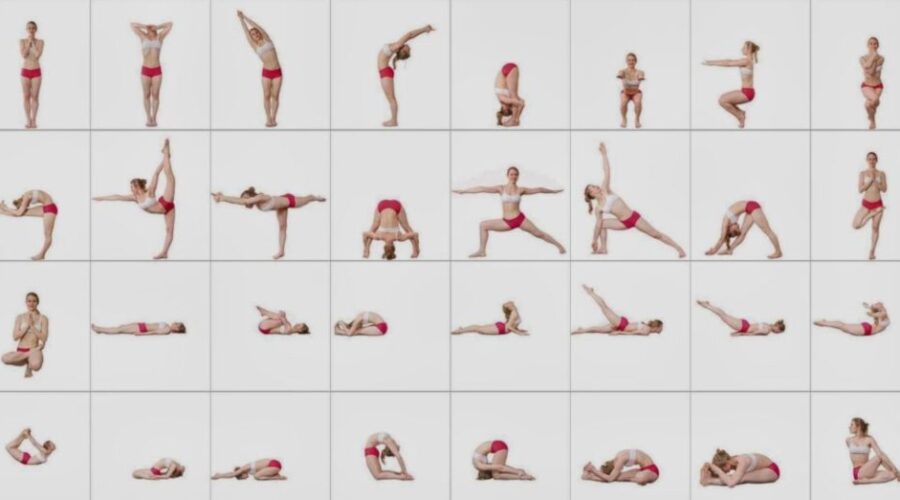
Read More: 26 Bikram Yoga Poses: A Detailed Pose-by-Pose Guide to the Hot 26 Sequence