People commonly connect yoga with its physical postures, flexibility training, and breathing exercises. Modern wellness culture shows that most yoga studios teach their students through movement and relaxation techniques while building their physical strength. The health advantages from these factors exist, yet traditional yoga philosophy shows that yoga serves as more than just a physical workout. The ancient yogic teachings define yoga as a total personal development system that unites its physical exercises with its ethical practice,d mental training, and spiritual development components.
The classical yogic texts show that yoga exists to help people achieve equilibrium between their physical body, their mental faculties, and their spiritual essence. Yoga practice focuses on developing self-awareness and inner peace,e which extends beyond its physical health benefits. The dedicated practice enables people to achieve mental clarity and emotional balance while they discover their true identity and how they relate to their environment.
The traditional framework of yoga practice requires practitioners to follow ethical standards during their yogic journey. Ancient yoga teachers taught that spiritual advancement needs practitioners to develop their meditation and breath control skills, along with their capacity for ethical practice and social awareness. The Yama concept, which appears in the Yoga Sutras, presents itself as a crucial ethical framework that governs all branches of yoga. The universal ethical principles create a framework for how people should treat others and interact with their environment,t which nurtures qualities of compassion, integrity, moderation, and mindfulness that enhance their yogic practice and peaceful existence.
Understanding the Eight Limbs of Yoga
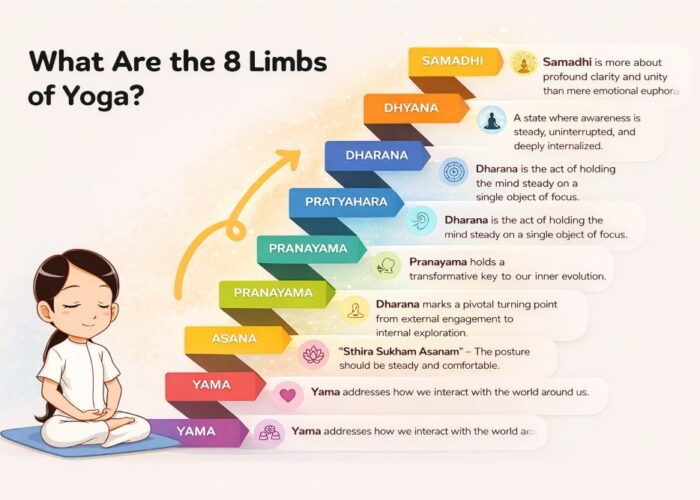
The Ashtanga Yoga system provides a complete definition of yoga as its traditional system of practice. The Yoga Sutras serve as a significant text that Patanjali compiled to establish this philosophical framework. The word Ashtanga originates from two Sanskrit words, which combine to create the meaning of the ight limb parts. The eight components of yogic practice form a complete path that exists through their connections with one another.
The eight limbs present a structured pathway that helps practitioners achieve self-awareness while developing their spiritual knowledge. The limbs function as interlinked systems that improve the performance ability of each separate limb. The combined practice of these elements establishes a system which promotes physical health, mental focus, emotional balance, and spiritual growth. The traditional yoga philosophy uses this method because it represents the complete essence of yoga.
These eight limbs are Yama – ethical restraints – Niyama, personal observance, Asana physical posture,s Pranaya ( breath control),g Prathyara (sensory withdrawal), Dharana ( concentration ), and Dhyana or meditation leading to Samadhi, deep spiritual awareness. The practitioner refines their skills and knowledge of the material at every stage of practice. The first set of precepts, known as Yama, is responsible for interpersonal relationships that are built upon where practitioners seek to pursue their compassion in all beings on this earth and aim at peaceful relations with others, animals included.
Meaning of Yama in Yoga Philosophy
Yama, which is derived from Sanskrit, literally means restraint, discipline or ethical control. The Yamas in yoga philosophy provide broad ethical guidelines and determine how we relate to others as well as to nature. The principles of Yamas create a framework for daily living that allows the individual to cultivate attitude, behaviour and conduct in any circumstance mindfully. The Yamas are guidelines that help people understand their actions with a better knowledge of themselves, impacting the way they speak and act.
The Yamas, together with honesty, moderation and respect, enable people to develop empathy through the practice. And when we follow our personal values, we feel more at peace and balanced and thus enjoy better psychological well-being. When people limit their aggressive, deceitful and overly dependent behaviours, they notice that relationships become more peaceful. The principles give practitioners the spiritual mentality and emotional balance necessary for succeeding in advanced practices such as meditation and self-reflection.
Historical and Philosophical Background of Yamas
The Yoga Sutras of Patanjali explain the concept of Yamas through their detailed presentation of the Yamas. This text presents yoga as a complete system that develops both personal growth and spiritual awakening through its various physical practices. Ancient yogic teachers taught that people must practice ethical discipline to attain mental clarity. They found that people who experienced inappropriate behaviour and deceitful conduct, and strong emotional ties, developed a chaotic mind which prevented them from entering deeper meditation states.
People used to practice ethical awareness before they learned advanced techniques of meditation. Practitioners achieve deeper spiritual exploration by developing inner stability through the cultivation of compassion, honesty, and moderation. The Yamas function as universal ethical principles that all people must follow regardless of their cultural, religious, and social background. The teachings that originated thousands of years ago continue to provide practical relationship management, communication, and personal decision-making guidance for contemporary life.
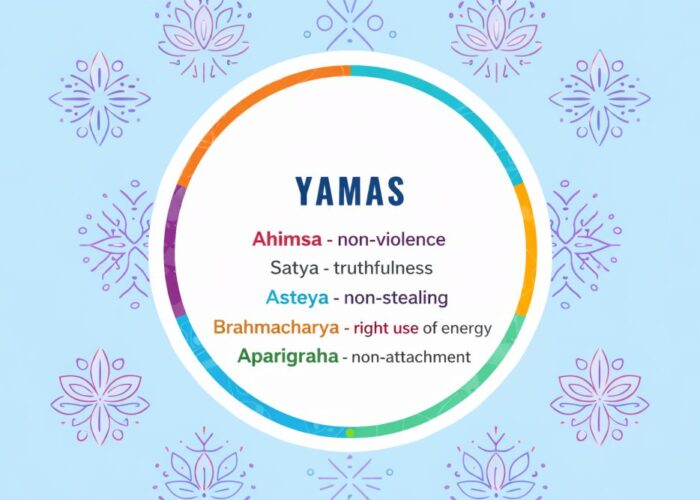
The Five Yamas in Yoga
1. Meaning and Purpose of the Five Yamas
The Five Yamas & yoga philosophy as a whole- Yoga in its old-age-yoga-philosophy is a large idea, one in which the practice of yoga isn’t just about how we are on our mat, but more of a realisation that pours into every inch of who we are. Their connection to society, alongside divine commands for the individual. They instruct how people should treat each other.” However, these can only support leading a life of respect for ourselves and others to gain more self-awareness, and this is where the Yamas come into play, as that promotes practices that encourage practitioners to align themselves with their lives extending out from the mat. This is a restoration of more conscious awareness, compassion, and way of life slowly coming into the outside world.
2. Framework for Ethical Living
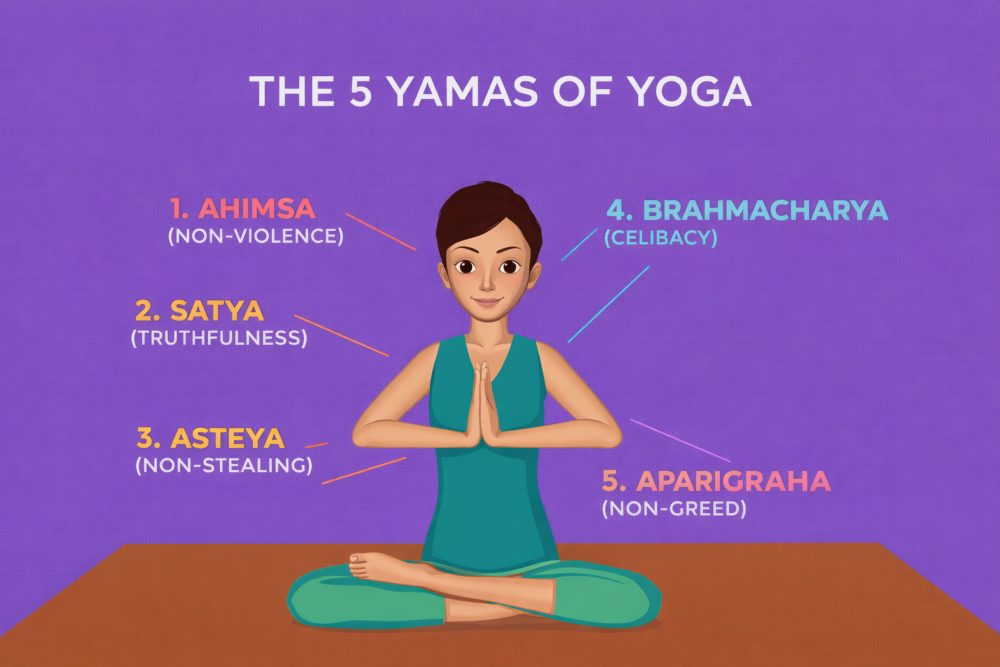
Ahimsa (non-violence), Satya (truthfulness), Asteya (non-stealing), Brahmacharya(moderation of energy ) and Aparigraha(non-possessiveness)–the five Yamas. And together they represent a guide for living an ethical life, in the manner of the language of yoga philosophy. These principles are not directives, but challenge individuals to weigh how best to act in the varied contexts of daily life, whether from individual or social considerations.
3. Values that Support Personal and Social Well-Being
Every Yama is an ideal quality that nourishes your relationships and the mind. Satya (truthfulness, or aligning your actions) and Ahimsa (avoiding harm and cruelty to others’ selves). Asteya also helps us respect the time and energy of others, whilst Brahmacharya teaches moderation and conscious consumption of our own energy.
5. Developing Simplicity and Inner Balance Aparigraha
The fifth Yama, Aparigraha, is the uprising against our bondage to possessions and desire. These are two best practices for human soft skills to shatter social pressure, de-stress the cohabiting environment, and eliminate saturation. Collectively, the five Yamas present a solid foundation for ethics, lifestyle balance, thoughtfulness, and morality.
Ahimsa (Non-Violence)
Ahimsa provides an umbrella of support for the five Yamas in yoga philosophy. In Sanskrit, the concept is known as Ahimsa, which can be translated in many ways, including non-violence or refraining from injury. But the yogic teachings take this idea to another level beyond preventing physical harm in its most basic interpretation. But in yogic texts, this principle extends more widely than avoiding physical harm. Since our actions impact others positively or negatively, people should track their speeches, thinking processes, and emotional states.
Ahimsa practitioners are fostering compassion, kindness, and respect for all living beings. People can be emotionally damaging to others through their words – they have humiliation, impatience, and pure venom. They start to notice these little types of injury, and in this way, folk learn how to relate with others patiently, sympathetically and empathically.
When we practice ahimsa, it begins with how we treat ourselves. If people have negative self-talk towards themselves, it will lead to a bad state of mind. The reason I am introducing you is that they should impart to those who need it a little more self-compassion and a little more self-understanding. Ahimsa also implies open conversations and emotional awareness about each other, creates respect between individuals in relationship/activities, and overall provides a peaceful state.
Satya (Truthfulness)
Satya: The second Yama is Satya, meaning truthfulness and honesty in yoga philosophy. Truth in this context is more than stating facts. Satya encourages individuals to express themselves in truth, authenticity, and integrity, meaning that what they think and do is congruent with what they say. The kind of awareness and responsibility that is especially valid in speaking to others, the Satya. It acts as a reminder for us humans that even truth spoken in bitterness cannot be conducive to the good, and instead can find a way to speak truth without allowing fear to take root in it.
Satya is also a pillar of trust and relationship stability. When honesty helps build bridges between people, we practice openness with each other; the lines of communication remain open, minimising the chances of aggressive misunderstanding and allowing transparency and mutual respect to flourish. On an individual basis, a true life allows you to reach inner peace and emotional equilibrium. This leads to a greater sense of harmony during the day, because when we act consistently with our true values and beliefs, we’re going to be more confident and clear-headed.

Asteya (Non-Stealing)
The third Yama in yoga practice teaches practitioners the principle of non-stealing through Asteya. The concept requires us to avoid taking anything which does not rightfully belong to us. The yogic teachings extend beyond material theft to include the need for individuals to honour other people’s time, energy, and potential. The practice of Asteya requires people to demonstrate their trustworthiness throughout every part of their existence.
People can implement Asteya through minor actions which they can perform throughout their daily lives. The act of interrupting a speaker or claiming another person’s work as your own, or wasting someone’s time without reason, all constitute forms of unauthorised acquisition. The principle requires people to acknowledge the skills, inventions, and work that others have made, which leads to increased social understanding and greater respect between people.
The development of gratitude and contentment stands as a central element of Asteya. People who value their existing possessions experience less inclination to take things which belong to others. The practice of this principle establishes ethical standards which people should follow in their personal lives and during work activities. People develop daily fairness through their work by recognising others’ contributions and their own duties, along with maintaining honest relationships.

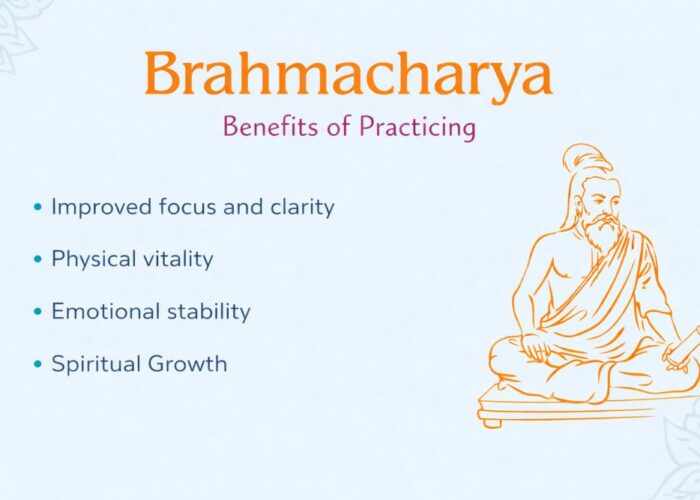
Brahmacharya (Moderation of Energy)
Different cultures have developed various interpretations of Brahmacharya as the fourth Yama of yoga. The classical yogic teachings established celibacy as the primary requirement for practitioners who wanted to achieve complete control over their sexual urges. The traditional interpretation required individuals to maintain their energy levels through both physical and mental activities, which they needed to execute during their spiritual development process.
Modern yoga practitioners understand Brahmacharya as the practice of moderation and efficient energy management. The program teaches participants to maintain their physical strength and mental focus by stopping their practice of harmful behaviors which go beyond their normal activities. People can use this principle to control their daily activities because they need to manage their work responsibilities and technology use together with their eating patterns and healthy practice selection. People can use self-discipline together with their understanding of personal habits to protect their energy, which they can use for activities that help them grow and create things while they improve their health.
Aparigraha (Non-Possessiveness)
The fifth Yama of yoga philosophy refers to Aparigraha, which teaches people to practice non-possessiveness while breaking their need to cling to material things. The practice encourages people to find equilibrium between their possessions and accomplishments and their desires. People in modern society face pressure to pursue wealth, status and recognition, which leads to their continuous pursuit of these things. The practice of Aparigraha requires people to examine whether their happiness and personal identity rely too much on material possessions.
The practice of material comfort brings no danger to people until they start to develop excessive attachments to their belongings and achievements, which leads to them experiencing stress and measuring their worth against others. The principle helps people to understand when their needs are actual requirements and when their wants become unnecessary requests. People who practice gratitude with simplicity will discover that they can start to value their present possessions without needing to acquire additional things.
The principle of Aparigraha extends to human life through its impact on both expectations and actual life results. People who develop strong connections with particular outcomes will experience disappointment when life does not proceed according to their expectations. People who build acceptance with adaptability will discover that they can handle different situations more effectively. The practice of Aparigraha leads to emotional freedom, which protects inner stability because it does not rely on outside factors.

Applying Yamas in Modern Life
The Yamas teaching originated from ancient yogic philosophy, yet their teachings still maintain modern-day relevance. Ethical awareness serves as a vital element which helps people build healthy relationships, make responsible choices, and achieve emotional stability in the contemporary world that moves at a fast pace and imposes high demands. People can use non-violent truthfulness, fairness, and moderation and non-attachment principles as enduring principles which teach them to live with greater awareness and integrity while treating themselves and others with respect.
These values provide practical guidance for people to use in their daily activities. Ahimsa promotes people to treat others with respect and use peaceful methods to resolve conflicts, while Satya requires people to practice both honesty and authentic self-expression during their personal and professional relationships. Asteya promotes people to treat others fairly while recognising their time and efforts. Brahmacharya teaches people to keep their lives balanced by preventing them from developing excessive habits, whereas Aparigraha teaches people to practice gratitude while avoiding material possessions and constant comparison. The practice of these principles through mindful dedication enables people to achieve a balanced existence based on ethical living through their awareness and responsible behaviour.
Powerful Life Tips Inspired by Yamas
Daily life can benefit from the Yamas teachings through their implementation in fundamental and conscious daily activities. The practices enable individuals to develop awareness about their daily life decisions, which they make throughout the day. People develop ethical awareness through watching their behaviour because it helps them understand how their actions, their communication with others, and their mental goals work together. The path to balanced existence starts from making minor changes to our daily habits, which lead us to better living.
The principles find their practical application through controlled communication, which helps people stay present in their current state. The practice of speaking with kindness, honesty, and consideration shows people how to follow Ahimsa, which stands for non-violence, and Satya, which represents truthfulness. The process of thinking before speaking helps people use words which show respect while creating useful dialogue. This behaviour enables people to build better relationships while decreasing misunderstandings and creating an environment where they can connect better with others.
Gratitude and moderation serve as essential elements in daily life through their meaningful application in practice. The practice of Asteya (non-stealing) and Aparigraha (non-attachment) principles receives support from individuals who practice gratitude because they focus on their existing possessions. Brahmacharya teaches people to practice moderation through the discipline of maintaining working hours while resting, using technology, and participating in social events. The establishment of a compassionate,d honest, and balanced life comes from these minor daily habits, which develop into a mindful existence.
Psychological Benefits of Practising Yamas
The practice of ethical living brings multiple mental health advantages to individuals who practice it. People who incorporate their daily lives with the values of honesty, compassion, and moderation experience improved emotional health and decreased stress levels. People who act according to their personal values achieve mental stability through their resulting inner peace and mental equilibrium. When a person maintains consistency between their thoughts, spoken words, and actual behaviour,r their mind experiences greater serenity and concentration because internal dispute and guilty feelings become less common.
The principle of Ahimsa or non-violence brings people to develop empathy, patience, and kindness toward others. People who handle situations with understanding instead of aggression can decrease their tendency to react, and they will face fewer problems that lead to conflicts. This attitude enables people to develop better relationships while creating a social atmosphere that values support and respect. The practice of Satya, which means truthfulness, helps people achieve psychological equilibrium. Through honest communication,n people can show their true selves without feeling the emotional burden which comes from hiding their actual feelings and pretending to be someone else. The result is that people develop relationships which better demonstrate their trustworthiness through open communication.
The principles of Asteya and Aparigraha teach people to practice gratitude and contentment, which leads to better emotional health. People who want to reduce their jealousy, comparison, and dissatisfaction need to practice appreciation of their current possessions instead of striving for more. People who practice fairness, simplicity, and gratitude will develop healthier connections with their material possessions and personal accomplishments. The practice of these ethical values leads to self-respect, which develops into trust from others and the experience of inner peace.
Yamas and Mindfulness
The Yamas principles create a direct relationship between their main beliefs and their fundamental connection to mindfulness practice. Mindfulness requires people to observe their thoughts, emotions and actions while they stay aware of their complete body movements. Mindfulness practitioners develop the ability to recognise their reactions, which they show through their regular daily behaviours. The process enables people to determine whether their behaviour matches ethical principles, which include kindness and honesty, moderation, and respect. Increased thought and behaviour observation helps people develop decision-making, which they explain through their thought process and actions.
People develop their mindfulness skills because they start to observe their behaviour patterns, which repeat themselves. The individuals who develop this capacity start to recognise their habitual behaviour patterns, which include waiting difficulties, unkind speech, dishonest behaviour, and excessive attachment to their accomplishments and possessions. Personal development needs this awareness because it provides the opportunity to think about yourself. The people who want to make decisions between two choices acquire the capacity to examine the results of their choices on themselves and others. The people who complete this process acquire better decision-making skills, which help them apply the Yamas ethical framework more easily.
People use mindfulness as their best tool for handling tough discussions and dealing with high-pressure situations. People who develop emotional awareness and experience both anger and frustration can stop their current situation. Through this short period of mindfulness practice, people who practice mindfulness develop their awareness skills while maintaining their inner peace and treating others.

Common Misunderstandings About Yamas
Some people misunderstand Yamas because they see them as absolute moral standards which require complete adherence to their teachings. The traditional yoga philosophy provides a better understanding of its actual function, which serves as a moral principle for practising mindful and ethical conduct. The teachings establish a framework that enables personal development through self-assessment while protecting people from experience-based limitations. The Yamas require people to assess their actions, their ways of speaking, and their motives with greater precision. People who develop an understanding of themselves and others gain the ability to build relationships based on compassion and respect.
The Yamas require practice without creating guilt or forcing practitioners to reach complete perfection. The practice helps people identify which parts of their inner self and outer world they produce through their thoughts and actions. People who examine their actions with total honesty and transparency develop superior skills to make decisions that advance kindness, truthfulness, fairness, and moderation throughout their daily existence. This method enables individuals to develop ethical awareness, which emerges through natural processes instead of being forced upon them by strict regulations.
Another common misconception is that ethical living must be flawless from the beginning. The classical yoga teachings present personal growth as an incremental process which unfolds throughout time. The first challenges that arise when people start using these principles will guide them toward necessary personal development. The Yamas teach better with self-understanding because it leads to better practice than judging yourself for mistakes you make. People who practice small actions like using kind words and telling.
Frequently Asked Questions (FAQ)
What are the five Yamas in yoga?
The five Yamas are Ahimsa (non-violence), Satya (truthfulness), Asteya (non-stealing), Brahmacharya (moderation of energy), and Aparigraha (non-possessiveness). These ethical principles guide behaviour and relationships in yogic philosophy.
Why are Yamas important in yoga philosophy?
Yamas provide the ethical foundation of yoga practice. They help individuals cultivate compassion, honesty, moderation, and respect, creating the mental clarity needed for deeper practices such as meditation.
How can beginners practice Yamas in daily life?
Beginners can practice Yamas through small daily habits such as mindful communication, gratitude, respectful behaviour, and moderation in lifestyle choices.
Are Yamas relevant in modern society?
Yes. The ethical principles of the Yamas remain highly relevant today. They offer guidance for improving relationships, decision-making, and emotional well-being in modern life.
Conclusion
The Yamas establish the fundamental ethical principles of yoga philosophy, which direct practitioners towards achieving a state of mindful living that brings harmony to their existence. People learn through these principles to show compassion, practice honesty, achieve moderation, express gratitude, and develop awareness in their daily existence. People develop their system of responsibility through their values, which they choose to reflect and which extend to their personal life and their obligation to other people.
The Yamas teach people to observe their patterns of behaviour, speech, and decision-making, because these factors determine their relationships with others and their state of overall health. People obtain emotional clarity and inner balance through the practice of non-violence (Ahimsa), truthfulness (Satya), fairness (Asteya), moderation (Brahmacharya), and non-attachment (Aparigraha). People follow ethical guidelines, which help them maintain peaceful relationships, because these guidelines support their efforts to reach mutual understanding with others.
People discover that they can handle daily life requirements with more success when they use these principles as their guide. The Yamas enable people to grow personally while they create peaceful relations between individuals and community groups. Ancient yoga teachings from the past continue to provide important guidance for present-day society. Ethical awareness establishes moral principles that help people navigate through modern times, which present both distractions and competitive situations and continuous changes. The Yamas teach us that yoga exists as more than a physical practice because it serves as a lifestyle that promotes conscious decision-making, social connections, and ongoing self-analysis.