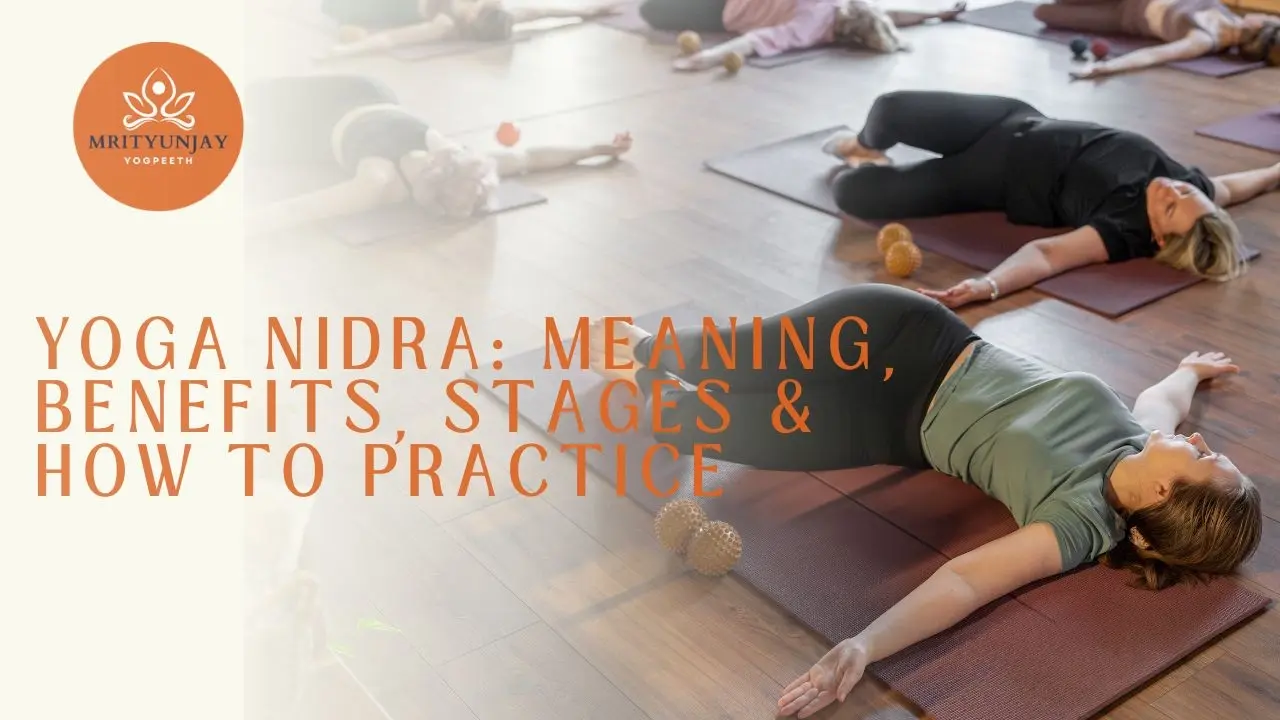
Yoga Nidra is a guided meditative practice in which you rest comfortably while following instructions that move attention through the body, breath, sensations, and sometimes imagery. Often translated as “yogic sleep,” it encourages deep rest while staying aware. You do not need flexibility, previous meditation experience, or the ability to stop thinking to begin.
People often discover Yoga Nidra because they want to feel less stressed or sleep better. Others encounter it during yoga teacher training and want to understand its relationship to meditation and traditional philosophy. These interests overlap, but they require an important distinction: the historical term, the modern guided technique, and the health outcomes measured in research are related subjects with different kinds of evidence.
Most of us don’t get much real rest, even when we’re lying down. Yoga Nidra is a guided practice where you lie still and let a teacher’s voice take you through the body, breath, and awareness, and it’s one of the easier ways to actually slow down. Some studies link it to lower stress and better mood, and a few suggest it may help sleep too. But many of those studies are small, so it’s too early to call it a treatment for anything. Try it because it feels good and see what changes for you.
What does Yoga Nidra mean?
The word nidrā is Sanskrit for sleep, but Yoga Nidra isn’t quite sleep. Today it usually means a guided practice done lying down, where a teacher (or a recording) walks your attention through the body, one part at a time. Your body goes still. Your mind stays gently switched on, following the voice.
What you feel can differ a lot from one session to the next. Some people notice their limbs getting heavy or warm. Others feel as if the edges of their body have gone blurry, or catch a few dreamlike images drifting past. And plenty of people just feel comfortable and hear every word the whole way through. All of that is fine. None of it is something you have to achieve. The only real instruction is to notice what’s happening without trying to force a special state.
“Conscious sleep” is a common teaching expression, but it should not be taken as a precise medical definition. A relaxed person who remembers a session has not necessarily entered deep non-REM sleep. Equally, missing part of a recording does not establish that awareness continued during physiological sleep. Subjective experience and laboratory sleep staging answer different questions.
Yoga Nidra is generally understood today as a form of guided meditation. Describing all meditation as seated or effortful creates a false distinction: meditation includes many postures and approaches. Yoga Nidra has its own recognizable structure, rather than exclusive ownership of relaxation or awareness.
Where did Yoga Nidra originate?
Ancient meanings and medieval developments
The word yoganidrā has a long and surprisingly varied past in Sanskrit texts. In the epics and Purāṇas, it often means the divine sleep of Vishnu. Shaiva and Buddhist tantric writings use it too, in contemplative settings. But these are old uses of a word. They don’t show that people in ancient India lay down and followed a guided body scan the way we do in a class today.
Research by Sanskrit scholar Jason Birch and yoga researcher Jacqueline Hargreaves identifies medieval Hatha yoga and Raja Yoga texts in which yoganidrā describes profound meditative absorption, or samādhi. The Amanaska and Yogatārāvalī are examples. The term also appears in the fifteenth-century Haṭhapradīpikā. Its meanings changed across texts and traditions, so a single uninterrupted origin story would oversimplify the evidence.
The modern guided practice
In the twentieth century, Swami Satyananda Saraswati shaped Yoga Nidra into the systematic practice many of us know today. The Bihar School of Yoga points to nyāsa, an old tantric practice, as one of its sources of inspiration. In nyāsa, a practitioner places attention, touch, and mantras on different parts of the body, often as part of a ritual. The modern version takes that idea of moving awareness through the body and turns it into a guided sequence that anyone can follow. If you want to go to the source, Satyananda’s book Yoga Nidra is still one of the most important teaching texts on the subject.
Modern approaches continue to differ. Richard Miller’s iRest, for example, uses a flexible ten-step framework with explicit attention to intention and an inner resource of security. Its structure is not identical to Satyananda’s method.
The distinction matters when choosing a class or reading research. “Yoga Nidra” names a family of practices, and a result obtained with one script or teaching format may not apply to every recording carrying the label.
How does Yoga Nidra connect with yogic philosophy?
Pratyahara and witnessing experience
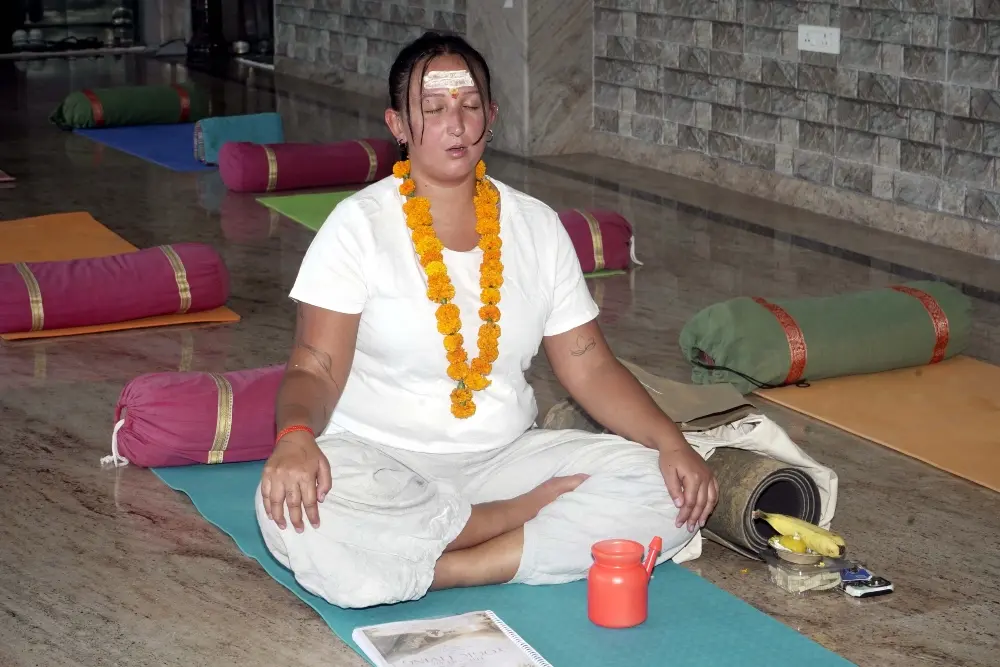
In many contemporary yoga traditions, Yoga Nidra is taught in relation to pratyāhāra, commonly translated as withdrawal of the senses. In practice, this means reducing habitual engagement with external stimulation so attention can turn inward. It does not require blocking sound or becoming unaware of your surroundings. Satyananda’s teaching situates the practice within this broader yogic approach.
An everyday way to understand witnessing is to notice a thought without immediately following it. You hear a passing vehicle, recognize the sound, and return to the teacher’s voice. You notice impatience without having to end the practice or criticize yourself. This is an approach to attention, rather than a demand to become emotionally detached from life.
Waking, dreaming, deep sleep, and turiya
The Māṇḍūkya Upaniṣad explores waking, dreaming, and deep sleep, then describes a “fourth,” often called turīya. In its philosophical context, this fourth is associated with the nature of the Self and nondual reality. It is not a fourth category in modern clinical sleep scoring.
Some teachers use this framework to discuss awareness beyond ordinary identification with thoughts and sensations. That is a traditional interpretation, not evidence that every guided session produces spiritual realization. Alpha, theta, and delta brain activity cannot by themselves verify turīya or samādhi.
Sankalpa as a personal intention
A sankalpa is often presented in contemporary Yoga Nidra as a brief resolve or intention. Choose something meaningful and believable, such as “I make space for rest” or “I meet myself with patience.” These are examples, not prescribed formulas.
An intention can orient your practice without becoming a promise that thoughts control external events. You do not need to use it to deny illness, suppress grief, or convince yourself that a difficult situation is acceptable. A simple intention to listen and rest is enough.
What are the benefits of Yoga Nidra?
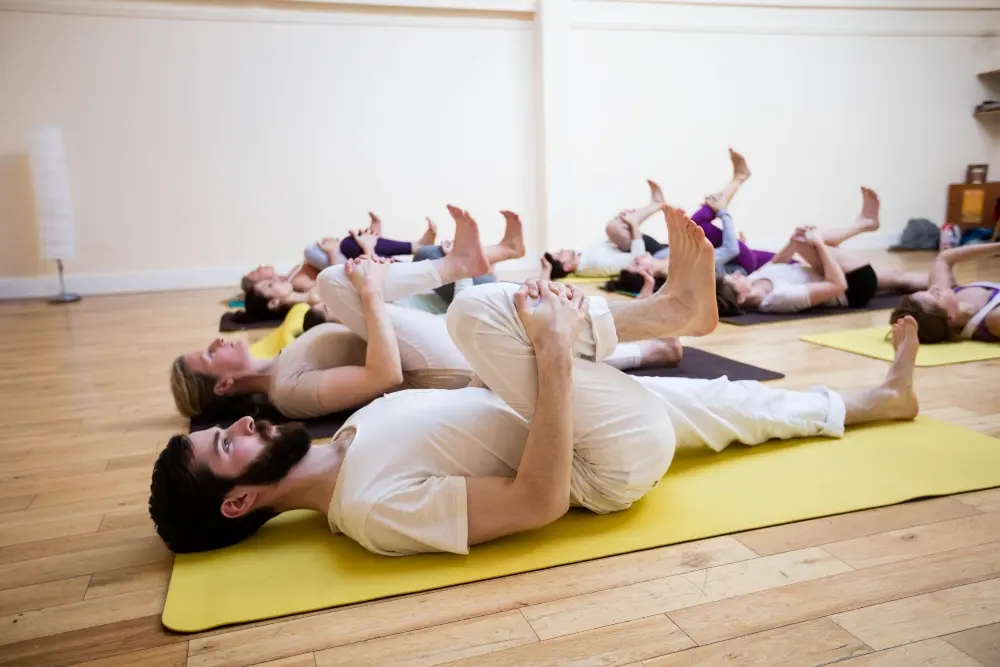
The strongest responsible conclusion is that Yoga Nidra shows promise for reducing distress and supporting rest, while its clinical effectiveness remains uncertain. Evidence comes from a mixture of small trials, larger online studies, and reviews with varying standards. Positive results deserve attention alongside the studies that find limited or nonsignificant effects.
Relaxation and stress management
A guided session provides time away from tasks and a repeatable focus for attention. For some people, that makes resting easier than lying down while mentally rehearsing tomorrow’s work. Feeling calmer after practice is worthwhile even when it does not represent a lasting change in a diagnosed condition.
A 2026 systematic review and meta-analysis by Ghai and colleagues included 73 studies involving 5,201 participants and reported favorable effects on stress, anxiety, and depression. However, the authors emphasized low methodological quality and variation in delivery, warning that the estimated benefits were likely inflated. The review supports further investigation rather than certainty about treatment effectiveness.
A 2025 randomized online study by Moszeik and colleagues compared short and longer Yoga Nidra practices with music and a waitlist. Its analyses included 362 participants. The short practice improved several psychological outcomes relative to waiting, but its advantages over music were much narrower. This suggests that some benefits may reflect taking a structured restorative break, as well as features specific to Yoga Nidra.
Sleep quality and insomnia symptoms
Yoga Nidra may help some people settle before sleep or reduce the strain associated with trying to sleep. However, improving a sleep questionnaire score is different from proving a reliable treatment for chronic insomnia.
In a small randomized study published in 2021, Datta and colleagues enrolled 41 patients with chronic insomnia into Yoga Nidra or cognitive behavioral therapy for insomnia groups. Both groups improved on several outcomes. Only volunteers repeated the overnight sleep testing, which limits interpretation of the objective findings. The study is encouraging but cannot establish that Yoga Nidra equals or outperforms established insomnia treatment.
The wider picture is less encouraging than the glowing personal stories suggest. A 2026 systematic review by Singh and colleagues pooled the results of randomized trials and found no statistically significant improvement in sleep quality or insomnia severity. The authors also rated the certainty of the evidence as very low. The studies were small, the results imprecise, and there was a real risk of bias. That doesn’t mean Yoga Nidra does nothing for sleep. It means we can’t say for sure yet.
For persistent insomnia, cognitive behavioral therapy for insomnia, or CBT-I, has a substantially stronger evidence base and receives a strong recommendation in the American Academy of Sleep Medicine guideline. Yoga Nidra can be discussed as a complementary practice. It should not displace assessment or established care.
Emotional well-being
A guided practice can provide an opportunity to notice feelings without immediately acting on them. This may be helpful when stress makes every uncomfortable sensation feel urgent. It does not require becoming cheerful or reaching a state of bliss.
The mental-health review and the online trial both hint at less distress. That still doesn’t make Yoga Nidra a cure for anxiety, depression, or trauma. A better score on a questionnaire isn’t a diagnosis-changer, and neither is it the same as recovery. If you’re in treatment, stay with it and keep your doctor in the loop.
Attention and cognitive performance
A 2023 study by Datta and colleagues enrolled 41 healthy novices and reported improvements in several cognitive tasks and sleep measures after practice. It used a before-and-after cohort design rather than a randomized parallel control group. Repeated testing, expectations, and other changes could therefore contribute to the findings.
The practical implication is modest: Yoga Nidra may be worth exploring as a rest habit, but claims that it reliably boosts intelligence, transforms memory, or guarantees better academic performance exceed the evidence.
Nervous system and brain claims
A small early sleep-lab trial by Sharpe and colleagues found Yoga Nidra easy to do and well tolerated. But there were no clear differences between groups in how fast people fell asleep, in heart-rate variability, or in the alpha EEG measure they chose. Results like this remind us the practice doesn’t work in some simple, tidy way.
Claims that Yoga Nidra “resets the nervous system,” permanently increases dopamine, or guarantees a sequence through particular brainwave states are too sweeping. Cortisol and other biological measurements require careful interpretation; even a measurable change would not demonstrate whole-body healing. The 2025 online trial found limited and small physiological effects rather than a universal hormonal reset.
How is Yoga Nidra different from sleep and other practices?
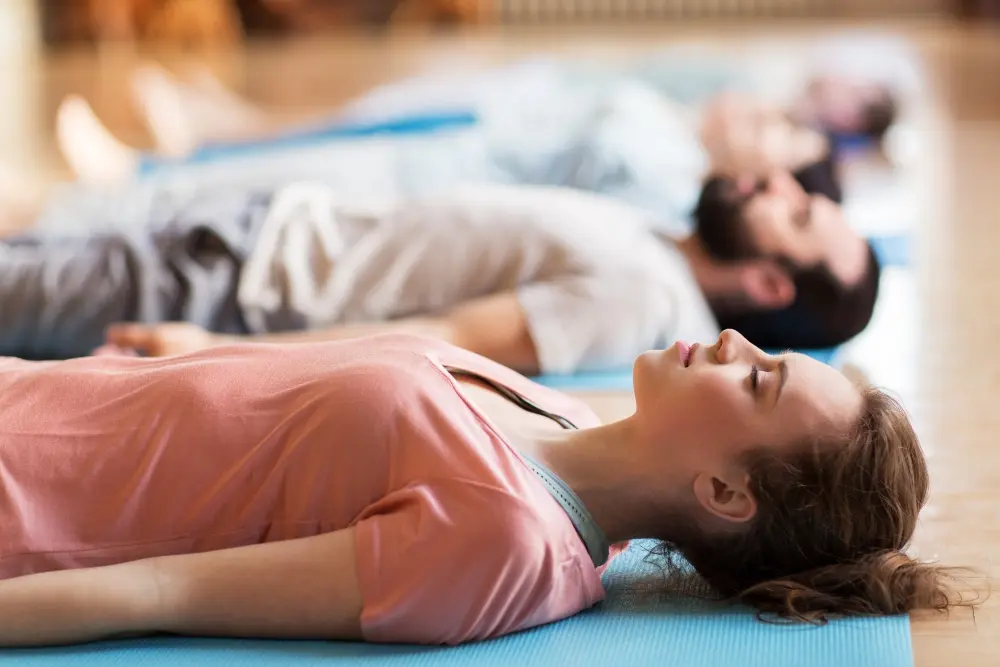
Yoga Nidra is a guided relaxation practice distinct from sleep, Shavasana, body scans, mindfulness meditation, and NSDR. It promotes relaxation but does not replace sufficient sleep or reduce biological sleep requirements.
Ordinary Sleep
- Main Feature: Naturally recurring stages of sleep.
- Relationship to Yoga Nidra: Yoga Nidra does not replace the need for sufficient sleep.
Shavasana
- Main Feature: A resting yoga posture, commonly practised while lying on the back.
- Relationship to Yoga Nidra: Shavasana can provide the posture for Yoga Nidra, but the posture alone is not the complete guided practice.
Body Scan
- Main Feature: Attention moves through different bodily sensations.
- Relationship to Yoga Nidra: A body scan is often one component of Yoga Nidra. Practising a body scan alone may leave out intention-setting and other stages.
Mindfulness Meditation
- Main Feature: Awareness of present experiences.
- Relationship to Yoga Nidra: Both practices involve awareness, but mindfulness meditation may be guided or unguided and can be practised in different postures.
Non-Sleep Deep Rest (NSDR)
- Main Feature: A contemporary umbrella term for restful practices.
- Relationship to Yoga Nidra: Some NSDR sessions overlap with Yoga Nidra, but the term does not refer to one standardised protocol.
There is no established conversion showing that a short Yoga Nidra session equals several hours of sleep. Feeling refreshed is useful, but it cannot demonstrate that biological sleep requirements have been met. Avoid using the practice to justify routinely shortening your night.
What are the stages of Yoga Nidra?
There’s no single agreed number of stages. Teaching in the Satyananda tradition usually comes in seven or eight parts, depending on how you count the return to the resolve and the ending. Other schools arrange the practice differently. The sequence below uses eight stages as a handy map, not as a claim that every tradition follows the same script.
1. Preparation and settling
The opening establishes a comfortable posture and a clear beginning. Notice the surfaces supporting you and allow unnecessary movement to settle. You can hear the room and the guidance without trying to exclude either. Comfort supports attention; stillness should not depend on enduring pain.
2. Setting a sankalpa
If the method includes a resolve, bring your chosen intention to mind briefly. Keep it simple enough to remember without effort. Treat it as a direction for practice rather than a demand for immediate change. You may also practice without a formal statement if the guide allows that option.
3. Rotation of awareness through the body
The guide names body parts in sequence. Bring attention to each location, then move on. You are not required to tense muscles, visualize anatomy, or create tingling. A faint sense of the area is sufficient. When you miss a cue, join the sequence at the next body part you hear.
4. Awareness of natural breathing
Notice breathing where it feels clearest, perhaps at the nostrils or in the movement of the abdomen. Some scripts introduce counting. The purpose is attentive observation; it does not require breath retention, rapid breathing, or repeatedly taking unusually deep breaths.
5. Exploring sensations or opposites
Some practices introduce contrasting qualities, such as heaviness and lightness. Explore only what feels manageable. You can recognize the idea of a sensation without forcing it to become vivid. Strong emotional opposites and distressing memories are unnecessary for an introductory home practice.
6. Imagery or open awareness
A guide may offer simple images or invite awareness of thoughts and sensations as they arise. Mental imagery varies between people. If you do not see pictures, you can follow the words conceptually or stay with a neutral bodily sensation. Vivid visualization is not a measure of progress.
7. Returning to the intention
The resolve may be recalled near the end. Let it be brief and unforced. There is no need to judge whether it has “worked,” or to interpret thoughts arising at this point as predictions, hidden truths, or instructions you must follow.
8. Reorienting and ending
Notice the room, contact with the floor or chair, and the sounds around you. Begin gentle movement, open your eyes when comfortable, and sit up slowly if you have been lying down. Allow time to feel fully alert before returning to an activity requiring concentration.
How to practice Yoga Nidra step by step
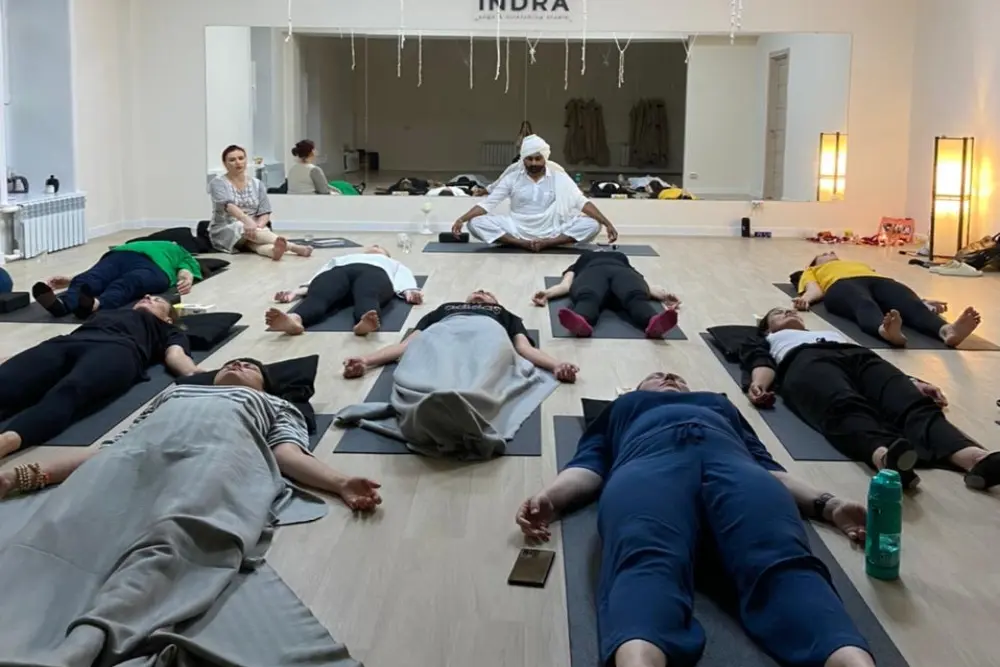
Prepare your space and choose guidance
Choose somewhere you can rest safely without needing to monitor traffic, supervise a task, or respond immediately. Silence avoidable notifications. A reasonably quiet room helps, but everyday background sounds do not invalidate practice. If interruptions are likely, choose a shorter session.
For your first attempts, select a beginner recording or a qualified teacher whose instructions are clear and unhurried. Preview unfamiliar recordings so you know whether they include emotional imagery, spiritual language, lengthy silence, or breathwork you do not want. A session should make it easy to adjust or stop.
Begin with about 10 – 20 minutes if that suits your schedule and comfort. This is a practical starting range, not a scientifically established dose. Longer sessions are available, but duration alone does not guarantee a better experience.
Find a supportive posture
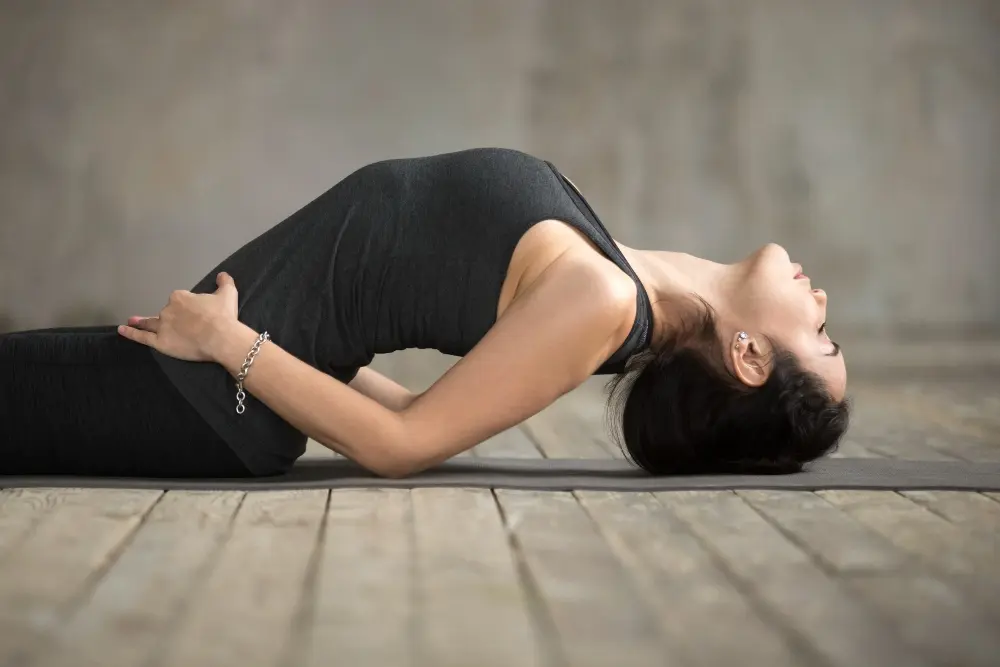
Lying on your back in shavasana is common, with arms resting comfortably and legs positioned without strain. A cushion beneath the knees may ease the lower back. Use head support that allows the neck to feel neutral, and a light covering if you tend to feel cool when still.
You can instead rest on your side or sit in a supportive chair. Choose the position in which you can breathe easily and remain reasonably comfortable. If pregnancy, reflux, breathing difficulties, recent surgery, or pain affects positioning, follow advice appropriate to your condition. A flat supine posture is not a requirement.
Follow this beginner sequence
- Arrive. Spend a minute noticing contact with the floor, bed, or chair. Let your eyes close if comfortable, or soften your gaze. Remind yourself that you can move or stop.
- Choose a direction. Briefly recall an intention such as making time for rest. If a formal sankalpa feels distracting, keep the intention practical and simple.
- Notice the body. Follow the guide through different areas. Allow sensations to be clear, faint, or absent. You do not have to manufacture an experience.
- Notice breathing. Observe a few natural breaths without changing their depth or pace. If inward attention feels uncomfortable, return to sounds or physical support.
- Continue gently. Follow optional sensation or imagery cues only while comfortable. Skip anything that feels intrusive and return to your chosen anchor.
- Rest with what is present. Thoughts may continue. When you realize attention has wandered, return to the next instruction without reconstructing what you missed.
- Close deliberately. Recall the intention if prompted, notice the room, and begin small movements. Take time to sit up and orient yourself.
This sequence is an introductory adaptation, not a reproduction of a lineage-specific script or a clinical treatment protocol. Learning a complete method from an appropriately trained teacher can clarify the timing and purpose of its components.
A simple 15-minute practice plan
Allow approximately two minutes to settle, one minute for intention, five minutes for bodily attention, three minutes for natural breathing, two minutes for quiet awareness, and two minutes to return. The timings are illustrative. You do not need to check the clock while practicing; a suitable recording can hold the structure for you.
For beginners, it is reasonable to leave out imagery and sensation opposites. Familiarity with resting and following attention is a useful foundation. Add complexity only when it serves your practice, rather than because a longer checklist appears more advanced.
Decide when and how often to practice
For daytime rest, try a time when you are unlikely to be rushed and can remain somewhat alert. If you want to explore the meditative aspect but repeatedly fall asleep, practice earlier, shorten the recording, or use a more upright position.
A bedtime session can be part of winding down. If it becomes another test you must pass to sleep, move it earlier or take a break. People following CBT-I should discuss timing and bed use with their clinician so a relaxation habit fits their treatment plan.
Try a manageable schedule, such as several short sessions across a week, rather than promising yourself an elaborate daily routine. Notice whether the practice is comfortable and useful over time. There is no well-established universal frequency that guarantees benefit.
What common mistakes should beginners avoid?
Trying to empty the mind. Thinking during Yoga Nidra is normal. The task is to return to guidance, not to prevent the next thought. Turning every distraction into evidence of failure adds the effort the practice is meant to soften.
Treating stillness as an endurance exercise. Adjust a painful knee, remove an uncomfortable eye covering, or change position. Persistent pain is not a necessary stage of meditation. Set up support before the session so fewer adjustments are needed.
Forcing sensations or breathing. You may not feel “heavy,” visualize a beach, or notice dramatic relaxation. Follow what is accessible. If breath counting becomes frustrating, stop counting and notice ordinary breathing or external sounds.
Evaluating the session constantly. Repeatedly asking whether you are relaxed enough keeps attention on performance. Assess the practice afterward instead. A neutral session can still help you learn the sequence, even when it brings no immediate improvement.
Choosing increasingly intense recordings. A more emotional or longer script is not automatically more effective. Select guidance that suits your needs and supports choice. Repetition of a familiar, comfortable practice can be more useful than continually searching for a dramatic experience.
How can you tell whether the practice is helping?
Notice changes that matter in ordinary life. After a session, you might ask whether your body feels more comfortable, whether you feel alert enough to resume activity, and whether the experience was pleasant or manageable. “Nothing much happened” is also useful information. You do not need to reinterpret a neutral experience as a hidden breakthrough.
If sleep is your main interest, consider a brief weekly note about how rested you feel and whether bedtime has become less stressful. Avoid monitoring every sensation or repeatedly checking the clock during the night. A personal record can help you decide whether to continue, but it cannot establish that Yoga Nidra caused a change. Workload, illness, caffeine, medication, and changes in sleep opportunities may also matter.
For teacher training students, observation should include the teaching environment. Could participants hear the instructions? Were they given time to adjust before becoming still? Did the ending allow them to reorient? These practical details can explain an uncomfortable session more usefully than speculation about blocked energy or emotional resistance.
If the practice repeatedly leaves you unsettled, significantly drowsy, or frustrated, change the length, posture, or type of guidance. You may prefer walking, a different meditation, or another way of resting. Choosing a practice that suits you is a legitimate outcome of learning about Yoga Nidra.
What precautions should you take?
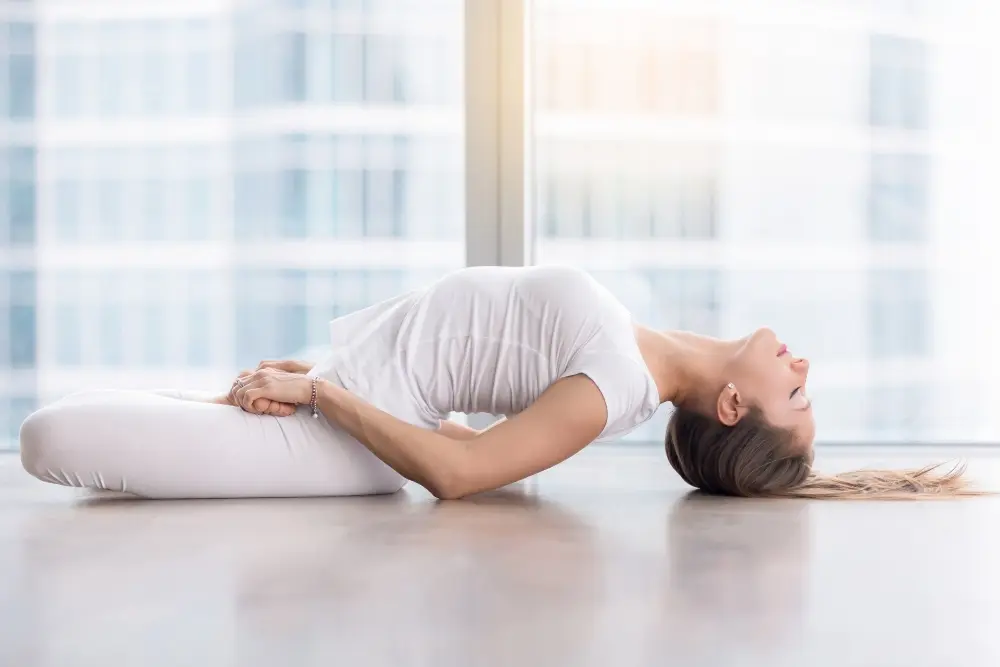
Yoga Nidra involves little physical movement, but that does not make every version suitable for everyone. NCCIH notes that meditation can sometimes involve unwanted psychological effects and that safety research remains incomplete. This is broader meditation evidence, rather than an adverse-event rate established specifically for Yoga Nidra.
If closing your eyes, scanning the body, or using imagery brings panic, distress, intrusive memories, or a sense of disconnection, stop the exercise. Open your eyes, look around, feel your feet against a stable surface, and return to ordinary activity. You do not need to remain with overwhelming sensations to benefit from practice.
People with significant trauma symptoms, dissociation, severe mental-health symptoms, or repeated distress during meditation may benefit from guidance from a suitably qualified mental-health professional and a teacher experienced in adapting the practice. A yoga teacher’s training does not automatically qualify them to provide trauma therapy.
Do not practice while driving, operating machinery, or in water. If you remain drowsy afterward, allow more time before activities requiring alertness. Seek assessment for persistent insomnia, disruptive snoring or gasping during sleep, or substantial daytime sleepiness. Yoga Nidra cannot identify or treat every cause of poor sleep.
Frequently asked questions
Can beginners do Yoga Nidra?
Yes, you can. Start with a short guided session in whatever position feels comfortable. You don’t need to do any yoga poses or have meditated before. It matters more that you feel free to pause, shift around, or pick a different focus than that you follow every instruction perfectly.
Is it okay to fall asleep during Yoga Nidra?
Dozed off? It happens, especially when you’re tired, and it doesn’t mean you got it wrong. Want to stay awake through the whole thing? Try practising earlier in the day, or sit up with some support. Sleeping through most recordings is fine as rest. It just isn’t conscious deep sleep.
Can Yoga Nidra replace a nap or nighttime sleep?
It can make a good rest break, but you can’t trade minutes of Yoga Nidra for hours of sleep. There’s no reliable exchange rate. Nap or sleep as your body needs. And if you’re regularly not getting enough sleep at night, a recording won’t make up for it.
Should I practice with headphones?
Headphones are optional. Use them if they help you hear the voice, and they sit comfortably. A speaker works just as well in a quiet room. Keep the volume moderate, and skip anything that leaves you cut off from what’s going on around you.
Do I have to practice on an empty stomach?
You don’t need to fast first. Pick a time when lying or sitting still feels easy. A big meal right before can make some people uncomfortable, so you may want to leave a little gap. And if you have medical or dietary needs, follow those rather than adding rules of your own.
Can I practice Yoga Nidra without a recording?
Yes, once you know the sequence, you can guide your own attention. Beginners often find an external voice helpful because remembering instructions can interrupt rest. A live teacher can also answer questions and offer adjustments a recording cannot provide.
Is Yoga Nidra religious?
Its history belongs to Indian religious and yogic traditions. Contemporary sessions vary in how much spiritual language they include. You can choose secular guidance while respecting those origins. Preview the content and select a teacher whose approach fits your interests and beliefs.
How soon should I expect benefits?
Some people feel rested after one session. Others notice little at first, or decide it just isn’t for them. Research gives no guaranteed timeline. Aim for a habit you can actually keep and small shifts in your days, not a big transformation.
How should yoga teacher training students approach it?
Learn the history, the specific method you’re teaching, and where your competence ends. Give students choices about posture, eyes, breath, and imagery. Keep traditional explanations separate from clinical evidence. Don’t interpret a student’s emotions, and don’t promise treatment outcomes.
Conclusion
Yoga Nidra offers a structured way to rest while exploring attention and awareness. Its historical meanings are broader than the modern guided practice, and its philosophical depth cannot be reduced to claims about brainwaves or sleep replacement.
Scientific findings are encouraging for psychological well-being and some sleep outcomes, but uncertainty remains substantial. A sensible beginning is a short, comfortable session with clear guidance, ordinary breathing, and permission to adjust. Over time, the most useful measure is whether the practice supports your life: making rest more accessible, helping you relate to experience with less strain, and fitting alongside the sleep and care you need.