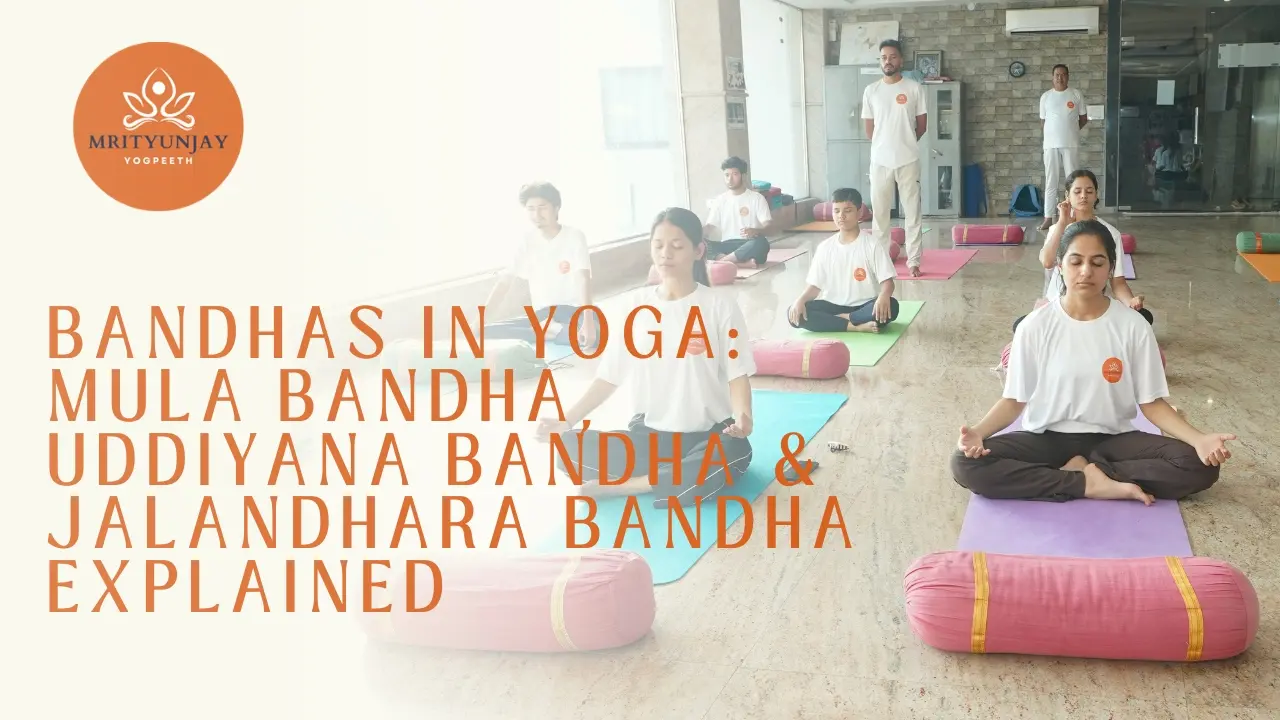
Bandhas are internal yogic “locks” used to coordinate specific physical actions with breath and attention. Mula Bandha focuses on the pelvic floor, Uddiyana Bandha on the abdomen, and Jalandhara Bandha on the throat and neck position. In traditional hatha yoga, they direct prana, or vital energy, within the practice.
“Engage your bandhas.” If you’ve heard that in class and had no idea what to do, you’re in good company. Sometimes the teacher just means a quiet feeling of support in the body. Other times they mean a proper technique with breath retention, and that’s a different thing altogether.
Here, I’ll go through the three main bandhas, show how their meaning shifts from class to class, and explain what beginners can safely try and what needs a teacher watching you. I’ll also keep traditional teachings apart from medical evidence, because a yoga practice isn’t a treatment for any health condition.
Practice note: This is an educational guide, not a personalised breath-retention programme. Learn formal locks with a teacher experienced in bandha and pranayama instruction. If you have a relevant health condition, discuss suitability with a healthcare professional first.
What does “bandha” mean in yoga?
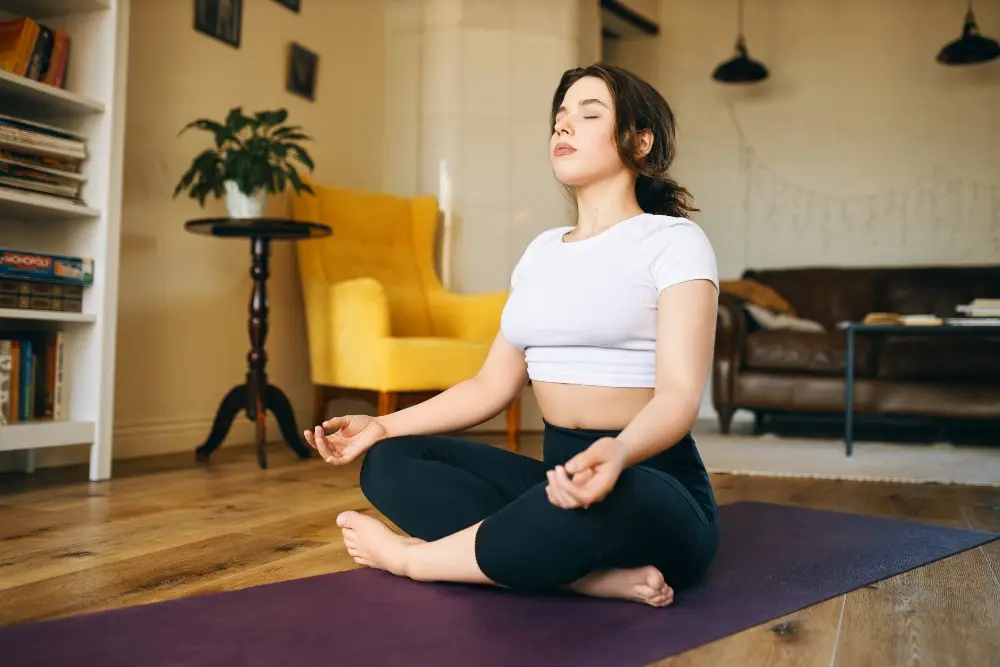
Bandha is commonly translated as “lock” or “binding.” In practice, the word describes a deliberate action that gathers attention and changes how a practitioner engages a particular area of the body. “Lock” does not mean that every muscle should become rigid.
Prana, nadis, and the subtle body: that’s the language the old texts use when they talk about bandhas. The Hatha Yoga Pradipika deals with Uddiyana, Mula, and Jalandhara Bandha in its third chapter, around verses 55 to 75, and frames them as a way of guiding energy within a spiritual path. These are teachings from yoga’s history. They were never meant as clinical proof that a bandha can prevent or cure a disease, and it’s best to read them that way.
For a modern student, a useful first question is: What exact action does my teacher mean, and am I supposed to keep breathing? Asking this prevents a general posture cue from becoming an unintended breath hold.
The three main bandhas at a glance
Mula Bandha (Root Lock)
- Focuses on an inward and upward action around the pelvic floor or perineum.
- Gentle awareness differs from a forceful contraction, especially when combined with breath retention.
Uddiyana Bandha (Abdominal or Upward-Flying Lock)
- In its classical form, the abdomen draws inward and upward after exhalation.
- The full lock is different from simply engaging the abdominal muscles while breathing.
Jalandhara Bandha (Chin or Throat Lock)
- Involves a deliberate relationship between the lifted chest and lowered chin.
- A slight chin adjustment during meditation is not the same as the full pranayama lock.
Maha Bandha (Great Lock)
- Combines Mula, Uddiyana, and Jalandhara Bandhas in many modern yoga teaching systems.
- Generally taught as a supervised progression rather than a beginner exercise.
Mula Bandha: What is the root lock?
Mula Bandha centres on the base of the pelvis. “Mula” means root. Some teaching systems describe an anal contraction, while others emphasise a subtler inward lift at the perineum or pelvic floor. That difference explains why two teachers may use different cues for the same Sanskrit term.
Where should you feel Mula Bandha?
The intended area is internal, around the pelvic floor, rather than a strong squeeze of the buttocks. The perineum is the region between the anus and external genitals. Because this area is difficult to see and not always easy to sense, an initial attempt may feel uncertain.
Treat that uncertainty as information. If you cannot distinguish the intended action from gripping your thighs or holding your breath, ask for a different explanation. A stronger contraction is not necessarily a more accurate one.
A gentle introduction to pelvic-floor awareness
The following is a preparatory exploration, not the full classical lock:
- Sit comfortably with support if needed, and allow several ordinary breaths.
- On an easy exhalation, explore a small inward and upward pelvic-floor action.
- Let the next breath remain comfortable; do not add retention.
- Release completely and notice the contrast between engagement and relaxation.
Some contemporary meditation teaching uses a gentle pelvic-floor lift in this way. [7] The objective here is to recognise an action and its release, not to accumulate repetitions or maintain a contraction throughout the day.
Is Mula Bandha the same as a Kegel exercise?
They overlap physically, but their purposes differ. Kegel exercises are pelvic-floor muscle training used for particular bladder and bowel-control problems. Mula Bandha belongs to a yoga practice involving attention, breath, and traditional energetic concepts. A yoga cue is not an individual rehabilitation prescription.
Do not make stopping urine midstream your regular practice. NIDDK warns that repeatedly doing pelvic-floor exercises while urinating can interfere with bladder emptying and increase infection risk. It also advises individual guidance because these exercises are not appropriate for everyone.
Why release matters
The ability to soften is as important to this exploration as the ability to engage. Medical pelvic-floor guidance emphasises relaxation and warns against over-exercising. If an instruction leaves you feeling that you must grip continuously, clarify its purpose before continuing.
People with pelvic pain or bladder-pain symptoms should not assume that additional contraction is helpful. For interstitial cystitis with pelvic-floor symptoms, NIDDK describes therapy aimed at relaxing tight muscles and advises against unsupervised strengthening. That guidance concerns a specific medical condition; it supports caution rather than a universal ban on Mula Bandha.
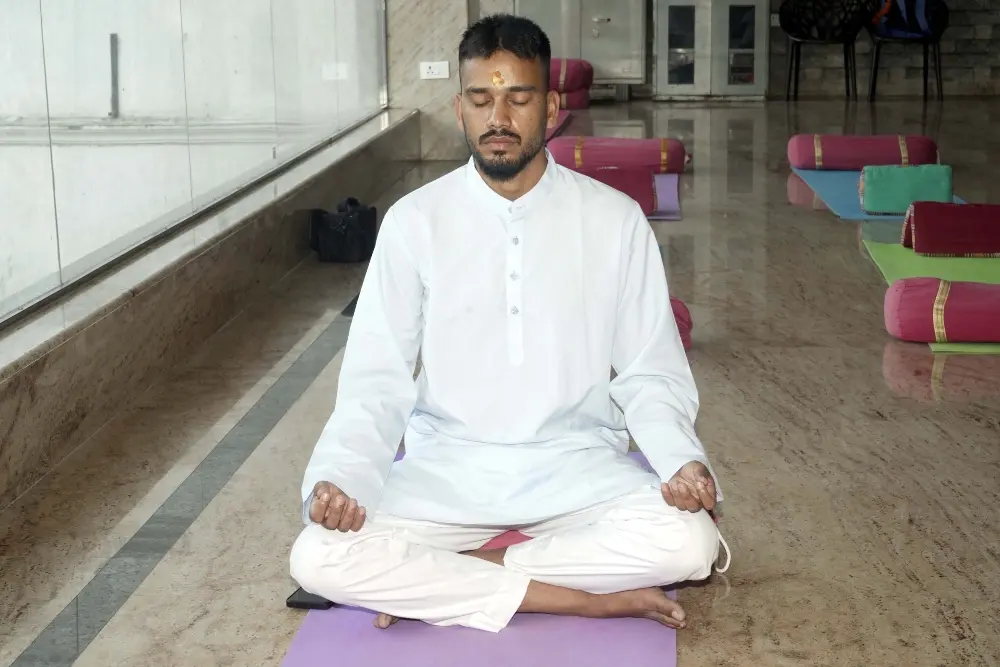
Uddiyana Bandha: what is the abdominal lock?
Uddiyana Bandha is associated with an upward-flying action. Classical descriptions place the abdominal drawing-in movement within an energetic practice. In a commonly taught standalone version, the practitioner exhales, briefly keeps the breath out, and creates an inward and upward abdominal hollow.
Classical Uddiyana versus a modern “lift the belly” cue
This is the distinction most likely to prevent confusion. A teacher may use “Uddiyana” for subtle support around the waist while a student continues breathing in a posture. Contemporary meditation teaching also describes a light lift beneath the ribs.
The full abdominal lock after exhalation is a different task. Do not translate “lightly support your abdomen” during a moving sequence into “empty your lungs and hold your breath.” Ask which application is intended.
What does learning the full technique involve?
A typical teaching demonstration includes an empty stomach, a supported standing or seated position, exhalation, a brief comfortable pause with the breath out, and the abdominal inward-and-upward action. The abdomen is released before a smooth inhalation. Yoga in Daily Life specifically cautions against practising Uddiyana with high blood pressure.
These stages explain the technique; they are not a recommendation to copy an abdominal vacuum from a photograph. A teacher needs to observe whether you are creating the intended action, straining, or delaying the next breath beyond comfort.
Common misunderstandings
“The deepest hollow is the best lock.” Appearance is an unreliable measure. Two people may look different while following the same instruction.
“If I can suck in my stomach, I have mastered Uddiyana.” The learning task also includes timing, release and recovery of breathing. Those details matter more than producing a dramatic shape.
“I should hold it until I cannot manage any longer.” The practice should finish before the need for a rushed recovery breath. There is no benefit to turning a yoga lesson into a retention contest.
“Uddiyana and nauli are identical.” They are distinct techniques. Nauli adds abdominal isolation and movement; it should not be treated as the automatic next step after a first attempt at a lock.
What about digestion and weight-loss claims?
Do not treat Uddiyana as a proven treatment for constipation, diabetes, or abdominal fat. Some traditional teaching pages make therapeutic claims, but those statements do not themselves establish clinical effectiveness. Understanding a technique’s cultural explanation and evaluating a medical claim require different kinds of evidence.
For a student, a more useful question is whether the instruction improves clarity and control within the practice, without discomfort. That question can be explored in a lesson without making promises about disease or body shape.
Jalandhara Bandha: what is the chin or throat lock?
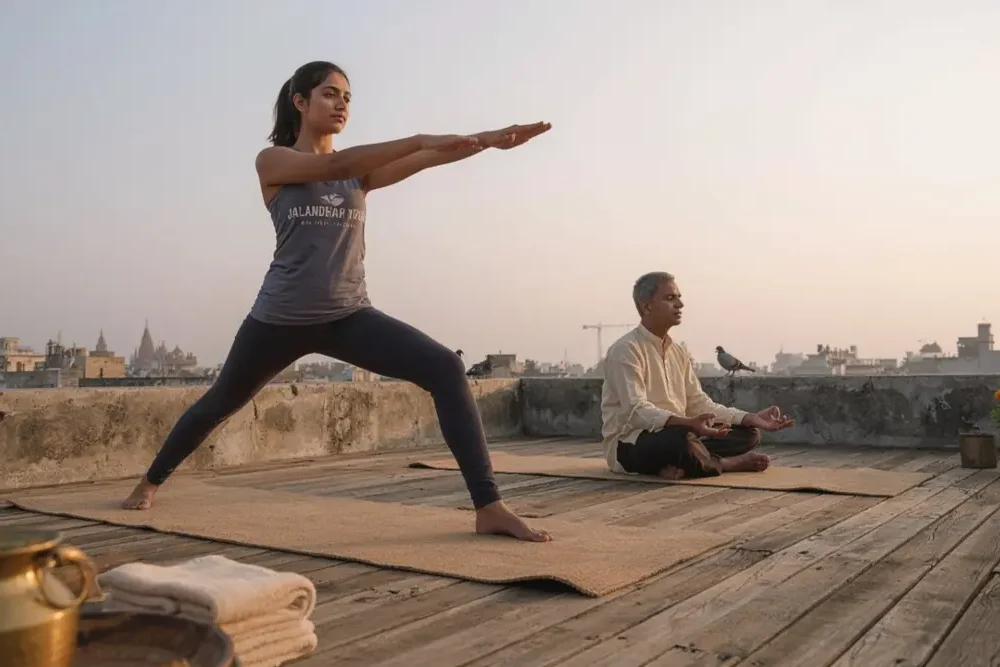
Jalandhara Bandha involves the throat region and the relationship between the chin and chest. It is commonly taught in seated pranayama, including practices involving breath retention. Traditional instruction may use a more pronounced chin-to-chest position than the slight chin adjustment used during ordinary meditation.
How is it different from simply looking down?
Lowering the face while collapsing the chest does not explain the whole technique. Its application belongs to a particular posture and breathing method. A teacher should make clear how the spine, chest, neck and breath relate in that method.
For introductory alignment awareness, sit comfortably, let the chest remain easy and lifted, and explore a very small chin adjustment without forcing the neck or interrupting breathing. This is preparation, not a substitute for learning the formal lock.
Why does the release matter?
The exit from the position must be taught alongside the entry. In one traditional version involving a hold after inhalation, the head is raised before exhalation. Yoga in Daily Life advises keeping retention comfortable and seeking medical advice if a thyroid problem exists.
Avoid treating pressure on the throat as evidence of success. If a cue feels compressive or produces discomfort, stop and have the technique reassessed.
Does Jalandhara Bandha regulate the thyroid?
It should not be presented as a proven thyroid treatment. An explanation based on traditional energy centres, or the technique’s proximity to the thyroid gland, does not establish that it corrects hormone levels. Keep prescribed treatment and medical follow-up separate from yoga instruction.
What is Maha Bandha, and should beginners practise it?
Maha Bandha, in a lot of modern schools, just means holding Mula, Uddiyana and Jalandhara together after you’ve breathed out. Whatever cautions apply to each lock still apply once you stack them.
There isn’t one sequence everybody agrees on. Schools teach the release differently, so choose a single method and learn it from a qualified teacher who shows you how to enter and how to come out. Take the way in from one video and the way out from another, and you could find yourself holding an empty breath with no idea how to start inhaling again.
As a beginner, you only need to understand what the combined practice is. Nobody has to perform it for a normal yoga session to be worth your time.
How do bandhas relate to asana, pranayama and meditation?
The same term can identify different levels of practice:
Asana (Posture Practice)
- May refer to a subtle engagement or alignment cue during movement or a held posture.
- Clarify whether normal breathing should continue and when the engagement should be released.
Pranayama (Breath Practice)
- May refer to a formal lock coordinated with a particular phase of the breath.
- Clarify whether breath retention is required, how to release the lock safely, and who should avoid the practice.
Meditation
- May indicate subtle pelvic, waist, and head alignment combined with inward awareness.
- Clarify whether the instruction promotes relaxation and stability or creates unnecessary muscular tension.
“Sitting with Ease” from the Himalayan Institute shows how this plays out in meditation. The table is just a handy way to make sense of what teachers say. It isn’t saying every lineage teaches bandhas the same way, because they don’t.
Here’s a real-life case. Your teacher says “root lock” in a seated class. Ask yourself what they mean. A quick bit of pelvic-floor awareness? Or a lock you hold during pranayama? It matters, because one leaves your breath alone and the other changes how you breathe and how long you stay in it.
What benefits are reasonable to expect?
Bandha instruction can give a student a vocabulary for noticing engagement, release, alignment, and attention. These are learning goals: you can assess whether you understand a cue more clearly and whether your practice remains comfortable.
Traditional yoga talks about moving prana, working with chakras, and preparing the mind for deeper meditation. I’d treat those ideas with respect, as part of the tradition. But they sit in a different category from what a lab can measure, like nerve activity, blood flow, or hormone levels, and the two shouldn’t be swapped for each other.
When it comes to research, the NCCIH reports that yoga may help with several areas of health and wellbeing. It also notes that the styles of yoga and the studies themselves vary quite a bit. The important part is that this evidence looks at yoga programmes as a whole. It doesn’t tell us that one bandha, practised alone, would bring the same results.
Be cautious when an article turns a traditional description into a promise to detoxify organs, cure a disorder or awaken kundalini on a predictable schedule. A credible explanation identifies the type of claim, the relevant evidence and the limits of what can be concluded.
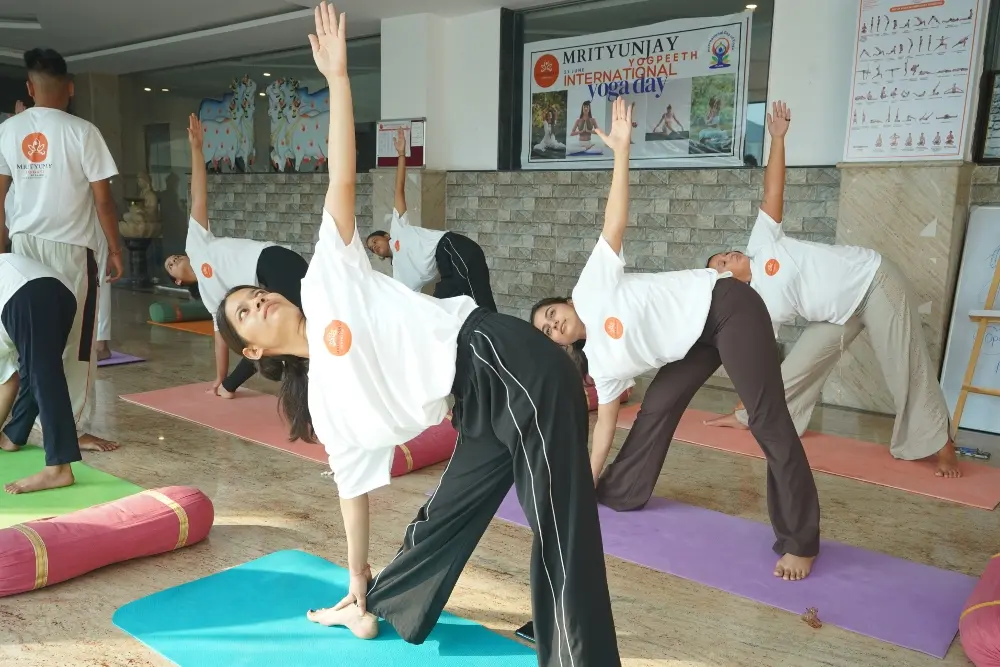
Who should seek individual guidance before practising?
NCCIH advises modifications and professional guidance for pregnancy and certain health conditions, including severe high blood pressure, glaucoma and pre-existing injuries. It also cautions beginners against forceful breathing.
If you’re pregnant, healing from surgery, or dealing with a heart, breathing, abdominal, pelvic-floor, or neck problem, hold off on trying full locks or breath retention by yourself. See a doctor about the health issue, and an experienced teacher about the technique. Treat this as a cautious rule of thumb. It isn’t a strict list of conditions where bandhas are banned.
Stop if a practice causes dizziness, visual disturbance, pain, unusual head pressure, or difficulty recovering ordinary breathing. Do not label these sensations as necessary signs of energy movement. Persistent symptoms warrant medical assessment.
Menstruation is treated differently across yoga schools. Avoid presenting one school’s restriction as a universal medical rule. Comfort, symptoms, and individual guidance should shape the decision.
A sensible learning progression for beginners
Start by understanding the words. Then explore comfortable sitting, easy breathing, and the difference between light engagement and complete release. Keep formal abdominal locks, pronounced throat locks, and combined retention practices for supervised instruction.
Before a lesson, ask the teacher:
- Which version of the bandha are we learning?
- Will we continue breathing, or use retention?
- What should I feel, and which sensations mean I should stop?
- How do I release the action and resume ordinary breathing?
- What modifications apply to my health history?
A helpful teacher can explain these points without asking you to imitate a photograph or endure discomfort. Progress means becoming more precise and less confused; it does not need to mean stronger contraction or a longer hold.
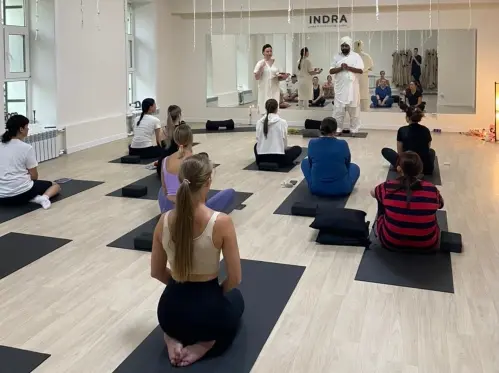
Frequently asked questions about bandhas in yoga
How many bandhas are there?
The three main bandhas discussed here are Mula, Uddiyana, and Jalandhara. Maha Bandha is often counted as a fourth because it combines them. Some contemporary classes also use bandha terminology for hand or foot actions, so the number depends on the teaching context.
Which bandha should I learn first?
There is no universally required order across schools. Begin with a teacher’s assessment, comfortable breathing, and basic awareness. The most suitable starting point is the one you can explore without strain and understand clearly.
Must I hold my breath to practise Mula Bandha?
Not for every application. Subtle pelvic-floor awareness can be explored with ordinary breathing, while formal versions may include retention. Ask which version is intended instead of assuming that every root-lock cue requires a breath hold.
Can I do classical Uddiyana while inhaling?
The standalone full abdominal lock described here is practised after exhalation with the breath out. Light waist or abdominal engagement while breathing is a different application, even when a teacher uses the same name.
Should I keep Mula Bandha engaged all day?
Do not turn a class cue into continuous gripping. Pelvic-floor exercise guidance includes full relaxation and warns against over-exercising. If you need pelvic-floor rehabilitation, follow an individual clinical plan.
How long should I hold a bandha?
There is no universal duration for all three bandhas and all students. The teacher should match any retention to the individual and teach a comfortable exit. The ability to hold longer is not, by itself, evidence of better practice.
Are bandhas necessary for every yoga posture?
No universal rule requires a full classical lock in every posture. Clarify the teacher’s intended cue, especially in moving sequences. Adding an unrequested breath hold changes the practice.
Are bandhas medical treatments?
This article does not present them as treatments. Traditional explanations and broader research on yoga should not be used to promise that a particular lock will cure pelvic, digestive, thyroid, or other health problems.
Bringing clarity to your bandha practice
Mula Bandha directs attention to the pelvic base, Uddiyana to an inward and upward abdominal action, and Jalandhara to the throat region and the chin-chest relationship. Their meaning becomes clearer when you know the teaching context and the intended breath pattern.
Start with accurate understanding, gentle awareness, and full release. Let an experienced teacher guide formal locks and retention. The most useful result is a practice you can explain, feel, and leave comfortably.