TLDR
Choosing a yoga school in Muni Ki Reti comes down to five checks, not gut feeling: faculty credentials, certification type (Yoga Alliance vs AYUSH vs YCB), campus location relative to the river and market noise, accommodation and food standards, and reviews that mention specifics rather than generic praise. Price and pretty photos tell you the least. A short call with the school before paying a deposit usually tells you the most.
At a Glance: Yoga School Selection Checklist
| Factor | What To Check | Why It Matters | Red Flag |
| Faculty Credentials | RYT status, years teaching, style specialisation | Determines actual teaching quality, not just certificate quality | School won’t name or detail instructors |
| Certification Type | Yoga Alliance USA, AYUSH, YCB — check which one(s) | Each opens different doors: international teaching vs Indian government recognition | Vague claims of “certified” with no registration body named |
| Location Within Muni Ki Reti | Riverside vs market-adjacent, noise levels | Affects sleep, focus, and practice quality during an intensive schedule | Campus advertised as “Rishikesh” with no exact area disclosed |
| Course Format | 100 / 200 / 300 / 500-hour, and prerequisites | Wrong format wastes time or money, or leaves you under-qualified | 500-hour offered with no 200/300-hour prerequisite check |
| Accommodation & Food | Private vs shared, sattvic kitchen, dietary flexibility | Directly affects energy and consistency across a multi-week course | No clarity on room type until after payment |
| Reviews | Named instructors, curriculum detail, post-course contact | Distinguishes genuine feedback from incentivised reviews | Only generic 5-star reviews with no specifics |
| Refund & Policy Clarity | Written refund, rescheduling, cancellation terms | Protects you if plans or health change mid-course | Policy only communicated verbally, not in writing |
Introduction
Muni Ki Reti, on the northern bank of the Ganga in Rishikesh, hosts one of the highest concentrations of yoga schools in India. For a learner, this density is both an advantage and a challenge.
Choosing a yoga school in Muni Ki Reti, Rishikesh involves more than comparing course fees. Faculty qualifications, certification recognition, accommodation standards, food quality, and genuine student feedback all affect the outcome of a teacher training or retreat experience.
This guide sets out the practical factors worth checking before enrolment, so the decision is based on verifiable criteria rather than marketing claims alone.
Why Location Within Muni ki Reeti Matters
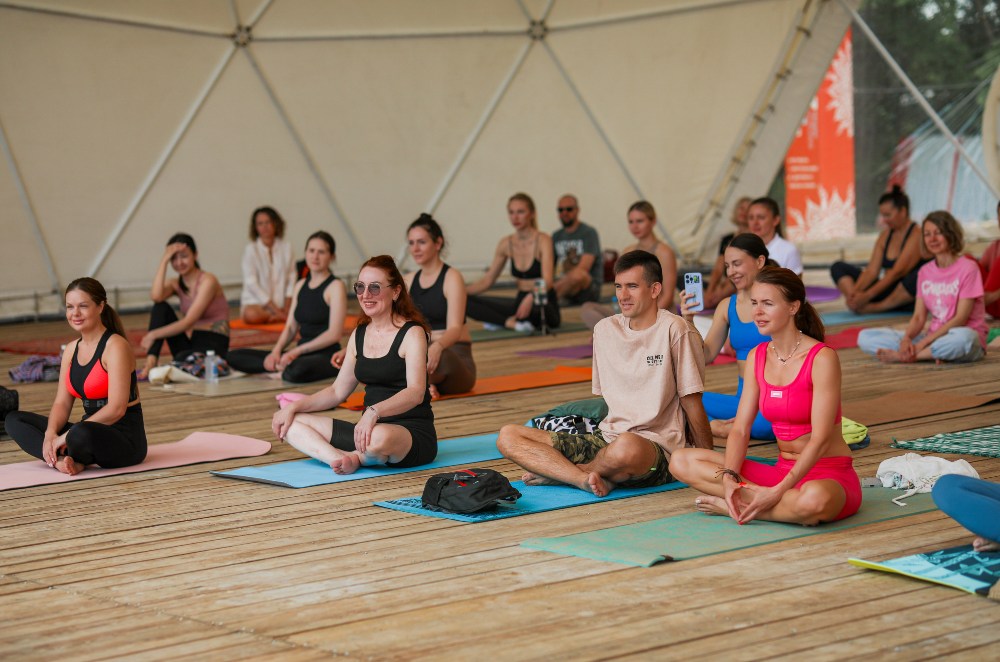
Muni Ki Reti is not a single uniform area – schools here are spread across riverside stretches, hillside campuses, and busier market-adjacent lanes, and the exact location within this stretch meaningfully affects noise levels, access to the Ganga for practice and rituals, and proximity to essential services.
Points worth checking before shortlisting a school:
- Distance from the main market area – closer proximity means more foot traffic, vehicle noise, and activity, which can interrupt early-morning meditation or evening study time.
- Direct or easy access to the riverbank – a school within walking distance of the Ganga allows meditation, pranayama, and ritual practices to happen riverside rather than only within the campus walls, which many students consider central to the Rishikesh experience.
- Walking distance from Ram Jhula or Laxman Jhula – relevant for students who value independent exploration, local markets, cafés, or nearby temples during breaks or free days.
- Availability of quiet, undisturbed practice hours – given the area’s mix of religious activity, pilgrim traffic, and tourist movement, it’s worth confirming whether the campus location allows genuinely quiet hours for practice, or whether ambient noise is a constant factor.
What experienced students tend to prefer
A campus set slightly back from the main road, with direct river access, is generally preferred by students seeking an immersive, distraction-free training environment – close enough to reach the Ganga on foot, but far enough from market density to avoid constant noise and crowd disruption during practice hours.
Before finalizing a school, it’s worth asking directly: how far is the campus from the market, how far from the riverbank, and what are the quiet hours – since these three factors, more than course content alone, shape the day-to-day residential experience in Muni Ki Reti.
Verifying Faculty Qualifications
Faculty quality is the single most consequential factor in yoga teacher training, more so than campus aesthetics or course pricing.
Before enrolling, a participant should ask a school directly:
- What is the RYT (Registered Yoga Teacher) status of each lead instructor, and with which Yoga Alliance USA registration level?
- How many years of teaching experience does each instructor hold, and in which specific style (Hatha, Ashtanga, Vinyasa, Yin)?
- Is the philosophy and methodology instructor separate from the asana instructor, or is one person covering all subjects?
- Schools teaching classical Yoga philosophy should also explain foundational concepts such as Patanjali’s Yoga Sutras and the Eight Limbs of Yoga (Ashtanga Yoga), ensuring students receive education rooted in accepted Yogic tradition rather than focusing solely on physical postures.
According to Yoga Alliance USA, RYS (Registered Yoga School) status requires schools to meet defined curriculum hour minimums and instructor qualification standards. Schools that cannot clearly answer the questions above, or that appear reluctant to disclose instructor credentials, warrant additional scrutiny.
How to verify, not just ask
A credential is only as good as its paper trail. Ask for the instructor’s Yoga Alliance profile link directly – genuine RYTs are listed publicly, searchable by name. A school that hesitates here, or offers only a screenshot, is a sign worth noting.
It’s also worth asking who actually teaches the hours on your certificate. Some schools list a well-known founder in their marketing but rotate in junior or guest teachers for daily sessions. Confirm who leads asana practice, who teaches anatomy, and who covers philosophy – and whether that breakdown stays consistent for your specific batch.
Finally, ask how instructors themselves continue learning. Faculty who attend workshops, hold advanced certifications, or study under senior teachers tend to bring a depth of understanding that a single foundational certificate alone doesn’t guarantee.
Vrikshasana Benefits for Mind and Body
Vrikshasana strengthens the body, improves balance and posture, enhances focus and stability, calms the mind, and develops patience, making it a valuable pose for overall well-being.
Physical benefits
- Strengthens the standing leg – ankle, calf, quadriceps, and glutes work continuously to hold the balance
- Opens the hip of the bent leg, improving hip mobility over time
- Builds functional balance and proprioception (your body’s sense of where it is in space)
- Encourages better postural alignment through the spine, pelvis, and shoulders
- Tones the core without heavy exertion, since the trunk must stabilize constantly to prevent tipping
Mental & nervous-system benefits
- Sharpens single-pointed concentration through sustained drishti (gaze)
- Builds calm under mild physical challenge – a skill that carries off the mat into daily stress
- Reinforces the sthira-sukha principle (steadiness with ease) that underlies all asana practice
- Interrupts mental chatter, since losing balance is immediate feedback that the mind has wandered
- Cultivates patience – Tree Pose rewards steady repetition, not force
Yoga is a valuable complement to wellbeing but isn’t a substitute for medical care. Modify or consult a qualified instructor if you have any recent hip, knee, or ankle injury.
Understanding Certification: Yoga Alliance, AYUSH, and YCB
Certification recognition determines whether a course qualifies a graduate to teach internationally, register with Indian government bodies, or both. These are distinct systems and are often confused by first-time students.
Yoga Alliance USA Registration (RYS 200, RYS 300, RYS 500)
This is an internationally recognised credentialing system for yoga teacher training schools, widely used by studios in the United States, Europe, and Australia when hiring instructors.
Ministry of AYUSH Authorisation
AYUSH is the Government of India ministry responsible for regulating and promoting traditional health systems, including Yoga. Authorisation from AYUSH indicates a school meets government-recognised operational standards.
Yoga Certification Board (YCB)
YCB is India’s official certifying body for yoga instructors and evaluators, offering government-recognised competency-based certification distinct from Yoga Alliance registration
A school may hold one, two, or all three forms of recognition depending on its educational focus. Prospective students should choose the certification pathway that aligns with their career goals, geographical location, and professional requirements.
How Long Should You Hold Tree Pose?
Hold times depend on your goal:
- Alignment check/beginner practice: 15–30 seconds per side, focusing on foot placement and even hips
- Balance training: 30–60 seconds per side, holding steady breath while resisting small wobbles
- Meditative or advanced practice: 1–3 minutes per side, often with eyes softened or closed
Always practice both sides evenly, even if one side feels noticeably steadier than the other – that imbalance is exactly what the pose is training. If you feel dizzy, shaky, or start straining to “win” the balance, step out, shake out the leg, and return with a softer gaze.
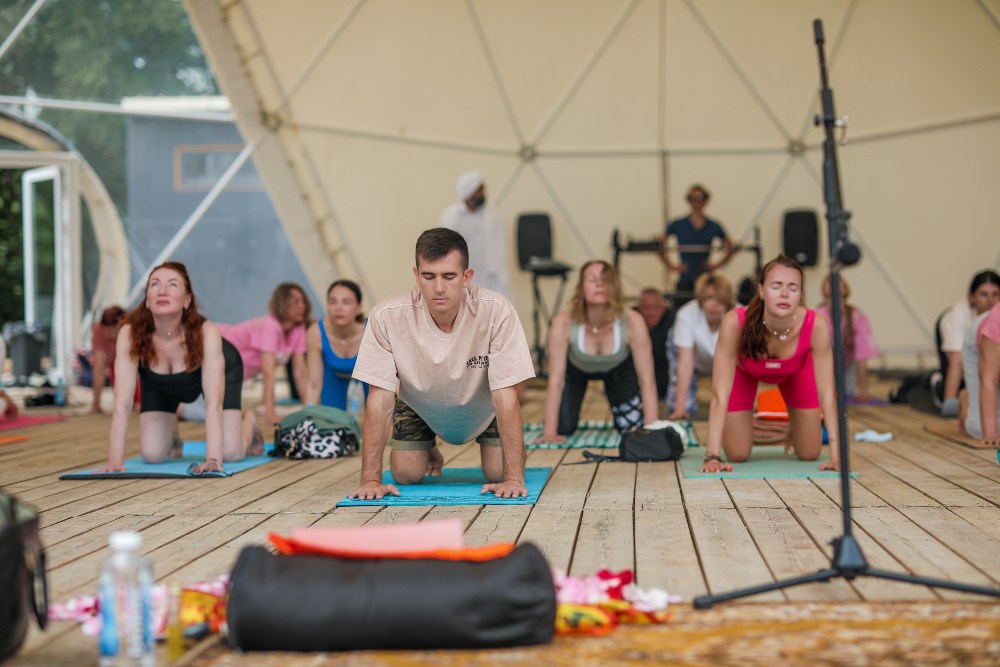
Comparing Course Formats: 100, 200, 300, and 500 Hour Training
Selecting the right course duration depends on prior experience, career goals, and available time.
| Course Format | Purpose | Suitable For | Duration | Benefits | Limitations | Best Use Case |
| 100-Hour YTT | Foundational practice and philosophy | Beginners exploring yoga seriously | 100 hours, typically 12 to 15 days | Builds fundamentals, low time commitment | Not a full teaching credential on its own | Personal deepening before committing to 200-hour |
| 200-Hour YTT | Entry-level teaching certification | Aspiring yoga teachers | 200 hours, typically 21 to 28 days | Yoga Alliance RYT 200 eligibility | Requires consistent daily practice discipline | First professional teaching qualification |
| 300-Hour YTT | Advanced teaching and philosophy | Certified RYT 200 teachers advancing skills | 300 hours, typically 25 to 30 days | Leads to RYT 500 combined with 200-hour | Requires existing 200-hour certification | Teachers deepening technical and philosophical expertise |
| 500-Hour YTT | Comprehensive advanced training | Experienced teachers seeking highest RYS credential | Combined 200 plus 300 hours | Highest Yoga Alliance individual credential | Significant time and financial commitment | Long-term teaching career or studio ownership |
Note: hour and day ranges vary by individual school scheduling; the ranges above reflect commonly offered formats and should be confirmed directly with each school.
Accommodation and Food: Practical Considerations
Since Yoga Teacher Training is residential, where you sleep and what you eat directly shape practice quality, energy levels, and overall experience – not just comfort.
Accommodation options
- Private rooms – best for protecting sleep quality between early-morning practice sessions and self-study; ideal for working professionals training during limited leave.
- Shared rooms – a practical, budget-friendly option, provided hygiene standards and quiet hours are maintained.
- Dormitory-style stays – the most economical choice, suited to students prioritizing community experience over privacy.
Pricing typically scales with privacy level, so it’s worth confirming this upfront rather than assuming a flat course fee covers all room types equally.
Food and kitchen
- Is the kitchen sattvic (vegetarian, yogic-diet aligned)?
- Can it accommodate common restrictions – gluten-free, dairy-free, allergies?
- Is filtered drinking water available on campus, reducing reliance on bottled water?
For international students specifically
- Are airport transfers included or arranged?
- Is Wi-Fi reliable enough for staying connected with family or work?
- Are laundry facilities on-site or nearby?
- Are pharmacies accessible in case of minor health needs?
- Is there support with visa documentation or requirements?
Choosing what fits you
A working professional on limited leave benefits most from private accommodation, protecting sleep between demanding practice days. A student on a tighter budget may find shared accommodation entirely sufficient, as long as cleanliness and quiet hours are respected.
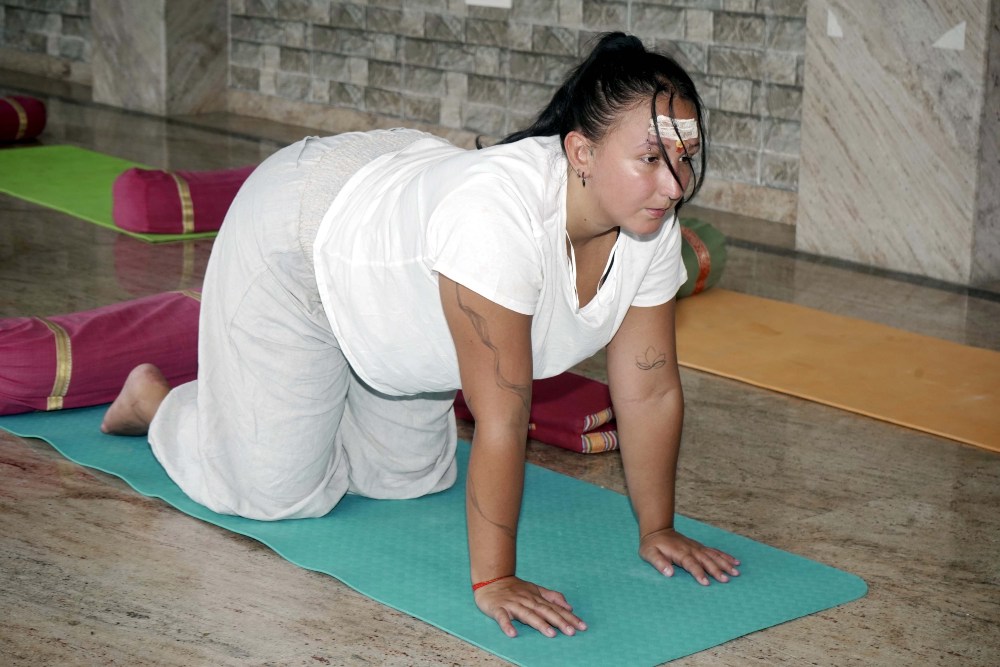
Reading Reviews: What to Look for Beyond Star Ratings
A star rating alone tells you almost nothing about training quality – it’s the substance behind the number that reveals whether a school delivers what it promises.
Signals worth paying attention to:
- Instructors named repeatedly across independent reviews – when multiple, unconnected students mention the same teacher by name, it suggests consistent quality rather than a one-off good experience.
- Comments on curriculum, not just location – reviews describing how philosophy, anatomy, or teaching methodology were actually taught carry far more weight than ones only praising the riverside view or the food.
- Mentions of post-course outcomes – students who reference continued contact with the school, mentorship, or successfully teaching afterward are signaling real, lasting value, not just a pleasant few weeks.
- Consistency between the school’s own website and third-party platforms – if claims about faculty, certification, or facilities differ significantly between the school’s marketing and independent reviews on Google or TripAdvisor, that gap is worth investigating further.
How to actually do this well
Rather than relying on one platform, compare reviews across Google Reviews, TripAdvisor, and social media – patterns that repeat across multiple independent sources are far more reliable than a cluster of reviews in one place. It’s also worth checking whether recent graduates have shared detailed learning experiences through YouTube videos, blog posts, or Instagram – first-hand, specific accounts tend to reveal far more about day-to-day training quality than a short written review ever can.
Vrikshasana Variations for All Levels
Vrikshasana offers variations for every skill level, from beginner-friendly modifications to advanced balance challenges, helping improve stability, flexibility, coordination, and confidence progressively. The pose scales in difficulty not by changing the standing foundation, but by altering what the arms, eyes, or mind are asked to do while that foundation holds – which makes it one of the most adaptable balancing poses for a mixed-level class.
1) Extended Tree (arms overhead)
Raise both arms overhead, palms together or shoulder-width apart. Lengthening the side body this way raises the challenge to the core and shoulders, since the added height shifts the center of gravity upward and demands more continuous stabilization from the trunk. It’s a natural next step once the basic standing balance feels secure.
2) Half-Bind Tree
From the standard foot placement, reach the same-side arm behind the back to hold the bent-knee foot or ankle. This adds a gentle chest and shoulder opener while testing balance under added complexity, since one arm is now occupied and unavailable for counterbalance – asking the standing leg and core to do more of the stabilizing work alone.
3) Eagle-Arm Tree
Wrap the arms into Eagle Pose’s arm bind (opposite elbow crossed under, forearms wrapped) while the legs stay in the Tree. Combining two balancing actions at once – one in the arms, one in the legs – makes this good preparation for students moving toward full Garudasana, training the coordination needed to hold multiple points of the body in an asymmetric bind simultaneously.
4) Closed-Eyes Tree
Once the standing pose feels stable, close the eyes for a few breaths. Removing visual reference dramatically increases the proprioceptive challenge, forcing the body to rely entirely on internal balance cues rather than a fixed drishti point – an advanced variation best attempted near a wall, given the higher likelihood of wobbling or stepping out.
5) Kickstand Tree (accessible entry point)
Keep the lifted foot’s toes resting on the floor beside the standing ankle, heel pressed to the inner ankle. This offers a supportive first step for beginners or anyone rebuilding balance after injury, since the grounded toes act as a light stabilizer without fully removing the balancing effort the pose is meant to train.
Choosing the right variation
Progression through these variations should follow how steady the base pose already feels, not a fixed timeline – a student who wobbles constantly in standard Tree Pose gains more from Kickstand Tree than from adding arm binds. Instructors can use this range within a single class to meet beginners and advanced practitioners at their own edge simultaneously, without changing the pose itself.
Anatomy: Muscles Engaged in Tree Pose
Vrikshasana engages the feet, legs, hips, core, spine, and shoulders, improving balance, stability, posture, and muscular coordination through continuous, controlled muscle activation.
Feet & ankles
- Intrinsic foot muscles and the arches actively grip and stabilize
- Tibialis anterior/posterior and peroneals control fine ankle balance
- Calves (gastrocnemius/soleus) make constant micro-adjustments to hold the position
Standing leg
- Quadriceps support knee alignment and prevent locking
- Glute medius and minimus stabilize the pelvis laterally – this is the muscle group most responsible for keeping the hips level
- Hamstrings and adductors provide secondary stabilizing tone
Bent leg & hip
- Hip external rotators and adductors work to open and hold the bent knee out to the side
- Hip flexors engage lightly to support the lifted leg’s position
Core & spine
- Transverse abdominis and obliques maintain trunk stability against sway
- Erector spinae keeps the spine long and upright
- Pelvic floor is passively engaged as part of overall upright stability
Upper body
- If arms are overhead, the lower trapezius and serratus anterior stabilize the shoulder blades
- Deltoids and rotator cuff muscles support raised-arm variations
Common Mistakes When Choosing a Yoga School
- Selecting a school based solely on price, without verifying instructor credentials
- Assuming Yoga Alliance registration and AYUSH authorisation are the same credential
- Overlooking the physical demands of daily 4 to 6 hour practice schedules before enrolling
- Failing to ask about class size and teacher-to-student ratio
- Not confirming refund and rescheduling policies before payment
Frequently Asked Questions
1. What should I look for when choosing a yoga school in Muni Ki Reti, Rishikesh?
Choose a school with experienced teachers, a well-structured curriculum, Yoga Alliance recognition, comfortable accommodation, positive student reviews, and an authentic learning environment that supports both practice and personal growth.
2. Is a Yoga Alliance-certified school better?
A Yoga Alliance-certified school follows internationally recognised training standards. If you plan to teach yoga globally, completing a certified course can provide greater credibility and broader career opportunities.
3. Can beginners join a yoga teacher training course?
Yes. Most 200-hour yoga teacher training courses are designed for beginners with a regular yoga practice. A willingness to learn and maintain discipline is usually more important than advanced experience.
4. Why is Muni Ki Reti a popular location for yoga training?
Muni Ki Reti offers a peaceful setting near the Ganges, experienced yoga teachers, and a traditional yogic atmosphere, making it one of the most sought-after areas in Rishikesh for authentic yoga education.
5. What facilities should I check before enrolling?
Before enrolling, confirm accommodation, sattvic meals, Wi-Fi availability, airport transfers, laundry services, class schedules, and student support to ensure a comfortable and hassle-free training experience.
Conclusion
Choosing a yoga school in Muni Ki Reti shouldn’t come down to course fees or attractive photographs alone. As this guide has shown, the factors that actually matter are less visible: faculty credentials and teaching experience, whether the certification offered (Yoga Alliance, AYUSH, or YCB) fits your goals, the campus’s exact location and its effect on noise and river access, accommodation and food standards during a residential course, and reviews that describe specifics rather than generic praise.
These factors work together, not in isolation. Excellent river access means little without qualified instructors. A recognised certification matters less if poor accommodation disrupts the rest a demanding practice schedule requires. A short, direct conversation with a school before paying a deposit usually reveals more than weeks of browsing websites – schools confident in their faculty and facilities tend to answer questions plainly, while vague answers are themselves worth noting.
If you are comparing yoga schools in Muni Ki Reti, explore the detailed curriculum, faculty profiles, accommodation options, and recognised teacher training programmes offered by Mrityunjay Yogpeeth. Understanding these aspects before enrolment can help you choose a programme that best matches your experience, objectives, and professional aspirations.