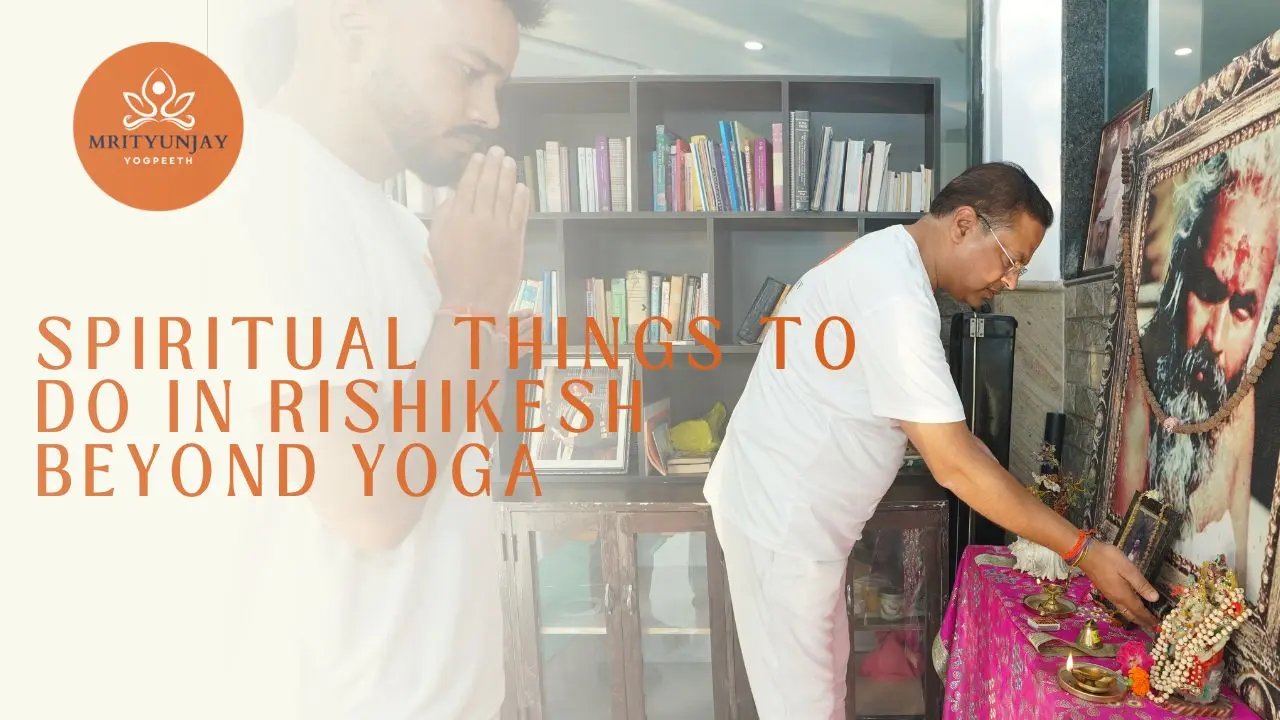
The most meaningful spiritual things to do in Rishikesh beyond yoga include attending Ganga Aarti, joining satsang and devotional chanting, studying Vedanta, visiting temples, sitting quietly at Vashishta Gufa, and taking part in organised seva. You can explore these experiences without signing up for a yoga course or staying in an ashram.
Start with two activities: an evening ceremony and a quieter spiritual experience. Attending Ganga Aarti introduces you to a shared tradition of worship, while a peaceful morning spent studying, reflecting, or volunteering gives you time to process the experience at your own pace.
Here, “beyond yoga” means beyond the posture classes that fill most travel itineraries. In the wider Indian tradition, yoga also includes meditation, devotion, selfless service, and the study of spiritual knowledge. Keep that in mind, and Rishikesh becomes much easier to understand.
Choose an experience that suits your interests
There is no single correct way to spend a spiritual day in Rishikesh. Choose according to whether you want to worship, learn, participate, or simply observe. The time allowances below are planning suggestions, not official session lengths, and exclude travel unless stated.
| Your Interest | A Suitable Starting Point | Suggested Time |
|---|---|---|
| Shared worship | Ganga Aarti at Parmarth Niketan or Triveni Ghat | Keep the evening free |
| Questions about spiritual life | A public satsang | One session |
| Philosophy and scripture | Vedanta teaching at Swami Dayananda Ashram | One confirmed class or a longer course |
| Chanting and devotional music | A scheduled kirtan or bhajan gathering | One session |
| Silence | Vashishta Gufa or a permitted quiet ashram space | Half a day for the cave outing |
| Temple worship | Bharat Mandir in town | About 45–60 minutes |
| A pilgrimage outside town | Neelkanth Mahadev or Kunjapuri | At least half a day |
| Practical service | Seva arranged through an organisation | Whatever commitment is agreed |
1. Attend Ganga Aarti with an understanding of the ritual
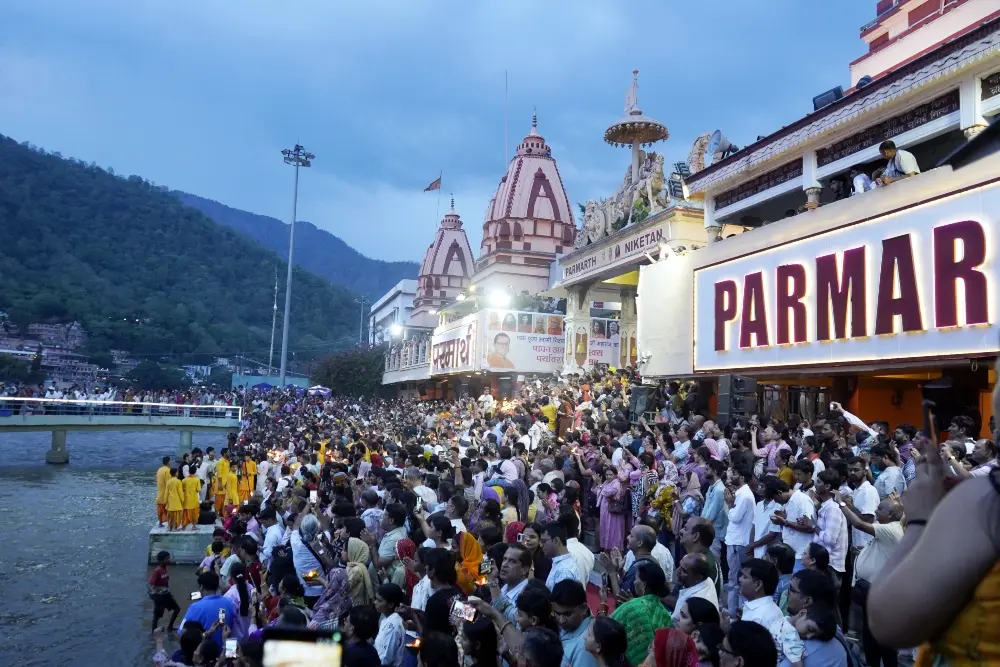
Ganga Aarti is a Hindu offering of light to the Ganga, revered as a goddess and mother. At Parmarth Niketan, the ceremony takes place at the riverside ghat at sunset. The ashram explicitly welcomes people from all religious and cultural backgrounds. Its official guidance says the time changes with the season and should be checked at reception; the yagna, a fire offering, begins half an hour before aarti.
If it’s your first visit, get there 30 to 45 minutes before the confirmed start time, and leave a bit more room on busy days. Try to keep your phone away for at least part of the ceremony. Just listening to the prayers and seeing how people around you give their full attention will tell you more than filming every moment.
You don’t have to sing, make an offering, or hold a lamp. Watching quietly is perfectly fine. If you do want to take part, go by what the organisers tell you, especially near the fire and on crowded steps. Leave the walkways open, and don’t stand in front of people who are seated in worship.
Parmarth Niketan or Triveni Ghat
Pick Parmarth Niketan if you’d like to pair the aarti with a visit to an ashram and ask about the other spiritual programmes it runs. Pick Triveni Ghat if you’re spending your time in central Rishikesh and want to catch the evening worship there. Uttarakhand Tourism describes Triveni as a major pilgrimage ghat, where the evening ceremony brings together lamps, drums, and chanting.
Neither place promises a quieter or more “authentic” experience. What you get depends on the crowds, the festival calendar, the weather, and where you end up standing on the ghat. If you have two evenings, it makes more sense to attend one ceremony each day than to hurry from one to the other in a single night.
2. Join a satsang and bring a real question
Satsang is a gathering centered on spiritual truth or teaching. Depending on the community, it may include a discourse, questions and answers, chanting, or meditation. Parmarth Niketan describes its evening satsang with Sadhvi Bhagawati Saraswati as a space for questions about spiritual life. Sivananda Ashram also publishes an evening satsang programme with lectures, kirtans, and bhajans in English and Hindi.
Ask the reception which session is open to visitors, what language it uses, and whether the named teacher is present. A website’s regular schedule does not guarantee that a particular teacher will lead your visit.
Come with a question you genuinely want to sit with. How should I respond when I’m angry? What does non-attachment really mean when I have a family to look after? How do I give without wanting to be noticed for it? A down-to-earth question like these usually leads somewhere, far more than asking for a formula for happiness ever will.
When it’s over, jot down one idea that stayed with you and one doubt you still have. You can respect a teacher and still think carefully about what they said. And you don’t have to take on an entire worldview in a single evening.
3. Experience kirtan or bhajan without needing musical training
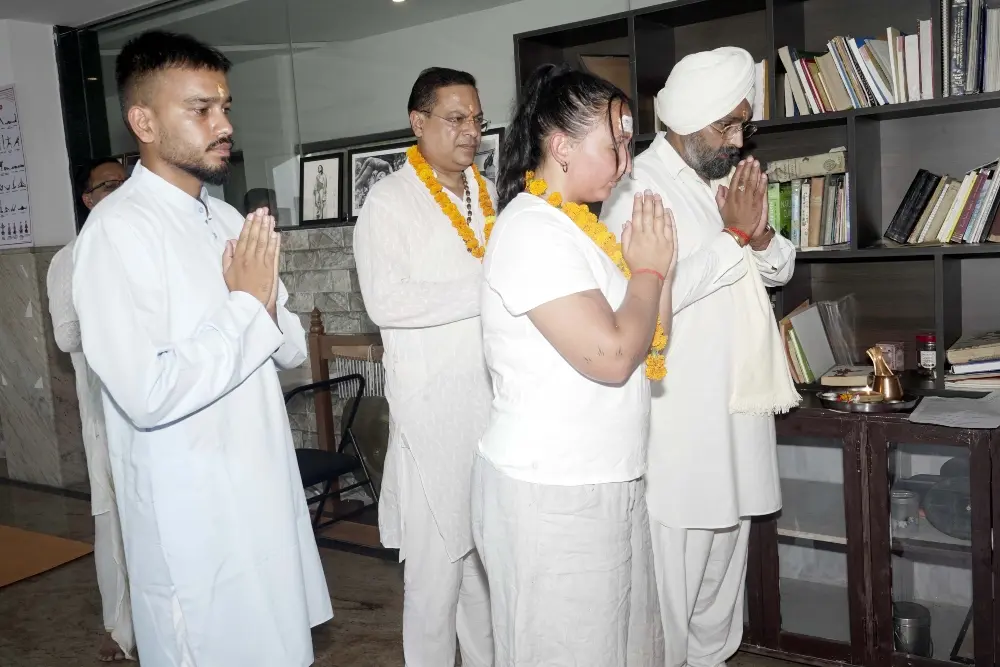
Kirtan often uses repeated devotional names or phrases in a shared, sometimes call-and-response form. Bhajans are devotional songs. At Sivananda Ashram, both appear in the published programme, making an established ashram a useful place to enquire about an accessible gathering.
If you’re a beginner, just listening is enough. Once you start to recognise the refrain, you can join in, and you can always ask what it means afterwards. Because the same short phrase comes round again and again, you can rest on it instead of trying to follow a long talk. That can be a relief if discussion tires you out or feels unfamiliar.
Find out beforehand whether it’s an open religious gathering or a music event that needs a ticket. Both can be worth attending, but they’re not quite the same thing in format or purpose. Ask first before you record any musician, teacher, or participant. And remember that the worshippers are there to pray, not to put on a show for visitors.
4. Study Vedanta at Swami Dayananda Ashram
If you want more than a brief introduction to spiritual ideas, consider a class at Swami Dayananda Ashram, also known as Arsha Vidya Pitham. Its teaching focuses on Vedanta and Sanskrit, including texts such as the Upanishads and Bhagavad Gita. The ashram’s visitor page says visitors may join ongoing daily classes in subjects including Vedanta, Sanskrit, and Vedic chanting.
Vedanta examines questions about the self, reality, and freedom. A traditional class may move slowly through a text, explaining terms and arguments rather than offering a series of inspirational statements. Arriving midway through a course can be demanding, so ask which class would suit a newcomer.
Before you turn up, find out what language the session runs in, what time it begins, roughly how long it lasts, and whether you’re expected to bring or prepare anything. Thinking of staying for a while? Apply through the ashram itself. On its activities page, the teaching is listed as free, but you’re expected to donate towards your room and meals.
Something that helps: read a short passage before the class. During the session, just listen. You don’t have to decide straight away whether you agree. Look at the passage again once you’re back. If you come away understanding an idea well enough to ask a sharp, specific question about it, that’s already a good outcome.
5. Sit quietly at Vashishta Gufa
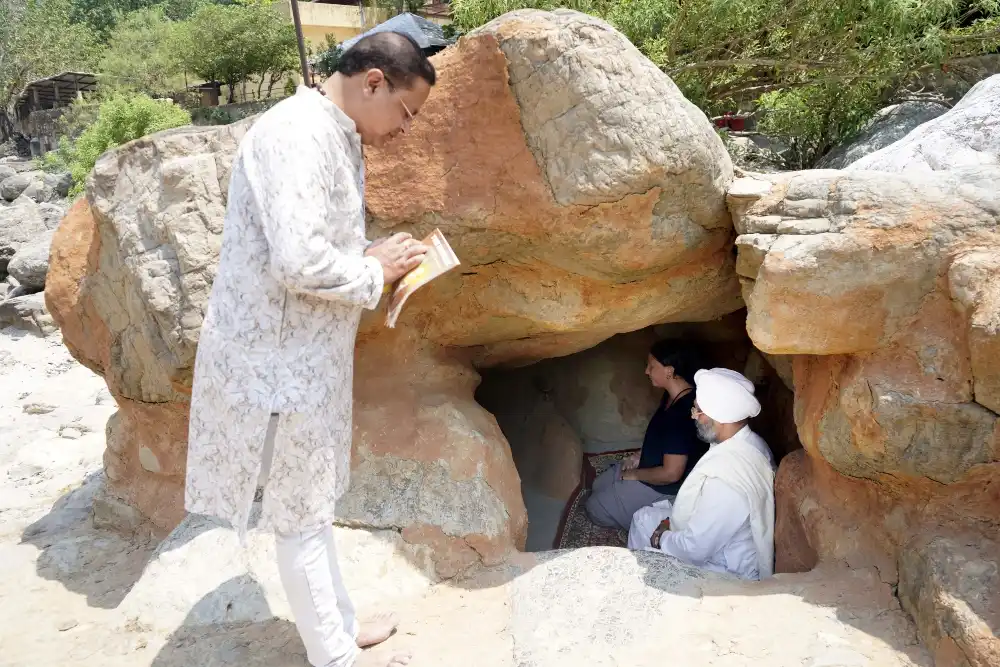
Vashishta Gufa, also written Vasishta Guha, is a cave shrine upstream from Rishikesh, about 22-25 kilometres away, depending on your starting point. It is traditionally associated with the sage Vashishta. Vedanta Bharati describes the cave’s Shiva lingam and records its place in living religious tradition. View the sage’s association as a sacred tradition rather than a historically verified date of occupation.
Set aside half a day for this trip. That covers getting there, getting back, and some time to simply sit. Check the visitor hours locally before you leave. And don’t count on a ride home being there when you need it. Sort out your return in advance.
Once inside, do what the caretaker asks and keep quiet. Begin gently, with a few minutes of sitting however feels comfortable. There’s no need to push yourself to concentrate, and you shouldn’t sit waiting for something unusual to happen. If the closed-in space gets uncomfortable, just step outside. Ask the caretaker where else on the premises you can sit.
Ask about the approach, steps, seating, and lighting if you have mobility or vision needs. The setting may be unsuitable for some visitors even when the road journey is manageable. Do not extend the visit into an unsupervised river swim or an improvised search for isolated caves.
6. Visit Bharat Mandir for darshan
Bharat Mandir is a Vishnu temple in central Rishikesh. Despite its name, it should not be confused with a temple dedicated to Bharata, Rama’s brother. The temple’s own account connects the site with Vishnu and the penance of Raibhya Rishi; such accounts express the shrine’s religious significance.
Darshan, the encounter of seeing and being seen by the deity, helps explain why a temple visit is more than looking at architecture. You can stand quietly, observe the worship, and ask a priest or attendant a brief question when they are free.
Before joining a puja, a ritual act of worship, ask what it involves and whether there is a stated charge or suggested donation. A simple visit does not need to become an elaborate ceremony. If an offering is proposed, you should be able to understand it and decide freely.
Allow roughly 45 – 60 minutes, and combine the visit with time in the old town. Confirm opening and any midday closure before planning your day around it.
7. Make a considered pilgrimage to Neelkanth Mahadev
Neelkanth Mahadev is a Shiva temple outside Rishikesh. Its sacred story recalls Shiva drinking the poison released during the churning of the cosmic ocean, which turned his throat blue. “Neelkanth” refers to the blue-throated one. The Pauri Garhwal district administration gives different distances for different approaches, including approximately 32 kilometres via the barrage route.
Treat it as a separate pilgrimage outing. Road travel, queues, worship, and the return journey require a generous part of the day. Ask locally about the current approach and traffic restrictions before booking a vehicle.
The district also describes a forest walking route of around 12 kilometres. That distance makes it a substantial walk, not a casual addition to temple sightseeing. Use a knowledgeable local guide if you choose to walk, and confirm that the route is open and appropriate for the weather and your fitness.
Read the Shiva story before visiting, then notice how it is represented and remembered at the shrine. This gives the journey a focus beyond reaching the entrance and taking a photograph.
8. Visit Kunjapuri as a temple as well as a viewpoint
Kunjapuri is a hilltop temple dedicated to the Goddess, described by Tehri Garhwal’s district administration within the Shakti Peetha tradition. These sacred sites are associated with the story of Sati. The district also highlights the mountain views and the appeal of sunrise and sunset. Clear views depend on the weather.
If sunrise matters to you, arrange transport in advance and confirm access for your date. Leave time for the final approach and steps. A driver’s arrival at the parking area is not the same as reaching the temple.
Once there, allow time for worship or quiet observation before concentrating on photographs. Read a short account of the Goddess tradition beforehand; otherwise, the shrine can easily disappear behind the view.
Bring a warm layer for an early start and ask specifically about steps and handrails if anyone in your group needs assistance. A daylight visit may be a better choice than a hurried climb in the dark. Plan at least half a day rather than combining it with every other excursion outside town.
9. Practise seva through an organised programme
Seva means service, usually undertaken with an intention of helping without seeking personal reward. In Rishikesh, enquire through an established organisation about a task that matches its needs and your availability.
Parmarth Niketan has a formal volunteer application. Its published guidelines encourage a minimum commitment of three months, with shorter placements considered individually. This is an important distinction for travellers: a long-term volunteer role is not something to assume you can join for an hour between activities.
State your skills, dates, languages, and available time honestly. Ask whether a short supervised task is useful, whether induction is required, and who will supervise it. Accept that the answer may be no.
If no suitable role exists, ask about a specific material need or an official donation route. For any service involving children or vulnerable adults, follow the organisation’s safeguarding rules and avoid taking photographs for personal publicity. The value lies in whether the work helps the people receiving it.
10. Connect reverence for the Ganga with care for the river
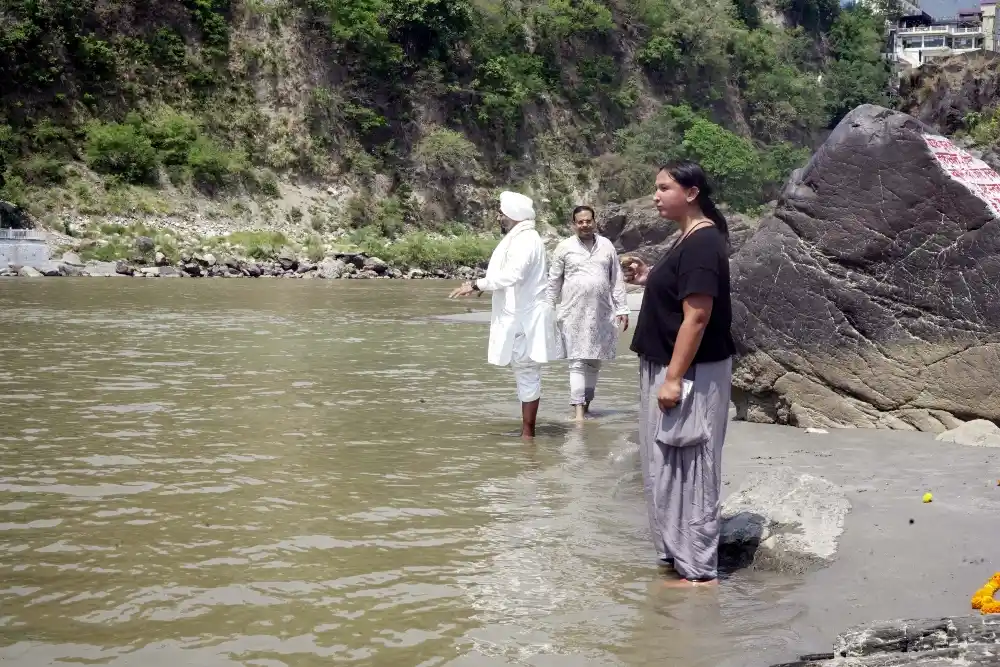
River care can be part of spiritual practice. Parmarth Niketan’s aarti awareness programme explicitly connects worship with waste management, reducing plastic, and protecting the Ganga.
Ask whether a supervised clean-up or environmental activity is scheduled during your stay. Use the equipment and disposal arrangements provided, and stay within the area assigned by the organisers. Avoid handling sharp or hazardous waste yourself.
During ordinary visits, take your litter away and use designated arrangements for ritual materials. Ask where offerings should go rather than putting flowers, packaging, or lamps directly into the water. A natural material can still become waste when many people leave it in the same place.
This is also a useful way to involve children: give them a simple responsibility, such as checking that your group leaves nothing behind, without taking them close to the river’s edge.
11. Explore the Beatles Ashram through its meditation history
The Beatles Ashram, also called Chaurasi Kutia, is the former Maharishi Mahesh Yogi ashram where the Beatles studied meditation in 1968. Today, its surviving structures and artwork make it a place to explore the meeting of meditation, creativity, and international interest in Indian spirituality. It should not be treated as an operating residential ashram with a guaranteed programme of classes.
Allow about 1½ – 2 hours as a planning estimate. Check the current ticket price, permitted access, and last entry before going; do not build your budget around an old travel blog’s fee.
Read about the site before you arrive, then walk through without playing music aloud. You might pause where permitted to write about how you use your attention, or what conditions help you think clearly. Stay within accessible visitor areas and respect restrictions around deteriorating structures.
If your priority is meeting a teacher or joining daily worship, choose an active ashram instead. The value of this visit lies chiefly in its history and setting.
12. Leave time for silence and personal study
You can also create a modest personal practice without booking a retreat. Swami Sivananda’s published routine for spiritual visitors includes scripture study, japa or repetition of a sacred name or mantra, and mouna or silence. It provides evidence of these practices’ place in the tradition, rather than a timetable to assume is currently offered to drop-in visitors.
Try a quiet half-hour in a permitted space: read a short passage, sit for ten minutes, then write a few sentences about what you understood. If you want to use a mantra, ask a teacher about its meaning and whether that practice requires specific instruction. Silent reading or attention to ordinary breathing is also an option.
Choose a staffed ashram space or a public place with people nearby rather than seeking isolation. Keep your phone silent, but available for practical needs. A short period of silence should still allow you to ask for help or communicate when necessary.
Plan your visit around geography and energy
A balanced one-day itinerary
Begin with Bharat Mandir and a slow visit to the old town. Have lunch and rest, then travel to the area of your chosen evening ceremony. Confirm the day’s programme and attend either Triveni Ghat aarti or Parmarth Niketan aarti. Add satsang only if its timing, location, and your energy allow.
If philosophy is your main interest, replace the temple morning with a confirmed introductory class. If walking is difficult, keep the entire day centred on one accessible venue and an evening activity nearby.
A slower three-day itinerary
Day one can follow the town-and-aarti plan. On day two, choose Vashishta Gufa for silence or a confirmed class for study, leaving the afternoon unhurried. On day three, choose Kunjapuri or Neelkanth Mahadev as your main outing. An approved seva commitment can replace an excursion rather than being squeezed between them.
This is a sample structure, not a timed tour. Keep Kunjapuri, Neelkanth, and Vashishta Gufa as separate choices unless you have checked routes and allowed enough travel time.
Where to stay
Swargashram is an eastern-bank cluster of ashrams identified by Uttarakhand Tourism. It is a logical area to investigate if Parmarth Niketan and nearby spiritual activities are your focus. Central Rishikesh may be more convenient for an old-town visit; for a specific course, prioritise proximity to the teaching venue.
Check the actual walking route from your accommodation. Bridge access and traffic arrangements can change, and a room that looks close across the river may require a longer journey. Ask about road access, luggage handling, steps, and your route back after dark.
What to confirm before you go
For a first visit, consider October – November or February – March as practical starting points for planning outdoor activities. These are recommendations, not promises of mild weather or low crowds. Check the forecast and religious calendar for your dates. Winter mornings may call for warm layers; in warmer months, early starts and midday rest are more useful.
During the monsoon, allow flexibility for rain, road disruption, and changing river conditions. Uttarakhand’s disaster authority highlights the need to monitor rising rivers, landslide-prone areas, roads, and bridges during heavy rainfall. Follow current local advisories before an outing, even when the sky above town looks clear.
Before travelling to any venue, confirm these details directly:
- The current opening hours and whether a midday closure applies.
- Whether visitors can attend the specific session you want, and in which language.
- Any booking requirement, entry charge, donation expectation, or cancellation condition.
- The complete route, return transport, steps, seating, and toilet access.
You do not need an ashram stay to attend every public spiritual activity. If you do want to stay, obtain confirmation first. The Divine Life Society specifically asks prospective overnight visitors to write and receive written permission because accommodation is limited.
Etiquette that makes participation easier
Dress for the place you are entering. Cover shoulders and legs, and carry an extra layer if needed. Parmarth’s published guidance asks residents and visitors following its ashram guidance to cover shoulders, midriff, and calves, and to remove footwear at sacred places. Follow each venue’s signs and instructions.
Ask before photographing people or rituals, especially inside a sanctum. Do not assume that an open door permits recording. Sit where directed, leave access routes clear, and avoid interrupting a teaching to enter noisily.
Keep donations voluntary and understandable. If someone offers to arrange a ritual, agree on the scope and any cost beforehand. Use the organisation’s official counter or payment route when giving to it, and request a receipt where appropriate.
Choose a teacher or programme whose background, format, and costs you can check. You should be able to ask questions, decline participation, and leave. Pressure to purchase an expensive initiation immediately is a reason to pause and seek more information.
At the river, remain in permitted public areas and follow barriers and local instructions. Spiritual participation does not require entering the water. For solo visitors, an organised activity with a planned return journey is a better starting point than an isolated excursion after dark.

Frequently asked questions
Can I have a spiritual experience in Rishikesh without doing yoga?
Yes. You can attend aarti, listen to satsang or chanting, study philosophy, visit temples, or arrange service without taking a posture class. Choose activities that interest you; no particular feeling or revelation is required for the visit to be worthwhile.
Are non-Hindus and international visitors welcome?
Parmarth Niketan explicitly welcomes people of different faiths and backgrounds to its Ganga Aarti. For individual temples, classes, and residential programmes, confirm the applicable entry and participation rules. You can often observe respectfully without performing a ritual, but permission is venue-specific.
Is Ganga Aarti held at the same time every evening?
At Parmarth Niketan, the official guidance ties aarti to sunset and says to check reception for the day’s timing. Ask separately about Triveni Ghat. Avoid assuming that one fixed clock time applies throughout the year.
How much should I budget for spiritual activities?
Costs depend on your choices. Quiet reflection needs no course booking; excursions add transport costs, while heritage sites, retreats, accommodation, and meals can have separate charges. Ask what is included and distinguish an optional donation from a stated fee. Confirm current prices rather than relying on an unsourced total.
Can I stay in an ashram for just one night?
Possibly, subject to that ashram’s rules, availability, and approval. Confirm directly before travelling, including check-in, identification requirements, meals, curfew, and participation expectations. An ashram stay involves joining a community’s routine; it is not interchangeable with a hotel booking.
Which activities suit older visitors or people with limited mobility?
Start by asking about a seated teaching or chanting session and an aarti viewing area with suitable access. Check stairs, floor seating, chairs, handrails, toilets, and the distance from the vehicle drop-off. Cave visits, hilltop temples, and crowded ghats need individual assessment; do not assume that taxi access means step-free access.
Do I need a guide?
For a public event with clear visitor instructions, you may be comfortable attending independently. A knowledgeable local guide can help explain a temple’s stories or plan an outing. Confirm language, experience, fees, transport, and any sales stops before booking. A guide is especially useful for an unfamiliar walking route.
Are sound healing and energy sessions essential to the visit?
No. They are optional offerings and are not necessary to explore Rishikesh’s religious and philosophical traditions. If you book one, ask exactly what happens, who leads it, and what it costs. Keep personal spiritual meaning separate from claims that a paid session will produce guaranteed results.
How many days are enough?
One day can introduce you to a temple and an evening ceremony. Two or three days leave room for study, silence, or one excursion. A longer course or service placement needs its own planning. Repeating a practice you found meaningful may teach you more than adding another distant stop.
On your final evening, return to one experience that held your attention. Listen again, ask the question you did not ask before, or sit without making a new plan. Choose one small practice you can continue at home and give it time to become familiar.
Conclusion
Rishikesh offers many ways to explore spirituality beyond yoga, from Ganga Aarti and devotional chanting to Vedanta study, temple visits, quiet contemplation, and service. Choose experiences that connect with your interests, approach local traditions respectfully, and leave enough time to reflect.
You do not need to visit every temple or join every ceremony. Return to an experience that held your attention, ask a thoughtful question, or spend a little longer in silence. Carrying one meaningful practice into everyday life can give your visit a lasting place in your spiritual journey.