Yoga Certification Board certification is a voluntary competency certification system under the Ministry of Ayush, Government of India. It assesses whether a candidate meets the knowledge and practical standards published for a particular yoga role. It is not the same as simply completing a yoga teacher training course, and the Yoga Certification Board does not need to be the organisation that trained you.
A candidate can generally follow one of two routes. Students may train through a YCB-accredited yoga institution or centre and take the assessment there. Experienced practitioners who already possess the required knowledge and skills may apply as open candidates and select an approved Personnel Certification Body, commonly called a PrCB, for assessment.
The application normally involves choosing the appropriate certification, studying its official syllabus, registering on the YCB portal, uploading the required information and documents, paying the applicable enrolment fee, selecting an assessing organisation and examination date, paying the assessment fee, receiving an admit card, completing the theory and practical assessments, and then awaiting the result and certificate.
This guide explains the process, including what eligibility means, which documents to prepare, how published fees are structured, how the examination works, and what candidates should verify before making a payment.
TLDR
- YCB means the Yoga Certification Board, established under India’s Ministry of AYUSH.
- Certification is voluntary and is based on assessment against a published syllabus.
- Training and certification are related but separate. A course certificate does not automatically become a YCB professional certificate.
- There are two main application routes: through a YCB-accredited yoga institution or as an open candidate through an approved PrCB.
- Open candidates do not need to belong to a YCB-accredited training institution, but they must still pass the required assessment.
- Course-admission recommendations vary by level. Accredited institutions may also define their own admission requirements.
- Most professional certifications use separate theory and practical assessments. Candidates must meet the required passing standard in both parts.
- The YCB professional guideline lists a one-time enrolment fee for each certification type and a recommended examination fee. The assessing institution fixes the actual exam fee, so it may vary.
- Published fee tables should be treated as a reference, not as a guaranteed current quotation. Confirm the total directly in the official portal and with the selected institution or PrCB before paying.
- Professional certificates listed in the guideline are valid for five years from the result date and are renewed through the applicable Continuing Yoga Education Programme process.
What Is YCB Certification?
The Yoga Certification Board was created to support consistency in the knowledge and skills expected from yoga professionals. It publishes certification categories, role descriptions, syllabi, assessment patterns and operational guidelines. It also recognises or accredits organisations involved in training and assessment.
YCB certification answers a specific question: has this candidate demonstrated the competency required for this defined certification role?
It does not automatically answer every other professional question. A YCB certificate does not by itself guarantee employment, establish expertise outside its defined scope, or replace any separate requirements imposed by an employer, school, insurer, visa authority, healthcare setting, or local regulator.
Training, Certification, and Accreditation Are Different
These terms are often confused.
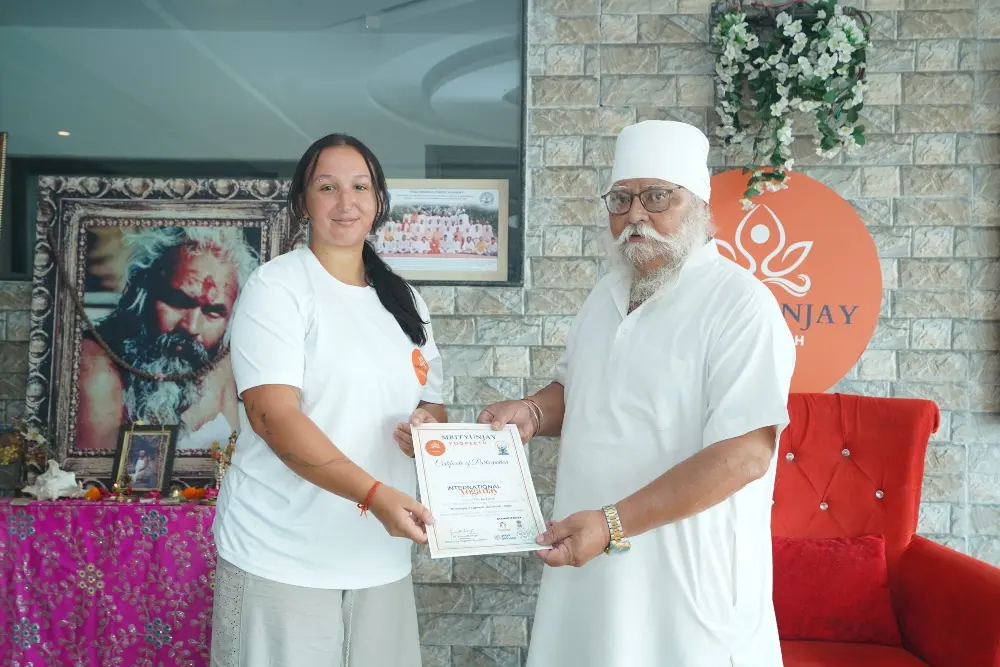
Training is the education and supervised practice a student receives. A yoga school may issue its own course-completion certificate.
Professional certification is the assessment of an individual against a YCB syllabus and competency standard. Successful candidates receive the applicable YCB certificate and identification credentials according to the scheme.
Institutional accreditation or recognition concerns the organisation. YCB lists categories of yoga institutions, centres and Personnel Certification Bodies. An organisation’s status does not mean every course it sells produces automatic individual certification.
Before enrolling, ask the provider to state clearly:
- the exact YCB certification name;
- whether the price covers training, YCB enrolment, examination or all three;
- which approved organisation conducts the assessment;
- whether you will be registered on the official YCB system;
- what happens if you do not pass;
- how the final certificate can be verified.
The two routes to YCB certification
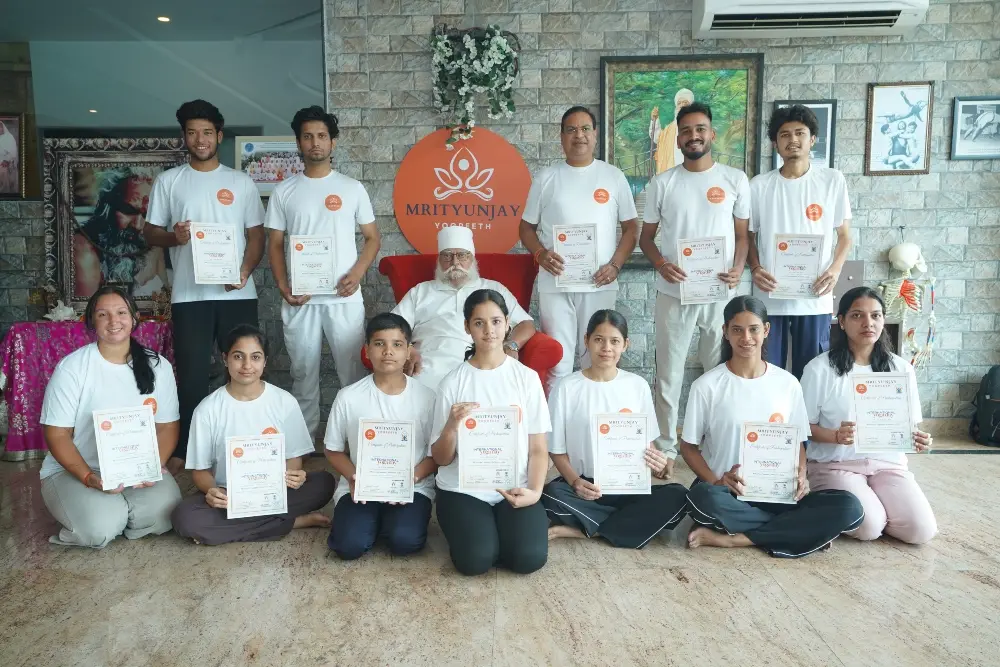
Route one through an accredited yoga institution or centre
This route suits candidates who want structured education before assessment. The institution provides training based on the relevant syllabus and manages or coordinates the application and examination process.
The candidate normally:
- checks the institution’s current YCB status;
- applies for the relevant training course;
- completes the required study and practice;
- registers or is enrolled through the YCB process;
- submits the requested documents;
- pays the stated training, enrolment and examination charges;
- takes the assessment through the institution or its authorised arrangement.
The advantage is guidance, teaching practice, feedback and administrative support. The limitation is that course admission rules and total training fees are set by the institution and may be much higher than certification-only charges.
Route two as an open candidate through a PrCB
An open candidate is a person who does not belong to a YCB-certified training institution or centre for that application. The official guideline allows a yoga professional who already has the relevant knowledge and skills to appear for certification through an approved Personnel Certification Body.
The candidate normally:
- selects the appropriate certification level;
- studies the complete official syllabus independently or through prior education;
- checks the YCB examination calendar and approved PrCB list;
- registers on the YCB website;
- selects a PrCB, examination date and available mode;
- pays enrolment and assessment fees;
- completes the theory and practical assessment.
Open candidature removes the need to attend a particular accredited course. It does not make the assessment easier or remove the need for competent teaching and demonstration skills.
Which YCB Certification Should You Choose?
YCB separates yoga education and training roles from yoga therapy roles. Select the role that matches what you are genuinely prepared to do, not simply the highest title you can apply for.
Yoga Volunteer
- Published Training or Competency: Equivalent to at least 36 hours
- Intended Role: Promote personal and community wellbeing and assist with basic group activities.
Yoga Protocol Instructor
- Published Training or Competency: At least 200 hours for the course route
- Intended Role: Teach basic yoga and the Ministry of Ayush Common Yoga Protocol in community settings.
Yoga Wellness Instructor
- Published Training or Competency: At least 400 hours for the course route
- Intended Role: Teach yoga for wellness promotion in schools, studios, and workplaces.
Yoga Teacher and Evaluator
- Published Training or Competency: At least 800 hours for the course route
- Intended Role: Teach advanced programmes and undertake evaluator or assessor functions within scope.
Yoga Master
- Published Training or Competency: At least 1,600 hours
- Intended Role: Serve as a senior educator, trainer and evaluator.
Assistant Yoga Therapist
- Published Training or Competency: At least 400 hours, including the stated anatomy and physiology contact component
- Intended Role: Work under appropriate supervision on specified conditions.
Yoga Therapist
- Published Training or Competency: At least 800 hours, including the stated anatomy and physiology contact component
- Intended Role: Work alongside qualified medical or senior yoga therapy professionals within the defined role.
Therapeutic Yoga Consultant
- Published Training or Competency: At least 1,600 hours with the specified professional background
- Intended Role: Advanced therapeutic role described by the scheme.
The therapy certifications have materially different responsibilities and prerequisites. Do not treat a general teaching qualification as permission to diagnose, prescribe treatment, or manage disease independently.
Yoga education and training track
The education and training track moves from community participation towards increasingly advanced teaching and assessment responsibilities. Yoga Volunteer is an introductory participation certificate. Yoga Protocol Instructor focuses on basic instruction and the Common Yoga Protocol. Yoga Wellness Instructor expands the teaching context to wellness settings. Yoga Teacher and Evaluator and Yoga Master require a much broader command of philosophy, texts, applied yoga, teaching, and assessment.
Higher is not automatically better. A candidate who wants to lead safe community classes may obtain more practical value from mastering the YPI syllabus than from attempting a senior category without the teaching experience to support it.
Yoga therapy track
The therapy track is separately defined because working with health conditions requires additional knowledge, supervision, and scope discipline. The titles Assistant Yoga Therapist, Yoga Therapist and Therapeutic Yoga Consultant should not be treated as marketing upgrades to a general teacher certificate.
Before selecting a therapy category, verify the current academic background, anatomy and physiology, supervised experience, and role description. Also check whether the setting where you intend to work imposes separate professional or clinical requirements. Certification within the YCB scheme does not remove the need to work within applicable law and competence.
How Is the YCB Ecosystem Organised?
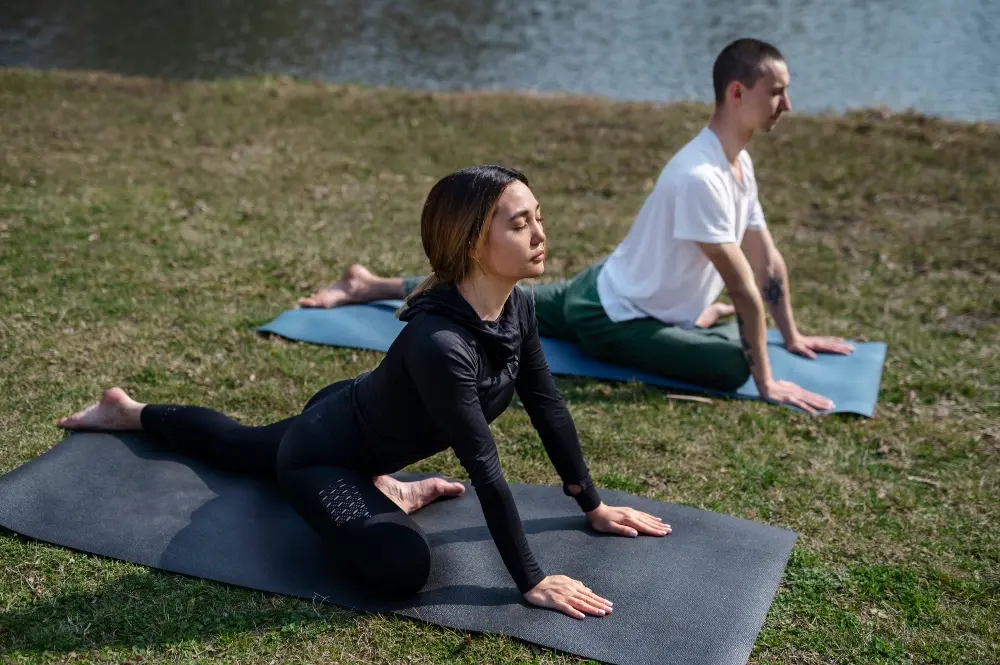
Understanding the organisations involved makes the application easier to verify.
Yoga Certification Board
YCB owns and administers the certification framework. It publishes syllabi and guidelines, maintains official information and issues the scheme’s certification credentials to successful candidates through the approved process.
Accredited yoga institutions and centres
These organisations deliver training within the categories for which they hold current recognition or accreditation. Their role can include admission, teaching, internal administration and coordination of the examination. Always check the exact category and validity of the institution’s status. Recognition for one activity should not be assumed to cover every programme advertised by the organisation.
Personnel Certification Bodies
PrCBs are approved to conduct assessment and certification activities under the scheme. Open candidates select a PrCB for the examination. The PrCB manages practical matters such as scheduling, exam-fee collection, admit-card support, assessment and result coordination.
Candidate
The candidate remains responsible for choosing the correct level, submitting truthful information, preparing to the current syllabus, checking the examination details, and retaining records. Paying a school or consultant does not transfer these responsibilities.
What Does YCB Certification Prove, and What Does It Not Prove?
A successful certificate shows that the candidate passed an assessment linked to a defined YCB role and syllabus. It can help an employer or student identify the standard against which the person was assessed.
It does not prove that the person is equally skilled in every yoga tradition, suitable for every population or ready to work beyond the certified role. It does not automatically provide business registration, insurance, employment, a visa, a government post or permission to practise medicine. Teaching quality still depends on judgement, communication, continuing study, personal practice and the ability to respond safely to individual needs.
Eligibility by certification level
The official guidelines distinguish between suggested course-admission qualifications and eligibility for open candidates.
Yoga Protocol Instructor
For admission to a course, passing Class 10 or an equivalent secondary qualification is suggested or desired. The institution may define its own admission criteria. The syllabus states no age limit. Open candidates are not given a separate academic eligibility requirement in the published guideline.
Yoga Wellness Instructor
For course admission, passing Class 12 or an equivalent higher-secondary qualification is suggested or desired. The institution may set its own rule. The guideline lists no age limit and no separate academic eligibility criterion for open candidates.
Yoga Teacher and Evaluator
For the course route, graduation in any stream from a recognised university or equivalent is suggested or desired. Institutions may define their own admission conditions. The published guideline lists no age limit and no separate academic eligibility criterion for open candidates.
Yoga Master
Graduation in any stream is suggested or desired for course admission, subject to the institution’s criteria. The competency framework is extensive, so the absence of a formal open-candidate academic condition should not be interpreted as the absence of an experience requirement in practice.
Yoga therapy categories
The published framework lists Class 12 for Assistant Yoga Therapist, a degree for Yoga Therapist, and a medical-professional or master’s-level yoga background for Therapeutic Yoga Consultant. Because therapy roles involve greater safety and scope concerns, candidates should check the latest syllabus and eligibility language directly before applying.
Does an Open Candidate Really Have No Eligibility Requirement?
The professional guideline says that open candidates for several categories do not have an academic eligibility criterion. This means a person may be permitted to apply without presenting the course-route qualification listed for admission.
It does not mean that a beginner can reasonably pass without preparation. The assessment may cover yoga philosophy, traditional texts, anatomy and physiology, teaching methodology, demonstration, contraindications, lesson planning, practical application, and field experience, depending on the category.
An open candidate should apply only after comparing current competence with every part of the official syllabus. If several sections are unfamiliar, structured training is the safer route.
Documents to prepare for a YCB application
Portal fields and upload requirements can change. The exact checklist shown in the live application and by the selected PrCB or institution is authoritative for that examination. Prepare the following categories in advance so you can respond without delay.
Identity and contact documents
- a valid government-issued photo identity document;
- recent passport-style photograph in the requested format;
- signature image if the portal requests one;
- active mobile number and email address;
- current address details;
- date-of-birth evidence if requested.
Indian candidates may be asked for an Aadhaar or another accepted identity document depending on the active portal workflow. Foreign candidates should expect to provide passport and nationality details. Never send sensitive documents to an unverified personal messaging number without confirming the organisation and secure submission method.
Educational documents
Depending on the chosen category and route, prepare:
- Class 10 certificate;
- Class 12 certificate;
- graduation degree or marksheet;
- postgraduate yoga or medical qualification where relevant;
- previous yoga training certificates;
- translations or equivalence evidence if documents were issued outside India and the assessor requests them.
Open candidates should not upload irrelevant qualifications merely to make the application look stronger. Use the exact fields and category requirements.
Training and institution documents
Course-route candidates may need:
- admission or student details from the accredited institution;
- course-completion or attendance evidence;
- institution verification or endorsement;
- details of the training centre and examination batch.
Ask the institution which documents it submits and which documents the candidate must upload personally.
Experience records
Some practical assessments include field-experience evidence. The professional guideline provides formats for training feedback and field experience. Depending on the certification, candidates may be expected to document:
- people trained;
- teaching dates and hours;
- home, park, society, corporate or other teaching settings;
- organisations and positions held;
- yoga camps conducted;
- roles and responsibilities;
- photographs and trainee feedback.
Keep genuine, dated and organised records. Do not manufacture teaching hours or feedback. False information can lead to rejection, cancellation or debarment under the scheme.
Why Must Names and Dates Match?
Small inconsistencies can delay scrutiny. Compare the spelling, order, and initials of your name across the identity document, academic certificates, portal account, and payment record. If a name changed after marriage or for another lawful reason, prepare the supporting document requested by the assessing organisation. Enter the date of birth in the required format and do not substitute an estimated date.
If a document is not in English or Hindi, ask in advance whether a certified translation or equivalence document is required. Do not assume that a foreign certificate will be interpreted automatically.
Declarations
The guideline requires declarations concerning previous YCB applications or certifications and certain conduct-related matters. Read every declaration before accepting it. If an answer needs explanation, ask the assessing organisation how to submit it accurately rather than omitting it.
File preparation checklist
Before opening the portal:
- scan documents clearly with all edges visible;
- use the file type and size shown by the portal;
- keep names consistent across identity and academic records;
- resolve spelling differences before the deadline where possible;
- name files clearly, such as `passport-name.pdf` or `class-12-certificate.pdf`;
- keep payment receipts and application acknowledgements;
- save the enrolment number, login details and examination contact;
- retain copies of everything submitted.
How Are YCB Fees Structured?
Candidates often see one advertised price and assume it covers the whole process. In reality, four different charges may exist:
Training fee: charged by the yoga institution for instruction, accommodation, meals, study material or related services. YCB does not set a universal course price.
YCB enrolment fee: a one-time fee for the selected certification type according to the published framework.
Assessment or examination fee: charged by the institution or PrCB conducting the assessment. The guideline describes this as recommended and states that the assessing institution fixes the fee.
Additional charges: possible re-examination, rechecking, certificate reissue, travel, accommodation or administrative charges.
Published enrolment and recommended exam fees
The table below reproduces the figures in Version 0.3 of the YCB Guideline for Yoga Professionals published on the official website. Because the guideline is dated 2020 and live charges can be revised, verify the amount shown in the portal and obtain a written fee breakdown from the selected organisation before payment.
Yoga Volunteer
- Indian Enrolment Fee: INR 250
- Indian Recommended Exam Fee: Not listed
- Foreign Enrolment Fee: USD 25
- Foreign Recommended Exam Fee: Not listed
Yoga Protocol Instructor
- Indian Enrolment Fee: INR 1,000
- Indian Recommended Exam Fee: INR 1,000
- Foreign Enrolment Fee: USD 100
- Foreign Recommended Exam Fee: USD 200
Yoga Wellness Instructor
- Indian Enrolment Fee: INR 1,500
- Indian Recommended Exam Fee: INR 1,500
- Foreign Enrolment Fee: USD 150
- Foreign Recommended Exam Fee: USD 350
Yoga Teacher and Evaluator
- Indian Enrolment Fee: INR 2,000
- Indian Recommended Exam Fee: INR 3,000
- Foreign Enrolment Fee: USD 200
- Foreign Recommended Exam Fee: USD 400
Yoga Master
- Indian Enrolment Fee: INR 2,500
- Indian Recommended Exam Fee: INR 5,000
- Foreign Enrolment Fee: USD 300
- Foreign Recommended Exam Fee: USD 500
Assistant Yoga Therapist
- Indian Enrolment Fee: INR 1,000
- Indian Recommended Exam Fee: INR 2,000
- Foreign Enrolment Fee: USD 200
- Foreign Recommended Exam Fee: USD 400
Yoga Therapist
- Indian Enrolment Fee: INR 2,500
- Indian Recommended Exam Fee: INR 5,000
- Foreign Enrolment Fee: USD 300
- Foreign Recommended Exam Fee: USD 500
Therapeutic Yoga Consultant
- Indian Enrolment Fee: INR 5,000
- Indian Recommended Exam Fee: INR 10,000
- Foreign Enrolment Fee: USD 400
- Foreign Recommended Exam Fee: USD 600
Important fee rules
The guideline states that the enrolment fee is fixed, non-refundable, and paid once for the applied certification type. If a candidate later applies for a different certification type, a new category enrolment fee applies. The same unique enrolment number continues to identify the candidate.
If a candidate fails and reapplies for the same certification, the guideline says the category enrolment fee is not charged again, although assessment or re-examination charges may apply.
Assessment-fee refund rules depend on timing and circumstances. The guideline states that the exam fee is not refundable after the admit card is issued. It also describes limited refund or relocation provisions when an assessing organisation cannot conduct the scheduled examination. Read the current terms before paying.
How Should You Request a Complete Fee Quotation?
Ask the institution or PrCB to provide one written breakdown with separate lines for:
- training tuition;
- accommodation and meals, if applicable;
- YCB enrolment fee;
- examination or assessment fee;
- study material or uniform;
- online-exam or venue charges;
- tax and payment-processing charges;
- re-examination or rechecking charges;
- certificate dispatch or reissue charges;
- refund and transfer rules.
This prevents a low “certification fee” from later becoming a much larger package. It also helps foreign candidates identify currency-conversion, bank, and travel costs before committing.
Why Does Fee Information Require a Publication-Date Check?
The official fee figures commonly cited online come from Version 0.3 of the Guideline for Yoga Professionals. The YCB website remains active and may publish operational changes, notices, or revised workflows without rewriting every older PDF. For this reason, the article reports the official published table and clearly identifies its source version. The amount displayed in the current application, together with written confirmation from the approved assessing organisation, should be used for an actual payment decision.
The complete application flow
Step 1: Choose the correct certification
Read the role description, eligibility, and complete syllabus. Do not choose only by course duration or title. Confirm that the role matches where and whom you intend to teach.
Step 2: Choose the training or open-candidate route
Select structured training if you need instruction, supervised practice, and exam preparation. Choose the open route only if you already meet the required knowledge and skill standard.
Step 3: Verify the organisation
Use the official YCB website to verify the current status of the yoga institution, centre, or PrCB. Match the legal name and location. Do not rely solely on a logo in an advertisement or a claim that an application is “under process.”
Step 4: Check the syllabus and examination schedule
Download the current syllabus for the exact certification. Review theory units, practical skills, marks, and field-experience expectations. Then check the examination calendar or obtain the proposed date from the verified organisation.
Step 5: Create the YCB registration
Use the Registration option on the official YCB website. Enter your identity and contact information accurately. Course-route candidates may complete this through their institution according to the active workflow.
Step 6: Complete enrolment and upload documents
Submit the required information and documents for Stage 1. Pay the category enrolment fee through the official process. Save the receipt and acknowledgement.
Once approved, the candidate receives a unique enrolment number. The guideline states that this number remains valid for life and continues as the candidate’s reference even when applying for another certification category.
Step 7: Correct discrepancies promptly
Applications are subject to document scrutiny. The guideline describes a seven-working-day scrutiny period and allows candidates to be contacted about gaps or discrepancies. If information is requested, reply through the stated channel and retain proof of submission.
Step 8: Select the assessing organisation and date
During the second stage, choose the certification category, approved institution or PrCB, preferred city or available mode, and examination date. The official How to Apply page says institutions may conduct examinations offline or online, subject to the available schedule and organisation.
Step 9: Pay the assessment fee
The portal may redirect the candidate to the selected PrCB or institution for the exam payment. Confirm the recipient, amount, tax or service charges, refund conditions, and what the fee includes. Save the transaction reference.
Step 10: Obtain and check the admit card
The guideline states that the admit card should be issued at least one week in advance and may be downloaded through the candidate login. Check the spelling of your name, certification, date, mode, reporting time, and centre. Contact the assessing organisation immediately if anything is wrong.
Step 11: Take the theory and practical examinations
Except for Yoga Volunteer, the professional guideline describes a two-stage assessment with theory and practical components. The theory paper uses objective multiple-choice questions. It is bilingual in English and Hindi, with provisions for another examination language where offered.
The practical test may assess demonstration, teaching, evaluation, therapeutic skill, application of knowledge, and field experience, depending on the certification. A confident asana demonstration alone is not enough if the role also requires lesson planning, communication, safety reasoning or teaching adaptation.
Step 12: Receive the result
The guideline states that results should be declared within 30 days of the examination. Candidates can check through the YCB website and the assessing organisation’s channel.
Step 13: Receive and verify the certificate
Successful candidates are issued a certificate and identification credential with a unique number. The guideline describes a security-enabled QR code and access to a digital certificate when enabled. Verify that the name, category, number, and result date are correct.
How Is the YCB Examination Marked?
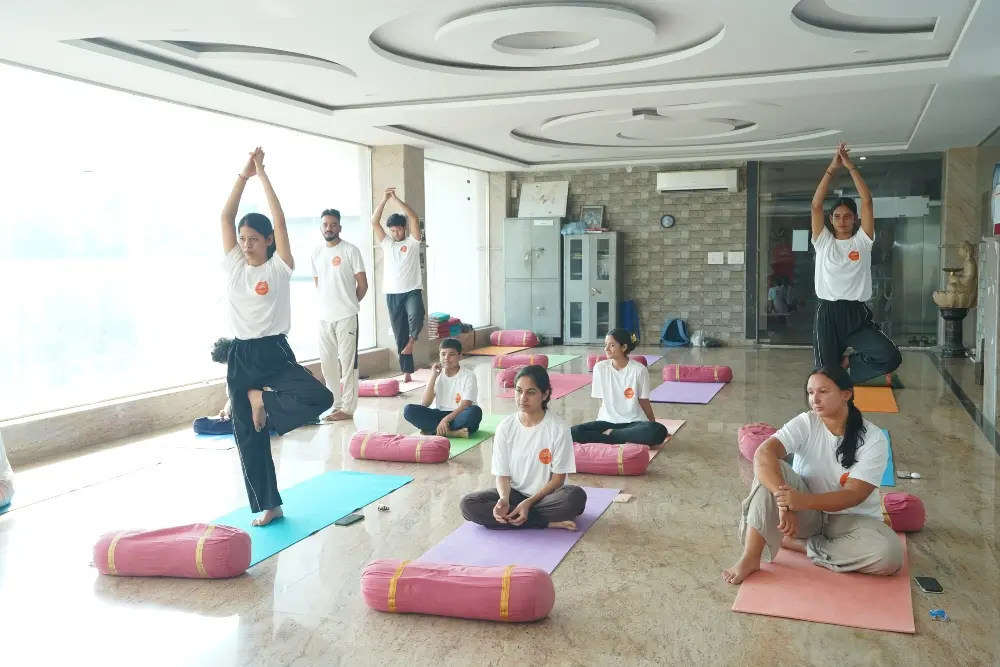
The assessment is based on the official syllabus for the chosen category. Most professional levels use a total of 200 marks, divided between theory and practical components in proportions that vary by certification.
For Yoga Protocol Instructor and Yoga Wellness Instructor, the published pattern is:
- theory: 60 marks;
- demonstration: 80 marks;
- teaching skill: 40 marks;
- application of knowledge: 10 marks;
- field experience: 10 marks;
- practical total: 140 marks;
- overall total: 200 marks.
The guideline requires 70 percent in theory and practical separately. Passing overall is not enough if one component falls below the separate threshold. It also describes limited grace marks and specific reappearance rules, so candidates should read the version governing their examination.
What Should You Expect in the Theory Examination?
The theory examination tests the knowledge stated in the category syllabus rather than general yoga trivia. For YPI, the published units include an introduction to yoga and yogic practices, yoga texts, and yoga for health promotion. Higher categories add broader philosophical, scientific, applied, teaching, or therapy content.
The guideline describes objective multiple-choice questions, normally bilingual in English and Hindi. Where another examination language is offered, candidates should confirm the exact language of the paper. It also states that there is no negative marking in the theory examination under that version.
Prepare by learning concepts, purposes, precautions, and teaching applications. Memorising isolated answers from an unofficial question bank can leave major syllabus gaps and may not prepare a candidate for the practical discussion.
What Should You Expect in the Practical Examination?
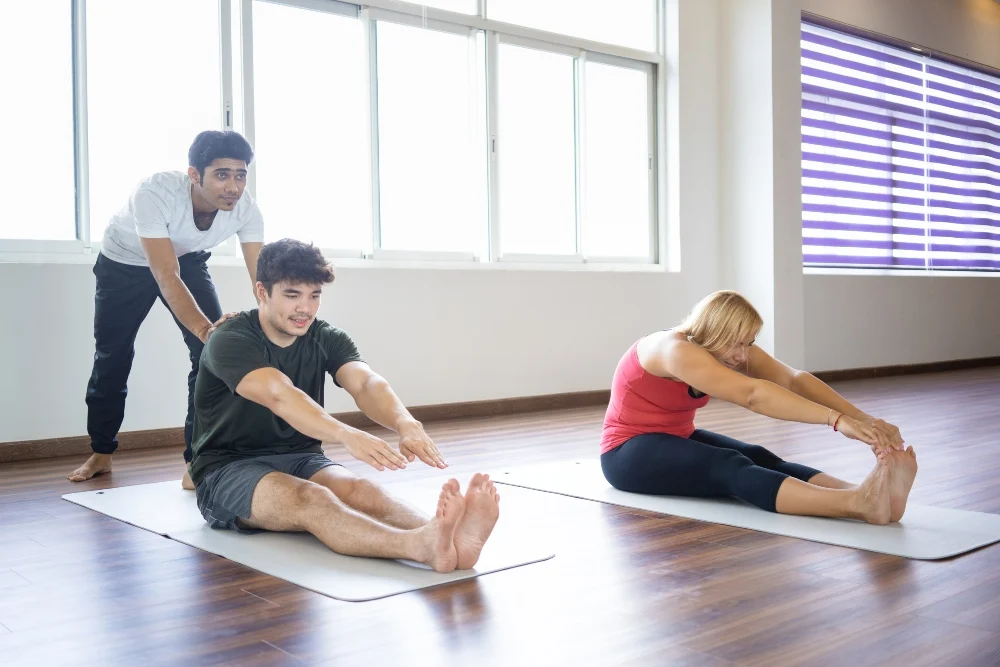
The practical assessment is designed to observe whether the candidate can apply knowledge, not only perform flexible postures. Depending on the category, assessors may examine:
- demonstration and sequence accuracy;
- breathing coordination and clear verbal instruction;
- lesson planning and class management;
- teaching to different age or ability groups;
- precautions and contraindications;
- observation and correction skills;
- application of yoga knowledge;
- evaluation or therapy competencies for higher categories;
- genuine teaching and field-experience evidence.
The guideline allows up to one hour for an individual practical assessment, while leaving the assessor discretion to conclude it within that limit. Ask the selected organisation about current format, permitted materials, dress, online-camera requirements and whether any lesson plan must be submitted in advance.
Online and offline examinations
The official How to Apply page states that institutions may conduct assessments offline or online. This does not mean every level, date, or PrCB offers both modes.
For an online examination, confirm identity verification, device, browser, camera position, room requirements, internet backup, practical demonstration space, and what happens after a connection failure. For an offline assessment, confirm centre address, reporting time, travel, identification and permitted items.
Candidates should never accept an offer to “complete” an online examination on their behalf. Impersonation, false documents and examination malpractice can lead to rejection or debarment.
Examination-day checklist
- Download and print or securely save the admit card as instructed.
- Carry the accepted original photo identification.
- Confirm the reporting time and time zone.
- Arrive early; the guideline warns that late entry may be refused.
- Carry permitted stationery for an offline theory paper.
- Wear appropriate clothing for practical demonstration.
- Bring only materials expressly allowed by the centre.
- Keep the assessing organisation’s contact details available.
- Follow safety instructions and disclose any current limitation that affects the demonstration.
- Do not photograph, copy or remove restricted examination material.
What Happens If You Fail?
Under the published guideline, a candidate who passes the practical but fails theory may reappear once for the theory examination within three months of the result, subject to the prescribed fee.
If the candidate passes theory but fails the practical, the guideline treats the candidate as failed and requires a fresh certification application and full assessment fee, although the category enrolment fee does not need to be paid again.
These rules may be implemented through the selected assessing body, so obtain written instructions after the result rather than assuming that a new registration is required.
Rechecking and complaints
The guideline permits a request for rechecking of the theory OMR calculation within 15 days of the result. Rechecking is limited to marks calculation rather than a fresh academic evaluation. Version 0.3 lists INR 1,000 for rechecking without the candidate and INR 3,000 for rechecking in the presence of the candidate and examiner.
For examination, admit card, result, and certificate queries, contact the assessing institution first. If the matter is unresolved, the guideline allows escalation to YCB with records of the previous communication.
Certificate validity and renewal
The professional guideline lists a five-year validity period for the professional certifications, counted from the result declaration date. Renewal requires participation in the applicable Continuing Yoga Education Programme before expiry.
Do not wait until the final week. Check the current CYEP schedule, required credit or attendance conditions, fee, and submission route well before expiry. Keep your certificate number, teaching record and continuing-education evidence organised.
YCB certification compared with a school certificate and Yoga Alliance registration
These credentials serve different functions and should not be described as interchangeable.
Yoga-School Course Certificate
- What it normally represents: Completion of that school’s stated training programme.
- What it does not automatically mean: Successful YCB assessment or government certification.
YCB Professional Certificate
- What it normally represents: Passing the competency assessment for a defined YCB category.
- What it does not automatically mean: Yoga Alliance registration, employment or competence outside that category.
Yoga Alliance RYT Registration
- What it normally represents: Registration based on Yoga Alliance’s current education and membership requirements.
- What it does not automatically mean: YCB certification, an Indian government licence, or a therapy qualification.
Guidance for international candidates
Foreign candidates should confirm more than the USD fee. Ask the PrCB about accepted identity documents, exam language, payment method, time zone, online availability, certificate delivery, and whether any course admission document needs equivalence or translation.
If travelling to India, do not assume that a course booking determines immigration permission. Check current visa and travel rules through official government channels. Leave enough time for document review before purchasing non-refundable transport.
After certification, check whether an employer or regulator in the country where you will teach recognises the credential for the intended role. YCB certification describes competence within its scheme; cross-border professional requirements can differ.
How Can You Avoid Misleading Providers?
Be cautious if a provider:
- says a course certificate is automatically a YCB professional certificate;
- cannot name the exact certification category;
- cannot show its current status on the official YCB list;
- promises certification without an assessment;
- asks for payment to an unrelated personal account without documentation;
- hides enrolment and examination fees inside an unclear package;
- guarantees a pass before assessing your competence;
- asks you to invent field-experience records;
- uses outdated logos or screenshots instead of a verifiable listing;
- claims that YCB certification makes someone a doctor or grants unlimited therapy authority;
- refuses to provide receipts, exam details or a candidate enrolment number.
A candidate preparation plan
Six to eight weeks before the exam
Download the syllabus and convert every line into a study checklist. Test your knowledge honestly. Arrange structured instruction for areas where you cannot explain both method and safety.
Four weeks before the exam
Practise complete demonstrations with names, sequence, breathing, precautions and common corrections. Teach short classes to appropriate volunteer participants and record genuine feedback where permitted.
Two weeks before the exam
Complete timed theory practice. Rehearse lesson planning, verbal instruction and adaptation for different groups. Confirm the admit-card timeline and practical expectations with the assessing organisation.
Final week
Check documents, travel or online-exam requirements, identification and reporting time. Reduce last-minute experimentation. Review the official syllabus rather than relying only on informal question banks.
A 30-day application checklist
Days 1 to 5: verify the route
Choose the certification, download the syllabus, decide whether you need training, and verify at least one approved organisation. Ask for dates, mode, fee breakdown, and document list.
Days 6 to 10: organise evidence
Check identity and education records, scan documents, reconcile name differences, and organise genuine teaching evidence. Create a secure folder for submissions and receipts.
Days 11 to 15: complete registration
Register through the official process, enter information carefully, upload the requested documents, and pay only through the verified route. Save the acknowledgement and enrolment number.
Days 16 to 20: Resolve scrutiny questions
Monitor the registered email and phone. Correct discrepancies promptly and keep a record of each response. Do not create a duplicate account merely because approval is pending.
Days 21 to 25: Confirm assessment
Select or confirm the PrCB, date, city, or online mode. Pay the assessment fee after reviewing the terms. Verify the expected admit card date.
Days 26 to 30: finalise readiness
Check the admit card, identity, technology, or travel plan. Rehearse theory timing, teaching instruction and practical demonstrations without introducing unsafe last-minute changes.

Frequently asked questions
Is YCB Certification Mandatory to Teach Yoga in India?
The YCB guideline describes the programme as voluntary. An employer, institution, government programme, insurer or role may still set its own qualification requirements. Check the context in which you want to work.
Can I Apply Without Joining a YCB-Accredited Course?
Yes. A suitably prepared person may apply as an open candidate through an approved PrCB. You must still meet the assessment standard.
Does YCB Run the Training Course Itself?
YCB sets the scheme, syllabi, and certification framework. Training is delivered by institutions or centres. Confirm the current status and exact role of the provider.
Is Yoga Protocol Instructor the Same as a 200-Hour Teacher Training Certificate?
No. The YPI course framework is at least 200 hours, but YCB certification depends on enrolment and successful assessment against the YPI syllabus. A separate 200-hour course certificate is not automatically a YCB certificate.
What Documents Are Compulsory?
The exact live checklist depends on category, nationality, route and portal requirements. Expect identity, photograph, contact, educational, and relevant training or experience records. Follow the active portal and assessing organisation’s written checklist.
Can Foreigners Apply?
The published fee table includes foreign-candidate charges, indicating a route for foreign applicants. Confirm passport, examination mode, payment and document requirements with an approved PrCB before arranging travel.
Are the Exam Fees the Same Everywhere?
Not necessarily. The professional guideline says the assessing institution fixes the exam fee, even though it publishes recommended figures. Request the final fee in writing.
Is the Enrolment Fee Paid Again After Failure?
The guideline says the enrolment fee for that certification type is one-time and does not need to be paid again for reappearance in the same category. Assessment charges may still apply.
Can I Take the Examination Online?
The official How to Apply page says approved institutions can conduct examinations offline or online. Availability depends on the organisation, certification, and scheduled examination.
How Long Does the Result Take?
The professional guideline states that the result should be declared within 30 days of the examination.
How Long Is the Certificate Valid?
The published guideline lists five years from the date of result declaration for the professional certifications and requires the applicable continuing-education process for renewal.
Does YCB Certification Guarantee a Job?
No. It provides evidence of meeting a defined certification standard. Employment also depends on experience, communication, safety, local requirements, employer criteria, and the role available.
Can a YPI or YWI Provide Yoga Therapy?
Their role descriptions concern protocol instruction and wellness teaching. They should not represent themselves as qualified for a therapy role merely because they hold a general teaching certification.
Conclusion
YCB certification in India is a structured assessment process, not simply a course-completion badge. Candidates first choose a certification that matches their intended role, then apply either through an accredited yoga institution or as an open candidate through an approved PrCB. They complete enrolment, submit the required documents, select an examination, pay separate enrolment and assessment charges, and demonstrate competence in the required theory and practical components.
The most important practical step is verification. Use the official YCB website to check the current syllabus, approved organisation, exam date, fee, and application instructions. Treat older guideline fee tables as published references rather than guaranteed live prices. Keep accurate identity, education and experience records, and never accept promises of certification without a legitimate assessment.
For well-prepared candidates, YCB certification can provide a clear, verifiable description of professional competency. Its value is strongest when the chosen level matches the work the teacher is actually ready and authorised to perform.
Your next step
Choose the exact certification category and download its current syllabus. Then create a three-part checklist:
- Eligibility: confirm the course route or open-candidate route and any institution-specific requirement.
- Evidence: prepare identity, education, training, and genuine field-experience documents.
- Application: verify an approved institution or PrCB, current examination date, total fee, and refund terms.
Do not make a non-refundable payment until the provider’s official status, certification name, and fee breakdown match the YCB website and your written confirmation.