The yoga system of ancient times established the profound foundation of the chakra system, a holistic framework that continues to influence modern wellness, psychology, and somatic therapies. This enduring belief system holds that human beings possess not only a gross physical form but also a complex, subtle energy body that extends beyond physical boundaries. Within this energetic architecture, there are distinct energy centers called chakras, which act as neuro-energetic hubs that control and regulate our emotional, mental, and spiritual states. Among these, the Sacral Chakra – known in Sanskrit as the Svadhisthana Chakra – serves as the primary center governing all aspects of emotional expression, creative manifestation, sexual energy, and the capacity for joyful experiences. This intricate system controls our internal feelings in tandem with our external expressions and social interactions.
The Sacral Chakra carries critical importance for contemporary society. In a modern era characterized by hyper-productivity and digital disconnection, individuals frequently tend to ignore, suppress, or intellectualize their emotional needs. The chakra system, however, demonstrates the vital process of handling our emotional experiences organically, allowing us to feel deeply without losing control or becoming overwhelmed. Tracking the flow of our emotions leads us to discover deeper levels of comprehension, which inherently supports the lifelong process of self-discovery and holistic well-being.
Fundamentally, the Sacral Chakra represents the ability to flow seamlessly between various states of existence while maintaining an underlying state of happiness, security, and emotional equilibrium. The Svadhisthana system functions properly when it enables us to navigate life’s inevitable fluctuations with creative expression and emotional freedom. This comprehensive report explains how to deeply understand the Sacral Chakra system, helping individuals identify systemic imbalances while providing evidence-based and historically rooted techniques to achieve peace through chakra-related healing methods.
Understanding the Sacral Chakra: Anatomy of the Subtle Body
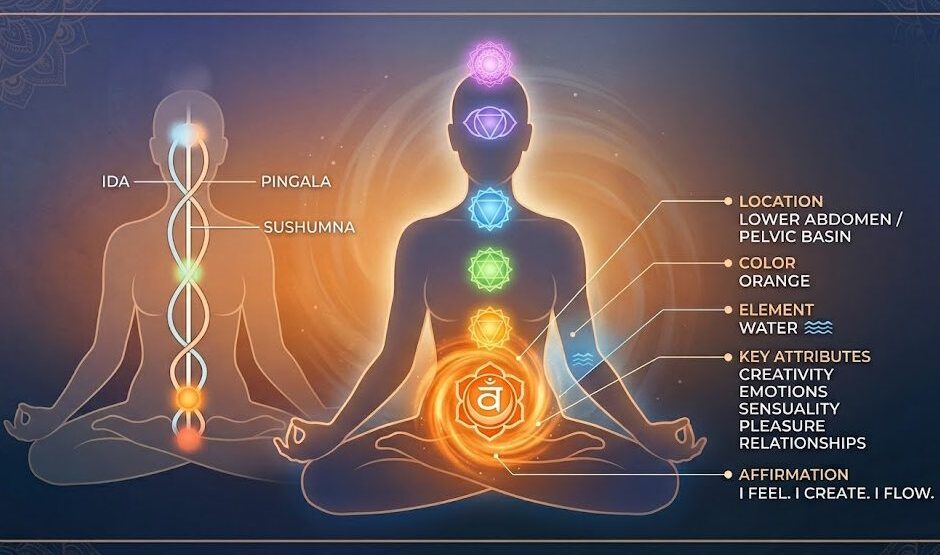
Often referred to simply as the Second Chakra, the Sacral Chakra or Svadhisthana is a dynamic vortex of energy located in the lower abdomen. Anatomically speaking, this energy center reaches out across the pelvic basin, beginning approximately two to three inches below the navel and descending toward the pubic bone. This specific positioning connects us strongly with our emotional body, providing the fundamental energetic guidelines on how we enjoy sensory pleasure, form interpersonal relationships, and express our inherent creative abilities.
Etymology and Symbolism
To truly grasp the essence of the Second Chakra, one must understand its etymological roots. The Sanskrit term Svadhisthana is a compound word derived from sva, meaning “self,” and adhisthana, meaning “dwelling place” or “seat”. Therefore, the Sacral Chakra translates to “one’s own dwelling place,” representing the sacred inner space where the authentic self, untethered emotions, and true creative essence reside.
In traditional esoteric iconography, the Sacral Chakra is universally represented by the water elemental symbol, visually depicted as a white crescent moon resting at the center of a lotus flower with six vibrant vermilion or orange petals. The system uses water (Jala) as a profound metaphor for emotional states. Just as water can be turbulent, calm, deep, shallow, or endlessly flowing, human emotions are cyclical and ever-changing. Water cannot be rigidly contained without building immense pressure, nor can it flow without a channel; similarly, emotional energy must be allowed to move dynamically yet safely.
Orange is the resonant color of the Sacral Chakra. This specific vibrational frequency indicates energetic power, artistic inspiration, and profound energetic warmth. It blends the grounding, survival-based life force of the Root Chakra’s red with the joyful, intellectual optimism of the Solar Plexus Chakra’s yellow. It is strictly through the unhindered flow of this orange energy throughout the body that we can authentically experience emotion, connect deeply with others, and achieve personal balance within the chakra system.
Origins and Philosophy of the Chakra System
The chakra system originated from ancient Indian spiritual texts, the Vedas and Upanishads, which specifically describe its complex principles through traditional yogic and tantric lineages. These ancient teachings explain that chakras function as subtle energy centers that directly affect both physical vitality and spiritual well-being. While the Root Chakra (Muladhara) governs raw survival, the Svadhisthana Chakra governs complex emotional states, human desire, and creative or artistic abilities.
In traditional Eastern philosophy, chakras exist as non-material elements that individuals experience as focal energy points existing throughout their subtle body (the Pranamaya Kosha). The system operates through essential energetic functions that control the flow of prana (life force energy). Prana serves as the fundamental life force that maintains physical health, mental awareness, and emotional regulation. The Sacral Chakra, in particular, operates through emotional movement, which directly connects to our lived experiences, our memories, and our interpersonal bonds.
Today, chakras have become an essential component of contemporary holistic psychological practices, which people increasingly utilize for their comprehensive health needs. While traditional scientific methods do not provide direct empirical measurements for chakras as physical organs, extensive modern research widely recognizes the undeniable physiological link between emotional well-being, nervous system regulation, and physical health. The energy centers find optimal balance through meditation, targeted yoga postures, and mindfulness practices, which together create a reliable pathway for people to achieve spiritual and practical wellness through chakra healing.
The Psychological Architecture: Carl Jung and Svadhisthana
According to contemporary psychological studies and depth psychology, the Sacral Chakra is deeply responsible for the way we express our feelings and how we connect with other people. It allows us to form real, vulnerable bonds with people when we are not suffocated by pathological guilt and fear. Understanding this chakra gives people the emotional stabilization necessary to bridge their physical sensations with their psychological states.
The Night Sea Journey and the Unconscious
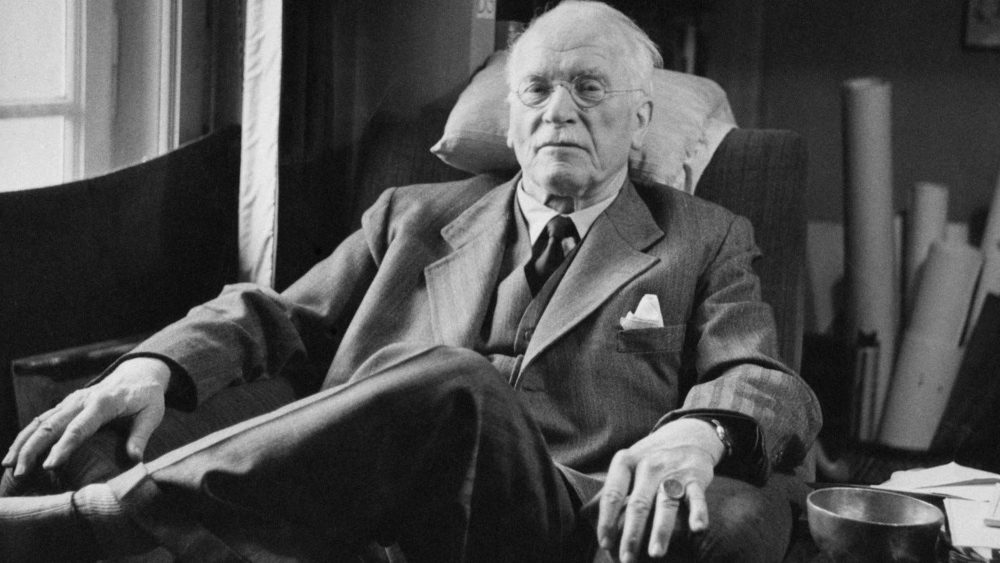
The renowned Swiss psychiatrist Carl G. Jung recognized the profound psychological utility of the chakra system, exploring it extensively in his seminars on Kundalini Yoga. Jung posited that the transition from the first chakra to the second chakra represents a monumental shift in human consciousness. He described the Root Chakra as the “surface of the world,” grounded in earthly, material survival. However, crossing into the Svadhisthana requires descending into the dark, fluid depths of the unconscious mind.
Jung utilized the archetype of the “Night Sea Journey” – a concept popularized by mythologist Joseph Campbell – to describe the psychology of the Sacral Chakra. In this mythic trope, the hero is swallowed by the Leviathan, a terrifying sea monster dwelling at the bottom of the ocean. Psychologically, this signifies the symbolic death of the rigid, purely survival-based ego, leading to a baptism into the waters of true emotional reality. The power that previously sustained the individual in the conscious, material world of the Root Chakra suddenly becomes an adversary when entering the Sacral Chakra, as the individual must abandon pure materialism to confront their irrational desires, deep-seated fears, and bodily discomforts.
Jung noted that a child transitions into the psychology of Svadhisthana as soon as they begin to notice their own physical body, feel discomfort, and assert “I”. This marks the exact moment when consciousness separates from the totality of the collective unconscious, leaving the pristine world of childhood behind to grapple with the dualities of pleasure and pain.
The Shadow Qualities and the Wound of Denial
To fully understand Svadhisthana, one must examine its “shadow” qualities. In holistic psychological paradigms, to live in the shadow frequency of a chakra is to be completely guided by the foundational wound associated with that energy center. We make decisions from that wound, relate to others through its lens, and often become consumed by it.
The primary wound of the Sacral Chakra is the “wound of denial”. Human neurobiology is naturally driven by the desire for pleasure (dopamine, serotonin) and the avoidance of pain (cortisol, adrenaline). However, in the shadow of Svadhisthana, this natural drive mutates into a vicious cycle of craving and aversion, driven by an inability to tolerate emotional discomfort. This wound is the seed of addictive behaviors, severe relationship conflicts, and a slew of unhealthy habits.
Furthermore, Sacral energy is fundamentally about connection and partnership. When operating from the shadow, this drive forces individuals to seek connection regardless of the personal cost, resulting in chronic people-pleasing behaviors, a lack of boundaries, and a desperate need for external validation. Individuals who struggle to say no or feel their own worth frequently hold deep somatic tension in the pelvic basin and lower abdomen—the exact physical location of the Sacral Chakra.
Richard Barrett’s Stages of Development
This Jungian framework parallels modern psychological models, such as Richard Barrett’s Seven Stages of Psychological Development. Within Barrett’s model, the second stage – termed the “Conforming” stage – aligns directly with Svadhisthana. During this developmental phase, humans focus on forming meaningful relationships and exploring emotional depth. Emotional intelligence becomes the paramount metric of growth, and the primary tension lies in balancing personal identity against the desire for collective belonging.
Characteristics of a Balanced Sacral Chakra
The Sacral Chakra achieves optimal emotional flow when it maintains a balanced state. This equilibrium enables people to experience their feelings deeply without any need for pathological suppression or excessive, volatile emotional expression. Individuals who possess a balanced Svadhisthana system maintain stable internal emotions while authentically showing their feelings to others. They possess the capacity to experience intense emotions, yet they handle these feelings through proper, regulated methods, which ultimately benefits their long-term personal development.
Emotional and Creative Manifestation
The balanced state of the Svadhisthana Chakra produces creativity as its main characteristic. This is not limited to traditional fine arts; the ability to create new things exists within people through their artistic skills, musical talents, innovative business ideation, and complex problem-solving abilities. In a balanced state, this creativity exists as a natural process that moves forward without forceful effort, mirroring the natural flow of water, which demonstrates the essential qualities of this chakra. Creative ideas appear seamlessly, creating a powerful drive to show artistic expression through various forms of work and everyday activities.
Healthy Intimacy and Relationships
The existence of healthy relationships functions as a primary indicator for maintaining balanced sacral states. A balanced individual radiates warmth, confidence, and generosity. Their relationships provide a deep connection without creating toxic dependency. Partners share an intimate bond that includes the ability to experience profound sensory pleasure without experiencing any lingering feelings of guilt or shame. The life experience develops its full meaning because one can experience life through active, joyous participation while staying grounded and present in their current state of awareness.
Signs of an Imbalanced Sacral Chakra
When the Svadhisthana Chakra falls out of alignment, the resulting physical and emotional dissonance can profoundly impact an individual’s quality of life. An imbalanced Sacral Chakra typically manifests through two distinct pathological patterns, showing either an underactive (deficient) or an overactive (excessive) condition.
Underactive conditions cause individuals to experience complete emotional disconnection and numbed feelings. The individual shows severe creativity deficits, an exceptionally low libido, and a general lack of drive, which creates significant problems when attempting to establish meaningful connections with others. They may exhibit a profound fear of pleasure and a resistance to any form of change.
Conversely, the overactive Sacral Chakra causes people to experience excessive emotional distress and volatility. People show extreme emotional attachment, resulting in codependency and a desperate need for others to guarantee their safety. They require constant entertainment and sensory stimulation to avoid sitting by themselves. The person will act impulsively without thinking about the consequences of their actions, facing severe challenges in controlling their emotional and physical limits.
Because chakras are inextricably linked to the endocrine and nervous systems, blockages in the Sacral Chakra manifest physically in the pelvic region. The following table outlines the comprehensive symptoms associated with Svadhisthana dysregulation:
| System / Category | Symptoms of a Blocked or Imbalanced Sacral Chakra |
| Physical (Musculoskeletal) | Chronic lower back pain (especially in the lumbar region), severe hip stiffness, tightness in the pelvic floor, and joint discomfort in the lower body. |
| Physical (Organ Systems) | Reproductive health issues (e.g., irregular menstrual cycles, erectile dysfunction), urinary and bladder problems, kidney dysfunction, and poor fluid metabolism. |
| Emotional State | Emotional numbness, chronic overwhelm, mood swings, extreme sensitivity, depression, and pervasive feelings of fear and betrayal. |
| Creative & Psychological | Complete loss of creativity, creative blocks, addictive behaviors, lack of self-worth, feeling alienated from one’s own desires, and fear of change. |
| Interpersonal & Relational | Codependent relationship patterns, fear of intimacy, inability to express emotions, difficulty setting boundaries, and extreme swings between desire and disinterest. |
The process of Sacral Chakra healing requires people to identify these particular symptoms, which they must learn to recognize with honesty. The first step to achieving balance requires the development of acute self-awareness. A person can only restore balance to their chakra system through consistent emotional pattern observation, which must be conducted without making harsh self-judgments.
Preparing for Chakra Healing: Setting the Container
The practice of chakra healing necessitates a protective psychological and physical space, which must be firmly established before practitioners commence their deep emotional work. The mind achieves its optimal state for healing through a peaceful and silent environment, enabling individuals to attain heightened consciousness. The physical space requires no complex design; simple, clean elements create a better environment for processing complex internal information.
The internal mindset holds equal significance to the external environment. The process of chakra healing requires practitioners to develop themselves gently, without violently forcing changes to their current state. Attempting to strong-arm the psyche into releasing trauma triggers the nervous system’s fight-or-flight response, causing the body to brace further. The practice needs people to proceed with profound openness and patience so their bodies can naturally recover. Intention functions as a strong influence because it guides people to achieve equilibrium and peacefulness.
Self-observation serves as an essential component for this development. The state of the Sacral Chakra can be accurately determined by tracking emotional responses to specific environmental triggers and documenting the resulting behaviors. The deliberate process of developing this awareness establishes the definitive path to permanent and significant life changes.
Step-by-Step Guide to Balancing the Sacral Chakra
Balancing the Sacral Chakra is an active, ongoing process that combines visualization, somatic grounding, and breathwork. The following foundational protocol can be utilized daily to establish energetic equilibrium:
- Establish the Posture: Your body should sit down in a peaceful area while your spine remains straight, yet your body stays entirely relaxed. Ground your sit bones into the earth or your chair.
- Focus the Awareness: Your body should close its eyes while you gently focus your attention on your lower abdomen, specifically the area two inches below the navel, which serves as the physical epicenter for the Sacral Chakra.
- Initiate Breath Monitoring: You should start to monitor your breath pattern through mindful breathing activities. The breath needs to move through your body in a natural, smooth, and unforced way.
- Visualize the Energy: While you breathe in, your mind’s eye should imagine a warm, vibrant orange light. Visualize this light expanding throughout your lower abdomen space to activate the Sacral Chakra, bringing it to a comforting and consistent energy level.
- Release and Exhale: Your body should exhale all its emotional weight while intentionally releasing pelvic tension and physical discomfort. Each exhaled breath brings you a sense of lightness and release, helping you remove stagnant energy while attaining emotional balance and internal flow.
- Observe the Emotional Wave: When you experience intrusive thoughts or heavy emotions during this process, you should observe them without responding, evaluating, or suppressing them. The emotional wave should pass through your awareness like gentle ocean waves. Emotional flow must occur naturally for genuine Sacral Chakra healing to take place.
- Return to Presence: Your body should gradually become aware of your physical presence and your current environment. The ground connection beneath you helps you reach complete awareness of your current state. The practice ends with you experiencing both peacefulness and balance, bringing a mild but profound emotional consciousness.

Sacral Chakra Meditation and Crystal Healing Techniques
The practice of specialized visualization meditation serves as the most powerful natural technique for restoring balance to the Sacral Chakra, as this energy center requires both emotional movement and unblocked energy flow to function properly.
Visualization and Water Metaphors
Because water is the ruling element of Svadhisthana, the practice requires you to center your mind by picturing a river that moves smoothly or ocean waves that rise and fall in their natural, uninterrupted patterns. These aquatic images demonstrate the natural way emotions should move through the human psyche. This movement should occur without any kind of blocking, hidden suffering, or active control. The natural flow of your own emotions will begin to mirror this visualization, establishing a progressive process that leads to a deeply relaxed state, permitting emotional energy to move through the pelvic region in a balanced manner.
Crystal Programming and Cord Cutting
To amplify the meditation, practitioners frequently integrate specific mineralogical frequencies. Crystals such as Carnelian and Tiger’s Eye possess vibrational signatures that perfectly align with the Sacral Chakra’s orange frequency. A highly structured, 11-minute visualization protocol utilizing a Carnelian crystal has demonstrated profound efficacy :
- Hold a cleansed Carnelian crystal in your hands, close your eyes, and take three deep breaths.
- Program the crystal by stating (aloud or internally): “I ask that the highest vibration of love and light connect with my highest self to clear all unwanted energy and any previous programming. I command this crystal to hold the intention of balancing my sacral chakra.”
- Lie comfortably on your back and place the crystal directly over your Sacral Chakra for exactly 11 minutes.
- Visualize a brilliant orange light filling the space, acting as a healing solvent that cuts the cords of past emotional blocks, traumas, and toxic relational attachments.
Mantra Meditation (The Sound of VAM)
The practice of mantra meditation through the sound repetition of “VAM” serves as a highly effective, ancient technique for healing the Sacral Chakra. The Svadhisthana Chakra, which this bija (seed) mantra represents, contains a sound pattern that matches its specific bio-energetic frequency. The practice of chanting “VAM” at a low volume, or through silent mental repetition, creates subtle somatic vibrations in the pelvic floor that enable people to attain chakra activation and balance their energy. Repeating this practice establishes a deeper neurological connection with your emotional center. The rhythmic pattern of mantra meditation helps people achieve inner peace, allowing natural somatic healing processes to take over.
Emotional Awareness Meditation
Emotional awareness meditation teaches people to experience their feelings without judgment. Instead of reacting impulsively to emotions as they arise, you learn to observe them as they occur, witnessing their presence without assigning them a moral value (good or bad). This technique develops profound inner strength while decreasing your tendency to respond emotionally to triggering situations.
Through this practice, you will start to realize that emotions exist strictly as temporary physiological feelings that do not define your permanent personality. Observing your emotions allows you to create vital distance between your core self and your fleeting feelings, resulting in drastically increased mental clarity and emotional equilibrium. This practice of gentle observation helps develop strong grounding skills, crucial for maintaining your emotional center during times of extreme instability.
Yoga Practices for the Sacral Chakra
Yoga functions as the primary physical practice that maintains equilibrium for the Sacral Chakra because this energy center exists precisely where the body controls hip movement, lower abdominal strength, and pelvic power. The physical body actively stores suppressed emotions – particularly trauma, guilt, and shame – in the deep fascial networks of the hips and psoas muscles, resulting in chronic physical stiffness and bodily discomfort.
The body can release this accumulated tension through targeted, gentle yoga practices that stretch the pelvic basin, enabling energy to flow without restrictions. The way these movements are practiced is just as important as the poses themselves. The Sacral Chakra requires soft and fluid movements; therefore, postures should be performed with slow, mindful, and flowing transitions. Aggressive stretching can cause the nervous system to brace, whereas gentle transitions stop blockages and avoid bodily tension.
The following table details the most effective yoga postures for balancing the Sacral Chakra:
| Yoga Pose (Sanskrit & English) | Biomechanical Action | Energetic and Emotional Benefit |
| Baddha Konasana (Bound Angle / Butterfly Pose) | External rotation and opening of the hips and groin. | Releases suppressed emotions held in the pelvic floor; provides a gentle, deeply effective release of sexual and emotional blockages. |
| Eka Pada Rajakapotasana (Pigeon Pose) | Deep external rotation of the anterior hip stretches the psoas. | One of the deepest hip openers; highly effective for processing and releasing stored fear, trauma, and tension held deep within the hips. |
| Utkata Konasana (Goddess Pose) | Wide-stance squat, activating the pelvis and inner thighs. | Activates the pelvis, builds strength and confidence, and awakens dormant creative and feminine (Shakti) energy. |
| Anjaneyasana (Low Lunge) | Opens the front of the pelvis and hip flexors. | Encourages receptivity, adaptability, and emotional openness by releasing the area where physical control is often held. |
| Ananda Balasana (Happy Baby Pose) | Hip flexion and gentle lower back release. | Reconnects the practitioner with pure joy, invites childlike curiosity and pleasure, and releases deep lower back tension. |
| Mandukasana (Frog Pose) | Advanced bilateral hip abduction. | Highly intense but exceptionally powerful for shattering deeply held emotional tension and defense mechanisms in the groin. |
The regular practice of these yoga techniques delivers compounding advantages for both physical health and emotional well-being. The body develops significantly increased flexibility, particularly in its hips and lower spine, while the mind becomes more receptive to vulnerability. The combination of physical opening and mindful breathing helps you release trapped emotions while developing the self-awareness needed to handle future emotional waves healthily.

Breathing Techniques (Pranayama)
Breath exists as the absolute physiological connector between the body and mind, making this connection vital in the practice of Sacral Chakra work. The body experiences disrupted energy flow because emotional energy imbalances lead to disruptions in the autonomic nervous system, causing shallow, sympathetic (fight-or-flight) breathing.
The practice of pranayama (breath control) establishes a regulated energy system through its ability to quiet the body and help practitioners stay aware of their current somatic experience. The body achieves emotional equilibrium through slow-paced breathing, which creates a steady parasympathetic pattern that enables erratic emotional energy to reach a state of deep calmness.
Deep Abdominal Breathing
Deep abdominal (diaphragmatic) breathing stands as the most effective baseline method for healing the Sacral Chakra. The practice involves taking gentle nasal breaths that force the lower abdomen to expand outward like a balloon, while maintaining a natural pattern that prevents the chest and shoulders from lifting. This physical movement activates the Sacral Chakra center through the direct, mechanical push of the diaphragm toward the pelvic basin.
Exhalation leads to a slow abdominal release, enabling the body to expel stored physical tensions and heavy emotional burdens. The method requires maintaining a state of relaxed breathing, which should remain entirely natural without any forceful or aggressive breath control. The body naturally reaches a peaceful state through this process, supporting the organic functions of Svadhisthana.
Through consistent practice, breathwork develops into a profound awareness and transformation tool. It creates emotional distance, helping people control their knee-jerk reactions. You learn to analyze your emotions with a better understanding and calmer physiology. Continuous breath awareness creates balance between bodily systems, maintaining natural energy movement and forging a stronger bond between physical sensations, mental states, and emotional feelings.
Lifestyle Practices to Balance the Sacral Chakra
It is completely necessary to do more than merely meditate and practice yoga to achieve Sacral Chakra balancing; systemic healing depends heavily on how you live every single day of your life. Practicing simple, mindful lifestyle changes helps support your energy center outside of formal therapeutic environments, allowing you to regain permanent emotional balance.
Nutrition and Hydration
This chakra functions directly according to how people select their food and living conditions. Because water is its essential ruling element, the Sacral Chakra requires people to consume fresh, vibrant foods with exceptionally high water content.
Eating orange-colored foods is an incredibly effective, scientifically supported way to nourish the physical body while aligning with the energetic frequency of the chakra. Highly recommended foods include sweet potatoes, carrots, pumpkins, butternut squash, melons, mangos, and orange citrus fruits. Nuts, seeds, and fermented foods are also crucial, as they support the reproductive and digestive systems located in the lower abdomen.
Hydration is paramount. Practitioners recommend infusing pure, filtered water with orange fruits – such as clementines, oranges, tangerines, and golden raspberries – to visually and biochemically support the sacral center.
Hydrotherapy and Environmental Immersion
Water restoration happens naturally when we intentionally spend time around bodies of water. Walking barefoot along meandering rivers, relaxing by still lakes, and engaging in outdoor walking are important ways for people to connect with nature, find emotional balance, and relieve the accumulated stress of modern life.
When outdoor water is inaccessible, therapeutic bathing is highly recommended. Languishing in a warm bath infused with two cups of Epsom salts (magnesium sulfate) and high-frequency essential oils, particularly rose oil, creates an optimal environment for physical relaxation and self-love.
Creative Pursuits and Authentic Relationships
Structurally, the Sacral Chakra is the genesis of all human creativity. You can increase its vitality by intentionally making space to facilitate your emotional release process through art. Creative pursuits – such as painting, free-writing, playing music, and unchoreographed dancing – give vital external expression to your inner sensations. These resources allow you to express yourself freely, helping you rediscover your intrinsic joy, creative energy, and personal freedom.
Furthermore, maintaining the Sacral Chakra equilibrium requires healthy interpersonal relationships and partnerships. This chakra dictates how humans show their emotions through social connections and sexual intimacy. The foundation of healthy relationships rests on honesty, mutual respect, and the establishment of well-defined, unshakeable personal boundaries. The ability to develop open emotional expression, paired with a firm comprehension of personal limits, enables the creation of a secure environment. The body experiences severe imbalance when people choose to hide their emotions or refuse to acknowledge their emotional state. Proper emotional recognition enables deep intimacy and drastically better mental health.
Emotional Healing and Shadow Work
Emotional healing functions as the absolute core element enabling people to achieve equilibrium for their Sacral Chakra. This energy center acts as the foundation for the entirety of the human emotional experience – how we process trauma, how we express joy, and how we navigate intimacy.
People who deal with a blocked Svadhisthana face immense challenges when they attempt to control their emotions through the mechanisms of guilt, shame, fear, and the unhealed history of their past pain. The physical body actively stores these unprocessed emotions, creating physical discomfort and severe energetic blocks.
The Practice of Non-Denial
The first and most vital step toward healing is simply acknowledging these emotions without falling back into the “wound of denial”. Your actual, unvarnished feelings – no matter how ugly or uncomfortable they may seem – create the only path that leads to emotional release and permanent personal change.
You must allow your feelings to develop naturally without attempting to avoid the discomfort that inevitably arises from emotional pain and distressing memories. You should observe your feelings with a peaceful, clinical understanding while maintaining behavioral self-control. Your emotions will rapidly become less intense once you start to simply observe them instead of exhausting your energy trying to prevent them from existing.
Through the consistent practice of mindfulness, you will realize that emotional experiences exist only for a brief physiological window and do not transform into permanent states unless they are suppressed. Accepting your emotions completely enables you to let your feelings pass through you without creating devastating internal struggles.
The practice of emotional awareness ultimately develops into a state of profound freedom, bringing a feeling of physical and psychological lightness. When people release their hidden emotions, body resistance and muscular tension decrease dramatically, allowing the energy in the Sacral Chakra to flow freely. Daily existence begins to show vastly improved emotional stability, mental clarity, and deep peacefulness. This process changes all aspects of your relationship with your own mind, transforming you from someone who avoids emotions out of fear to someone who understands and masters them.
Benefits of a Balanced Sacral Chakra
The benefits of successfully balancing the Svadhisthana Chakra permeate every facet of human existence, spanning the physical, emotional, and spiritual realms.
Emotional Stability: The balanced state of the Sacral Chakra enables you to maintain unwavering emotional stability while experiencing the full spectrum of emotional states. You no longer lack the ability to regulate your reactions, and your mind remains clear even in times of crisis. Your baseline emotional comfort increases, bringing you a greater, embodied understanding of inner peace, radical self-acceptance, and complete emotional health.
Creative Flow: The natural flow of creativity occurs effortlessly when this chakra achieves its balanced state. Innovative and creative ideas appear without effortful, grinding thought. This creates a powerful, joyful need to show artistic expression through various forms of work and everyday problem-solving activities. This process helps individuals continuously develop themselves while collaborating harmoniously with others to expand their skills.
Physical Vitality: The balanced state of the Sacral Chakra provides immense physical benefits, boosting raw vital energy and complete bodily health, with highly specific benefits for the lower body. The practice of balancing this center improves emotional-physical awareness, enabling the muscular system (particularly the pelvic floor and hips) to achieve greater relaxation, natural movement patterns, and perfect alignment with the body’s natural biorhythms.
Spiritual Connection: The spiritual state of this balance creates a deep, resonant experience of existence that connects all aspects of life. Your movement through the world becomes smooth as you stop aggressively opposing the natural flow of reality. This brings you to a permanent state of presence, psychological stability, and profound connection with both your authentic self and your surrounding environment.
Scientific and Psychological Perspective
While the chakra system originates in esoteric tradition, the modern scientific and psychological communities have conducted extensive research into the methodologies used to heal the Sacral Chakra. Techniques such as meditation, mindfulness practices, somatic yoga, and specific breathwork protocols have been heavily scrutinized and validated by clinical science.
These methods create measurable, highly specific effects on both brain functionality and autonomic nervous system operations. The practices enable the human body to shift from sympathetic dominance (fight-or-flight) into a parasympathetic state of deep relaxation. This biological shift leads directly to decreased blood levels of stress hormones (like cortisol) and an increase in mental tranquility. Regular practice is clinically proven to lead to better emotional control, improved executive concentration skills, and enhanced total mental health. While the strict scientific community does not currently recognize chakras as physical, dissectible energy centers, scientists thoroughly document and validate the actual physiological advantages that result from these chakra-balancing techniques.
From a purely psychological perspective, the Sacral Chakra functions as a vital metaphor that links emotional health directly to total physical well-being. Psychological studies confirm that the body experiences literal physical pain when unexpressed emotions build up, creating chronic stress and anxiety over extended periods. The developed ability to identify, process, and share feelings through healthy interpersonal methods leads to undeniable mental equilibrium and psychological resilience. Modalities such as targeted journaling, professional therapy sessions, and mindful somatic awareness practices enable people to deal with their emotions effectively, leading to vastly reduced internal struggle and supreme emotional self-control.
The connection between the esoteric and the empirical demonstrates how ancient yogic knowledge and modern scientific research function perfectly as a complementary system. The combination of these methods creates a comprehensive chakra healing protocol that serves as a complete, evidence-based method for achieving mental harmony and physical satisfaction in daily life.
Common Mistakes and Challenges in Chakra Healing
The path to balancing the Sacral Chakra is not without its pitfalls. Practitioners frequently encounter specific challenges and commit common errors that can severely stall their healing progress.
Rushing the Healing Process
People frequently make their first major error in chakra healing when they aggressively attempt to force an emotional release. Individuals in modern society are conditioned to expect instant gratification, leading them to believe that emotional healing requires fast, dramatic catharsis. However, this forceful method creates significantly more neurological stress than it solves.
Natural emotional development requires a person to give their feelings adequate time, space, and safety to proceed organically. Any attempt to artificially speed up or forcefully control the psychological treatment process will cause the mind and body’s defense mechanisms to fight back, making true healing exponentially harder to achieve. Authentic emotional release happens gently, often quietly, when you finally allow feelings to surface on their own without applying pressure or passing judgment.
Neglecting the Physical Body
Chakra healing often becomes artificially limited because practitioners treat it as a purely mental or spiritual exercise, completely failing to pay attention to their gross physical bodies. Chakras connect directly to the biological organism; therefore, people must develop acute physical awareness to achieve emotional balance.
The practices of yoga and breathwork, through their implementation of mindful biomechanical movement, are strictly necessary to help people release the physical tension that traps the emotional energy. The healing process only becomes truly effective when you combine physical somatic activities with your cognitive emotional understanding. This combined, holistic method develops a much more profound state of equilibrium, enabling the physical body and the psychological mind to function together in a peaceful, unified state.
The Challenge of Expression and Self-Judgment
One of the greatest challenges individuals face when doing Svadhisthana work is overcoming their deep-seated inability to express what they truly feel. Due to past trauma or societal conditioning, people are terrified of being criticized or rejected when they express vulnerability, causing them to chronically suppress their emotions. Over the years, this fear builds dense energetic blockages and severe physical tension.
Overcoming this requires individuals to summon immense courage and utilize self-acceptance as a bridge toward their healing goals. When individuals take small, manageable steps – such as private journaling or simply acknowledging their feelings to themselves without harsh self-criticism – their internal barriers slowly begin to break down.
Self-judgment is the single greatest factor that slows the healing process. Inner resistance is newly formed every single time you judge yourself for “not doing enough work” or growing too slowly. Practitioners must use a gentle hand, demonstrating radical compassion toward themselves during the healing journey. When you dovetail your healing efforts with complete acceptance of exactly where you currently are, your emotional energy is finally permitted to move freely.
The Crucial Role of Consistency and Patience
The overarching process of healing the Sacral Chakra inherently requires significant time because it develops through deep, neurological personal progress, which demands complete dedication. Healing needs people to practice their chosen modalities repeatedly while patiently waiting for the compounding results to manifest.
The daily, consistent practice of short meditation and breathing exercises – performed with complete awareness of one’s emotions – brings about permanent structural results. This daily consistency is vastly superior to engaging in occasional, highly intense spiritual training sessions followed by weeks of neglect. The body and mind utilize gentle, repeated exercises to establish a new normal state without feeling threatened by external demands. This method of healing through steady, incremental progress allows you to build a secure internal space that fully supports your emotional growth toward achieving lasting balance.
Furthermore, you must entirely cease comparing your personal psychological development to the perceived progress of others. Such comparisons create a toxic need to obtain progress rapidly, which invariably leads to unreliable, superficial development. The highly unique life experiences, traumas, and emotional baselines of individuals dictate that the healing process will look entirely distinct for each person. Progress comparisons create unnecessary psychological obstacles, resulting in frustration and self-doubt, which violently interrupt the natural growth process.
Instead, you must concentrate solely on your personal internal experiences and celebrate the minor progress you make each day. Every minor shift in your emotional understanding, every moment you successfully observe a feeling without reacting, creates immensely valuable progress toward your ultimate personal development. The complete transformation of the Svadhisthana system naturally progresses through various stages, which only become visible when you surrender to the process and allow time to do its work.
Comprehensive FAQ
- What exactly does the Sacral Chakra control?
The Sacral Chakra (Svadhisthana) is the primary energy center that governs the entirety of your emotional landscape, your innate creativity, your experience of sensory pleasure, and your interpersonal connections. Functionally, the system controls your emotional expression, your sexual energy, your ability to experience genuine happiness, and your capacity to build vulnerable, trusting bonds with other people. It acts as the bridge between raw, survival-based physical grounding and complex, heart-centered love.
- How do I know for sure if my Sacral Chakra is blocked?
A blocked or imbalanced Sacral Chakra manifests through a spectrum of emotional, physical, and relational signs. You may experience severe emotional numbness (feeling entirely disconnected from your feelings), a complete lack of creative inspiration, a drastically lowered libido, and an intense struggle to form authentic connections with others. Physically, a blockage frequently presents as chronic lower back pain, severe stiffness in the hips, or reproductive and urinary health issues. The condition can also manifest as overactivity, characterized by extreme emotional volatility, codependency, and an insatiable need for external validation.
- How long does it realistically take to balance the Sacral Chakra?
The time required to balance the Sacral Chakra varies wildly for each individual and depends entirely on the depth of their stored trauma and their dedication to the practice. Healing is not a linear timeline. However, the process of engaging in regular daily meditation, targeted somatic yoga, and lifestyle transformation will lead to gradual, compounding development. Most practitioners report noticing visible, significant improvements in their emotional stability and physical hip mobility within a few weeks of consistent, daily practice.
- Can practicing yoga alone balance the Sacral Chakra?
While yoga plays an incredibly important, foundational role in balancing the Sacral Chakra by mechanically releasing physical tension and improving blood and energy flow to the pelvic region, it is rarely sufficient on its own. True, lasting healing requires a holistic approach. The combination of somatic yoga postures with visualization meditation, breathwork (pranayama) techniques, specific nutritional adjustments, and deep emotional shadow work establishes a complete, comprehensive system that supports extended, permanent healing.
- Is a dramatic emotional release necessary for healing to occur?
Emotional release functions as a vital component of complete healing, but it does not need to be dramatic, explosive, or forced. Sacral Chakra healing requires emotional processing to occur as a natural, organic process. Attempting to force a cathartic breakdown often causes the nervous system to regress. The gentle process of allowing minor emotions to arise daily while maintaining mindful awareness and self-acceptance leads to authentic, sustainable healing, ultimately resulting in profound emotional liberation and unshakeable internal equilibrium.
Conclusion
The Sacral Chakra, in all its complexity, teaches us how to profoundly understand the way our feelings connect with our physical bodies through continuous, fluid emotional movement. The Svadhisthana chakra demands that we live our lives through a heightened state of awareness regarding our present, sensory experiences. By making our darkest fears, our deepest desires, and our passing feelings more understandable to us, this vital energy center provides the ultimate blueprint for emotional balance. The feelings that we courageously allow ourselves to experience show us the definitive path that leads to a better understanding of ourselves and stronger, more authentic relationships with others.
People who successfully learn to let their feelings flow through their bodies – like water moving effortlessly down a stream – experience life with an unmatched level of freedom, ensuring their creativity, sexual vitality, and mental clarity remain fully intact.
We achieve genuine, lasting healing only by developing gentle awareness, rather than by aggressively trying to force our minds and bodies to change. Our physical body needs us to create a deeply safe, non-judgmental space because our complex emotions exist inside us, waiting to be observed without resistance. The intricate body-mind-emotion connection achieves perfect balance through this quiet awareness, successfully releasing decades of internal pressure. This holistic approach teaches us to handle life’s inevitable challenges with grounded mindfulness instead of responding to them through blind, automatic, trauma-based reactions.
Ultimately, we must abandon the toxic pursuit of perfection in our spiritual and psychological practices, choosing instead to focus on achieving sustainable balance throughout the entirety of our lives. We must learn how to surrender to the natural flow of the universe. Emotions must be permitted to experience their natural life cycle – flowing through different intensities before reaching their final state of dissipation, exactly as water does. Through the profound practice of self-acceptance, the Sacral Chakra teaches us to implicitly trust ourselves, to trust the wisdom of our bodies, and to trust the fluid journey of life itself. In doing so, our inner peace and our true, authentic identity discover magnificent new depths.