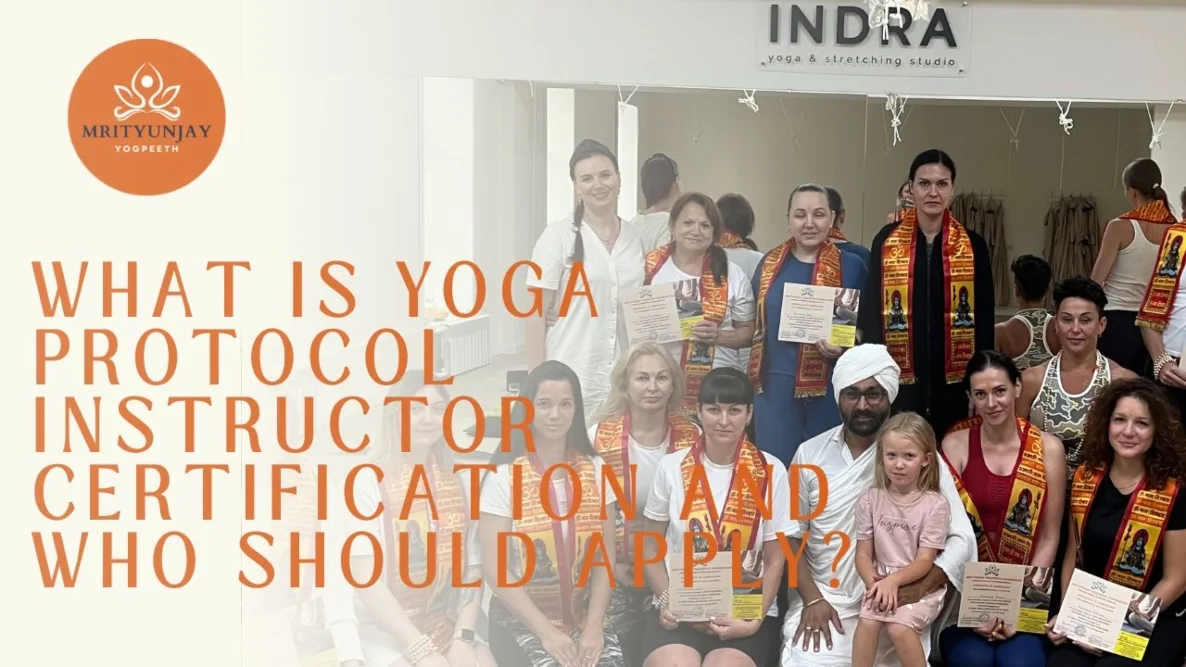
Yoga Protocol Instructor certification – commonly called YPI or Yoga Certification Board Level 1 – is a competency-based certification under the Yoga Certification Board (YCB), Ministry of Ayush, Government of India. It is intended for people who can teach the basics of yoga and lead the Ministry’s Common Yoga Protocol in community settings such as parks, residential societies and similar groups for health promotion.
It is not a yoga-therapy qualification, a medical licence, a guaranteed job or the same credential as a commercial 200 hour yoga teacher training. The number “200” appears in both systems, but the awarding body, syllabus, assessment and professional meaning are different.
TL;DR
- Yoga Protocol Instructor is the foundational professional certification in the Yoga Education and Training category of India’s Yoga Certification Board, Ministry of Ayush.
- The role focuses on teaching basic yoga and the Common Yoga Protocol, especially in community settings, for health promotion and preventive wellbeing.
- YCB does not itself conduct a YPI course. It defines the certification framework and assessment. Training is offered by eligible institutions; assessment is conducted through YCB-accredited institutions or approved Personnel Certification Bodies (PrCBs), depending on the route.
- For admission to a YPI-aligned course, YCB guidance says passing Class 10 or an equivalent secondary-school qualification is suggested or desired, but an institution may set its own entry requirements.
- An open candidate who already has the required knowledge and practical skill can apply for assessment through an approved PrCB. YCB’s FAQ says there is no minimum qualification or age limit for professional certification assessment.
- YCB’s published professional guideline describes YPI training competence as not less than 200 hours, or at least three months part-time or one month full-time. A particular institution may structure or extend its course differently.
- The published assessment totals 200 marks: 60 for theory and 140 for practical work. The practical component carries more weight because candidates must demonstrate and teach—not merely recall information.
- YCB’s guideline requires candidates to qualify in theory and practical separately, with 70% in each, subject to the detailed rules in the applicable exam notice.
- The theory syllabus covers introduction to yoga and yogic practices, introduction to yoga texts, and yoga for health promotion. Practical assessment covers demonstration, teaching skill, application of knowledge and field experience.
- A YPI certificate supports basic protocol-led teaching. It does not qualify someone to diagnose conditions, prescribe treatment, claim cures or independently offer yoga therapy.
- The official guideline lists five-year validity for YPI. Renewal involves the Continuing Yoga Education Programme (CYEP); candidates should check current YCB notices before expiry.
- Apply if you want a structured, assessed entry credential for community yoga and can commit to both study and personal practice. Choose a higher or specialist pathway if your goal is broader studio teaching, teacher training, clinical yoga therapy or work with high-risk populations.
- Always verify the exact institution, PrCB, exam date, fees and certificate route on the current YCB website. A training provider’s own completion certificate is not automatically the YCB professional certificate.
The terms people often confuse
| Term | What it means | What it does not mean |
|---|---|---|
| Yoga Certification Board (YCB) | A board established by India’s Ministry of Ayush to certify yoga professionals and accredit relevant bodies and institutions | A yoga studio, a commercial teacher-training brand or the organisation delivering every YPI course |
| Yoga Protocol Instructor (YPI) | A foundational YCB professional certification for basic yoga and Common Yoga Protocol teaching | Yoga therapist, medical professional, master trainer or specialist teacher status |
| YPI-aligned course | Training intended to prepare candidates for the YPI syllabus and assessment | Automatic YCB certification merely for attendance or payment |
| Training completion certificate | Evidence issued by a training provider under its own course process | Proof that the candidate passed the YCB professional assessment, unless the document explicitly is the YCB certificate |
| Personnel Certification Body (PrCB) | A YCB-approved body that can assess yoga professionals within its approved scope | Necessarily the organisation that trained the candidate |
| Accredited Yoga Institution/Centre | An institution recognised under a YCB category and scope | Permission to assess everyone for every YCB level indefinitely; current scope and validity still need checking |
| Common Yoga Protocol (CYP) | A standardised protocol developed under the Ministry of Ayush for International Day of Yoga and general wellbeing promotion | An individual therapeutic prescription for a person’s medical condition |
| 200-hour Yoga Alliance training | A school-based training route associated with a different, private international organisation | The same as YCB YPI, automatic eligibility under every YCB route or an Indian government certificate |
Use the exact name printed on the credential. “Ayush certified,” “government approved,” “YCB course certificate” and “international certificate” can be misleading when the provider does not explain who trained, who assessed and who issued the final document.
What is the Yoga Certification Board?
The Yoga Certification Board was established by the Ministry of Ayush, Government of India, to support quality, uniformity, and confidence in the skills of yoga professionals. Its scheme covers professional certification and institutional accreditation.
YCB’s published framework separates professional certifications into two broad categories:
Yoga Education and Training
- Yoga Volunteer;
- Yoga Protocol Instructor;
- Yoga Wellness Instructor;
- Yoga Teacher and Evaluator; and
- Yoga Master.
Yoga Therapy
- Assistant Yoga Therapist;
- Yoga Therapist; and
- Therapeutic Yoga Consultant.
The categories are not interchangeable. YPI belongs to education and training, not yoga therapy. A Level 1 instructor should not use the credential to imply clinical authority.
YCB describes the professional certification programme as voluntary. Voluntary does not mean irrelevant: a particular government scheme, employer, institution, tender, client or insurer may ask for a named credential. It also does not mean universally mandatory. Candidates should check the actual requirement for their target role.
Does YCB run the Yoga Protocol Instructor course?
No. YCB’s FAQ states that the Board does not conduct yoga courses; it conducts assessment or examination for professionals who want their skills certified.
There are two main routes.
Route 1: training and certification through an accredited institution
A candidate enrols with a suitable YCB-accredited institution or centre, completes its training and follows the institution’s process for the YCB assessment. The provider may set admissions, attendance, practical-work and internal-assessment requirements beyond the general YCB guidance.
Route 2: open-candidate assessment through an approved PrCB
An experienced or independently trained practitioner who already possesses the required knowledge and skill may apply as an open candidate through a YCB-approved Personnel Certification Body. This route removes the requirement to attend a particular YCB-accredited course; it does not remove the need to meet the same certification standard.
An open-candidate route is not a shortcut for a beginner. Without structured learning, supervised practice and feedback, it can be difficult to demonstrate the required breadth and teaching competence.
Who is eligible to apply?
Eligibility depends on whether the person is seeking course admission or professional assessment.
For admission to a YPI course
YCB’s professional guideline says it is suggested or desired that a candidate has passed Class 10, secondary school or an equivalent qualification. It also says yoga institutions may define their own eligibility.
For example, MDNIY’s current Certificate Course in Yoga for Protocol Instructor requires Class 10 plus its named foundation course or an accepted equivalent, or documented yoga teaching and training experience. It also states medical-fitness conditions for that particular programme. Those are MDNIY admissions requirements, not proof that every YPI provider must use exactly the same criteria.
For open-candidate certification assessment
YCB’s FAQ and guideline state that an open candidate does not have a minimum educational qualification or age limit for the professional certification assessment. The candidate is still expected to possess the knowledge and skill needed to pass.
Practical eligibility matters more than formal eligibility
Before applying, a candidate should be able to answer yes to most of these questions:
- Can I practise the syllabus consistently without forcing or concealing pain?
- Can I learn and explain foundational theory rather than memorise isolated answers?
- Can I demonstrate clearly from different viewing angles?
- Can I give concise instructions while observing participants?
- Can I recognise visible distress and stop or adapt a practice?
- Can I receive corrections without becoming defensive?
- Can I maintain attendance, self-study and practice for the full preparation period?
- Do I understand that certification is the start of supervised professional growth?
How long is Yoga Protocol Instructor training?
YCB’s published professional guideline associates YPI with not less than 200 hours, or not less than three months part-time or one month full-time. Training providers may distribute those hours differently and may run a longer programme.
Do not judge a course by “200 hours” alone. Ask how many hours involve:
- live instruction;
- supervised personal practice;
- teaching practice;
- observation and correction;
- theory and text study;
- field experience;
- anatomy, safety and contraindication discussion;
- independent study;
- recorded material; and
- formal assessment.
A compressed timetable may meet a provider’s stated duration but still be unsuitable for someone who needs more time to develop mobility, breath regulation, recall and teaching confidence.
What does the YPI syllabus cover?
The YCB website currently links Syllabus YPI Version 0.2. Its framework combines theory with substantial demonstration and teaching assessment.
Theory unit 1: Introduction to Yoga and Yogic Practices
The candidate studies foundational meanings, aims, history and principles of yoga, along with an introduction to major paths and practices. Preparation typically includes concepts associated with:
- major approaches such as Jnana, Bhakti, Karma, Patanjala and Hatha Yoga;
- foundational yogic models and principles;
- shatkarma or cleansing practices at the introductory level prescribed;
- sukshma and sthula vyayama;
- Surya Namaskara;
- yogasana;
- pranayama; and
- dhyana or meditation.
The examination requires understanding, not merely the ability to repeat Sanskrit names.
Theory unit 2: Introduction to Yoga Texts
Candidates are expected to understand introductory teachings from texts named in the official syllabus. A good course explains historical and philosophical context, uses reliable editions and distinguishes a text’s teaching from modern health claims.
The candidate should be able to explain a concept in plain language without inventing quotations, dates or scientific conclusions.
Theory unit 3: Yoga for Health Promotion
This unit addresses yogic approaches to health promotion and foundational knowledge relevant to safe general instruction. The emphasis does not create a clinical licence.
An instructor should distinguish:
- general health education from individual medical advice;
- a traditional explanation from biomedical evidence;
- a participant’s reported experience from a diagnosis; and
- prevention-oriented group practice from treatment of disease.
Practical demonstration
The practical syllabus assesses the candidate’s ability to demonstrate prescribed practices. Categories include prayer, cleansing practices, subtle and gross exercises, Surya Namaskara, asana, preparatory breathing, pranayama, bandha, mudra and practices leading towards meditation, according to the applicable syllabus.
Demonstration quality is not acrobatics. Assessors are looking for elements such as appropriate method, stability, breath coordination, clarity, sequence, awareness and safety.
Teaching skill
The candidate must be able to teach, not only perform. That means:
- preparing the group and environment;
- explaining purpose without overclaiming;
- giving an intelligible starting position;
- cueing movement and breath in a usable order;
- observing rather than performing continuously;
- offering appropriate general alternatives;
- managing time and transitions;
- responding calmly to difficulty; and
- closing the practice responsibly.
Application of knowledge
Candidates may be asked to apply theory to a practical situation. Memorised definitions are insufficient if the person cannot make a safe instructional decision.
Field experience
YCB’s guideline includes field experience within practical assessment and describes documentation of training activity. Candidates should obtain the current format and evidence requirements from the assessing institution or PrCB before the examination.
What is the Common Yoga Protocol?
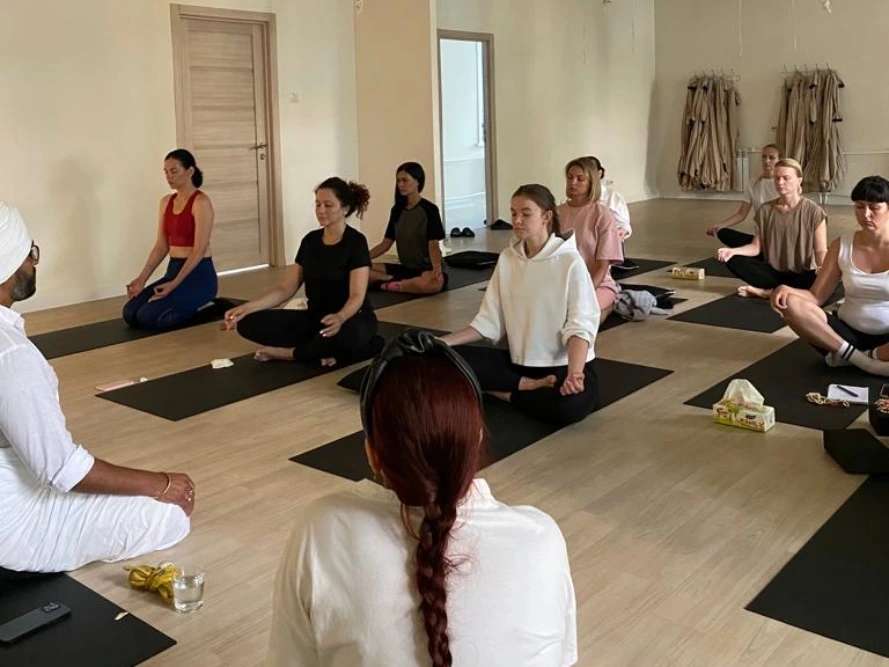
The Common Yoga Protocol is a structured yoga practice developed under the Ministry of Ayush in consultation with yoga experts for International Day of Yoga and wider wellbeing promotion. Official resources are available in multiple Indian languages.
It ordinarily combines preparatory elements, yogic movements and postures, breathing-related practices, meditation and a closing resolve or peace component according to the current official version.
The protocol is “common” because it provides a shared format for broad participation. It is not “universal” in the sense that every practice is suitable for every person.
A competent instructor still needs to:
- ask participants to respect pain, dizziness and breathlessness;
- explain that participation is voluntary;
- provide space to rest;
- consider age, mobility and the setting;
- avoid forcing range of movement or breath retention;
- follow the contraindications and cautions taught for the practice; and
- refer to individual health questions beyond scope.
Do not silently redesign the protocol and continue presenting it as the official version. If you adapt a session, explain what has been modified and why.
How is the YPI examination structured?
Under YCB’s published professional guideline, YPI assessment has two distinct parts.
| Component | Published maximum | What it assesses |
|---|---|---|
| Theory | 60 marks | Introduction to yoga and yogic practices, yoga texts, and yoga for health promotion |
| Demonstration skill | 80 marks | Ability to perform and present prescribed practices |
| Teaching skill | 40 marks | Ability to instruct a person or group clearly and safely |
| Application of knowledge | 10 marks | Use of knowledge in an applied situation |
| Field experience | 10 marks | Relevant practical experience and evidence under the applicable process |
| Total practical | 140 marks | Combined practical competence |
| Overall total | 200 marks | Theory plus practical |
The guideline describes theory as objective multiple-choice questions, generally bilingual in English and Hindi, with no negative marking. It lists a two-hour theory examination. Practical assessment may take up to one hour per candidate at the assessor’s discretion.
The published passing rule requires 70% in theory and practical separately. This distinction matters: a strong practical score does not automatically compensate for failed theory, and a strong written result does not compensate for unsafe teaching.
YCB procedures can change. Always use the current exam notice and instructions from the selected accredited institution or approved PrCB for language, format, online or offline delivery, documents, resits, fees and reporting time.
What happens after passing?
YCB’s professional guideline says successful candidates receive a certificate and identity card with a unique number. It describes a QR-enabled certificate and a downloadable digital certificate when that facility is enabled.
After receiving the credential:
- check that your name and certificate details are correct;
- verify your record in YCB’s certified-professional directory;
- use the credential’s exact title;
- record the issue, result and expiry dates;
- retain assessment and training documents;
- check current renewal notices well before expiry; and
- do not market services outside the competence the certificate represents.
How long is the YPI certificate valid?
YCB’s published guideline lists five-year validity for Yoga Protocol Instructor certification, counted from the declaration of the result. Its FAQ also describes five years for Level 1.
Renewal is linked to the Continuing Yoga Education Programme, commonly written as CYE or CYEP. YCB’s FAQ warns that a certificate may cease to be valid if the required continuing programme is not completed, and the professional may need to seek certification again.
The YCB website was publishing certificate-validity extension circulars in 2026. Do not assume a general extension applies to you. Check:
- your certificate number;
- the named circular or list;
- the revised validity date, if any;
- the CYEP route for your certification; and
- instructions from YCB or an authorised body.
Start renewal enquiries early. A course provider’s informal assurance is not a substitute for an official record.
What can a Yoga Protocol Instructor teach?
YCB describes the role as teaching basic yoga and the Ministry of Ayush Common Yoga Protocol in settings such as parks and residential societies for disease prevention and health promotion.
Within competence, a YPI may be suited to:
- community Common Yoga Protocol sessions;
- introductory group yoga;
- International Day of Yoga preparation;
- general wellbeing sessions for reasonably healthy adults;
- basic awareness workshops; and
- assisting with appropriately supervised public programmes.
The exact work also depends on local law, employer criteria, venue policy, insurance and the instructor’s experience.
What is outside the YPI scope?
The foundational credential should not be presented as authority to:
- diagnose a disease or injury;
- prescribe treatment or replace healthcare;
- claim that a protocol cures a condition;
- provide independent yoga therapy;
- manage rehabilitation after surgery or injury;
- advise on medication, nutrition or mental-health treatment;
- teach advanced cleansing, breath-retention or other higher-risk practices without adequate competence;
- lead prenatal, postnatal, children’s, geriatric or condition-specific programmes solely because the person holds YPI; or
- certify or assess other yoga teachers.
YCB has separate education, evaluator and therapy categories. A candidate with a specialist career goal should examine the appropriate higher pathway rather than stretch Level 1 language.
Safe referral language
When asked whether yoga is safe for a medical condition, an instructor can say:
“I can explain the general practice and its usual precautions, but I cannot diagnose your condition or decide what is medically appropriate for you. Please ask a qualified healthcare professional. You are welcome to rest or omit any practice that causes pain, dizziness, breathlessness or concern.”
A consent form does not expand competence. It records information and agreement; it does not turn an unqualified service into a qualified one.
Who should apply?
1. An aspiring community yoga instructor
YPI is aligned with people who want to lead foundational sessions in parks, residential societies and public wellbeing programmes.
2. A serious practitioner who wants an assessed foundation
Someone with regular personal practice may use the syllabus to organise theory, demonstration and teaching ability around a defined standard.
3. A fitness or wellness professional adding basic yoga responsibly
A physical-activity professional may benefit from a formal yoga foundation, provided they keep each professional scope distinct and do not claim therapy expertise.
4. A school, workplace or community-programme facilitator
The credential can be useful when the person’s role includes basic group practice or Common Yoga Protocol events. The employer may still require safeguarding, first aid, background checks or other qualifications.
5. An existing informal instructor seeking independent assessment
An experienced practitioner who did not train through a YCB institution may consider the open-candidate route after comparing current competence with the full syllabus.
6. A person planning to progress through YCB pathways
YPI can establish a foundation before broader education or specialist study. YCB’s FAQ says professional levels do not necessarily have to be completed sequentially, so progression should match competence and goals rather than credential collecting.
7. An international practitioner interested in the Ministry’s protocol
YCB says its certification is valid outside India. That does not guarantee legal recognition, insurance or employment in another country. International candidates should verify local teaching rules, visa and work rights, language, assessment logistics and market recognition.
Who should not apply - or should pause first?
YPI may not be the best immediate choice if:
- you want only a personal retreat and have no interest in assessment or teaching;
- you cannot yet sustain a regular foundational practice;
- you are seeking a clinical yoga-therapy credential;
- your goal is to train or assess teachers;
- you need a credential mandated by a particular foreign employer that does not accept YCB;
- you are choosing the course only because “government certificate” sounds marketable;
- a health condition currently makes the required practice unsafe without individual professional guidance; or
- the provider cannot prove its current YCB status and assessment route.
Pausing is not failure. A foundation course, personal practice, medical clearance where appropriate or a longer teacher-training programme may be a better first step.
YPI versus other yoga credentials
YPI versus Yoga Volunteer
Yoga Volunteer is oriented towards self and community wellbeing, assisting group activity and supporting yoga-related public programmes. YPI adds assessed professional competence to teach foundational yoga and the Common Yoga Protocol.
YPI versus Yoga Wellness Instructor
Yoga Wellness Instructor is a broader YCB education-and-training certification associated with more training and teaching yoga for wellness in settings such as schools, studios and workplaces. Candidates wanting a wider general-wellness role should compare its current syllabus and competence requirements with YPI.
YPI versus Yoga Teacher and Evaluator
Yoga Teacher and Evaluator is a higher YCB category intended for advanced teaching, training and evaluation responsibilities. It is not simply a renewal of YPI.
YPI versus YCB yoga-therapy certifications
The therapy pathway has separate categories, prerequisites, knowledge and supervised functions. A foundational protocol instructor must not use the word “therapy” merely because yoga may support wellbeing.
YPI versus a Yoga Alliance RYT 200 pathway
Both may reference 200 hours, but they answer different questions.
- YPI is a YCB competency certification tied to its prescribed syllabus, assessment and Common Yoga Protocol role.
- A Yoga Alliance RYT 200 pathway begins with completion of an eligible Registered Yoga School programme and a separate individual registration process.
- The curricula, practical expectations, governing organisations and renewal systems differ.
- Holding one does not automatically grant the other.
Choose based on the employer, jurisdiction, teaching style, population, and long-term pathway you actually need. Some teachers pursue both, but duplicated hours are not automatically interchangeable.
How to choose a legitimate training provider or PrCB
Verify the organisation on the YCB website
Search the current lists of approved PrCBs and accredited institutions. Match the legal name, city, enrolment or certificate number, scope and validity dates. A logo on a marketing page is not enough.
Ask who issues each document
Request a written answer to:
- Who issues the course completion certificate?
- Who conducts the theory and practical assessment?
- Who issues the professional YPI certificate?
- Will my record appear in YCB’s certified-professional directory?
Confirm the exact route
Ask whether you are enrolling as the institution’s student or appearing as an open candidate through a PrCB. The documents, fees and process may differ.
Ask for an hour breakdown
The timetable should show live training, supervised practice, teaching practice, theory, fieldwork, self-study and assessment preparation. Be cautious when 200 hours are advertised but most are unsupported recordings.
Assess faculty quality
Faculty should have credentials and experience appropriate to the subjects they teach. Ask who teaches philosophy, practical technique, health promotion and teaching methodology.
Inspect safety and feedback
A credible programme should explain:
- screening and participation cautions;
- how corrections are given;
- how online practice is observed;
- what happens if a student cannot perform a practice;
- emergency procedures;
- complaint and refund policies; and
- how teaching competence is assessed before the final exam.
Get the complete price in writing
Separate tuition, YCB enrolment, assessment, tax, study material, resit, travel, accommodation, certificate reissue and CYEP costs. Fees vary by provider and can change; confirm them with the current assessing body before payment.
Red flags
Avoid or investigate a provider that:
- says payment guarantees a YCB certificate;
- claims YCB itself teaches every course;
- cannot show current accreditation or PrCB approval;
- uses an expired certificate without an official extension;
- refuses to identify the assessing body;
- treats a provider certificate as identical to the YCB professional certificate;
- promises a government job;
- says YPI permits disease treatment or independent therapy;
- offers no live observation or teaching feedback;
- hides exam and enrolment fees until after payment;
- promises worldwide legal recognition without qualification;
- uses “internationally certified” without naming the issuing body; or
- discourages candidates from checking the YCB directory.
How to prepare for YPI assessment
Build a syllabus map
List every theory and practical item from the current official syllabus. Mark each as learn, practise, teach, revise or verify.
Practise explaining, not reciting
For each concept or practice, prepare a plain-language explanation of meaning, method, common caution and teaching purpose. Avoid medical promises.
Record short teaching segments
Teach five- to ten-minute sections and review:
- audibility and pace;
- sequence of cues;
- unnecessary words;
- whether you observe the group;
- timing; and
- how you respond to a participant who cannot continue.
Use peer feedback
Ask a competent teacher or study partner to score both accuracy and teachability. The practical exam rewards usable instruction, not silent personal performance.
Prepare field evidence early
Obtain the current required format before conducting or documenting sessions. Do not manufacture attendance, photographs or feedback after the event.
Rehearse the assessment conditions
Confirm the current language, identification, dress, props, camera position for online assessment, internet requirements, reporting time and prohibited assistance.
Plan for safety
Know the stated cautions and contraindications for prescribed practices. If you cannot perform something safely, discuss the correct assessment process with the provider rather than hiding an injury.
After certification: your first 90 days
Days 1 – 30: consolidate
- Verify the certificate and directory entry.
- Repeat the protocol regularly without rushing.
- Observe experienced instructors.
- Prepare a written class plan and emergency contacts.
- Arrange appropriate insurance and venue permission where relevant.
Days 31 – 60: teach in a controlled setting
- Begin with a small, general adult group within scope.
- Use transparent intake and consent language.
- Keep the protocol and session purpose clear.
- Request specific feedback on pace, clarity and comfort.
- Record incidents and changes factually.
Days 61 – 90: review competence
- Identify recurring participant questions you cannot answer.
- Seek mentoring on cueing and group observation.
- Decide whether your next need is experience, first aid, anatomy, a broader wellness credential or specialist education.
- Do not add advanced or therapeutic services merely to expand a brochure.
Frequently asked questions
Is a Yoga Protocol Instructor a government certification?
It is a professional certification under the Yoga Certification Board, established by the Ministry of Ayush, Government of India. Training may be delivered by an institution, while assessment and certification follow the applicable YCB route. Describe the exact issuing body rather than using vague “government approved” wording.
Is YPI the same as YCB Level 1?
Yoga Protocol Instructor is commonly described as Level 1 in YCB’s education-and-training pathway. Use the title shown in the current YCB scheme and on the certificate.
Is YPI a 200-hour course?
YCB’s published guideline associates YPI competence with not less than 200 hours, or specified full-time or part-time durations. Open candidates can seek assessment based on existing competence without attending a particular YCB course. Individual programmes may be longer or impose additional requirements.
Does YCB provide the training?
No. YCB’s FAQ says the Board does not conduct courses. Candidates train through institutions or prepare independently, then use the applicable accredited-institution or approved-PrCB assessment route.
What is the minimum education required?
Class 10 or equivalent is suggested for admission to a course, but institutions may set their own conditions. YCB says open candidates for professional assessment have no minimum educational qualification.
Is there an age limit?
YCB’s FAQ states there is no age limit for professional certification assessment. A training provider may still set lawful course-admission, fitness or participation conditions.
Can a beginner apply?
A beginner can join a suitable foundational course if the provider accepts them. An untrained beginner should not treat the open-candidate route as a shortcut; the practical assessment requires demonstration and teaching skill.
What is the passing mark?
YCB’s published professional guideline requires 70% in theory and practical separately, with detailed rules on grace marks and resits. Confirm the current exam notice because procedures can change.
Is the examination online or offline?
YCB’s application guidance says institutions may conduct examinations online or offline. Availability depends on the current schedule and selected organisation. Confirm identity, camera, space, technology and practical-demonstration requirements before registering.
How much does YPI certification cost?
There is no single course price. Costs may include provider tuition, YCB enrolment, PrCB or institution assessment, tax, material, resit and travel. Request an itemised current quotation and verify who receives each payment.
Does the certificate expire?
The published YCB guideline lists five-year validity for YPI and connects renewal to continuing yoga education. Check current CYEP and extension notices for your certificate.
Can a YPI teach yoga professionally?
The credential is designed for foundational yoga and Common Yoga Protocol instruction. Actual work depends on demonstrated competence, local law, employer requirements, venue permission and insurance. It does not authorise yoga therapy or every specialist class.
Can a YPI open a yoga studio?
The certification does not by itself create or license a business. Studio operation can involve local registration, tax, property use, consumer, employment, insurance, safety and other requirements. The classes offered must remain within instructor competence.
Is YPI accepted outside India?
YCB’s FAQ says the certificate is valid in other countries, but a foreign government, employer or insurer decides how it is recognised. Verify local rules and market requirements before enrolling solely for overseas work.
Does YPI allow yoga therapy?
No. YPI belongs to Yoga Education and Training. YCB has separate yoga-therapy certifications. Do not diagnose, treat or advertise therapy solely on the basis of YPI.
Is YPI equivalent to RYT 200?
No. They are credentials from different organisations with different curricula and processes. Some training providers may offer routes connected to both, but each credential’s requirements must be completed and verified separately.
Must I complete YPI before applying for a higher YCB level?
YCB’s FAQ says professional levels do not have to be cleared sequentially. Apply for the level that matches your actual knowledge and skills, subject to current route and provider requirements.
Your next step
Before paying a provider, complete this seven-point check:
- Find the exact organisation in YCB’s current accredited-institution or approved-PrCB directory.
- Confirm its scope and validity on the proposed exam date.
- Ask whether you are a course student or open candidate.
- Obtain the full syllabus, hour breakdown and assessment pattern.
- Get written confirmation of every certificate issuer and fee.
- Compare the YPI role with the work you genuinely want to do.
- Speak to recent candidates and verify sample certificate numbers in the YCB directory.
Choose the programme only when the training quality, assessment route and professional scope are all clear. The value of YPI lies in verified competence—not in collecting a logo or another “200-hour” label.